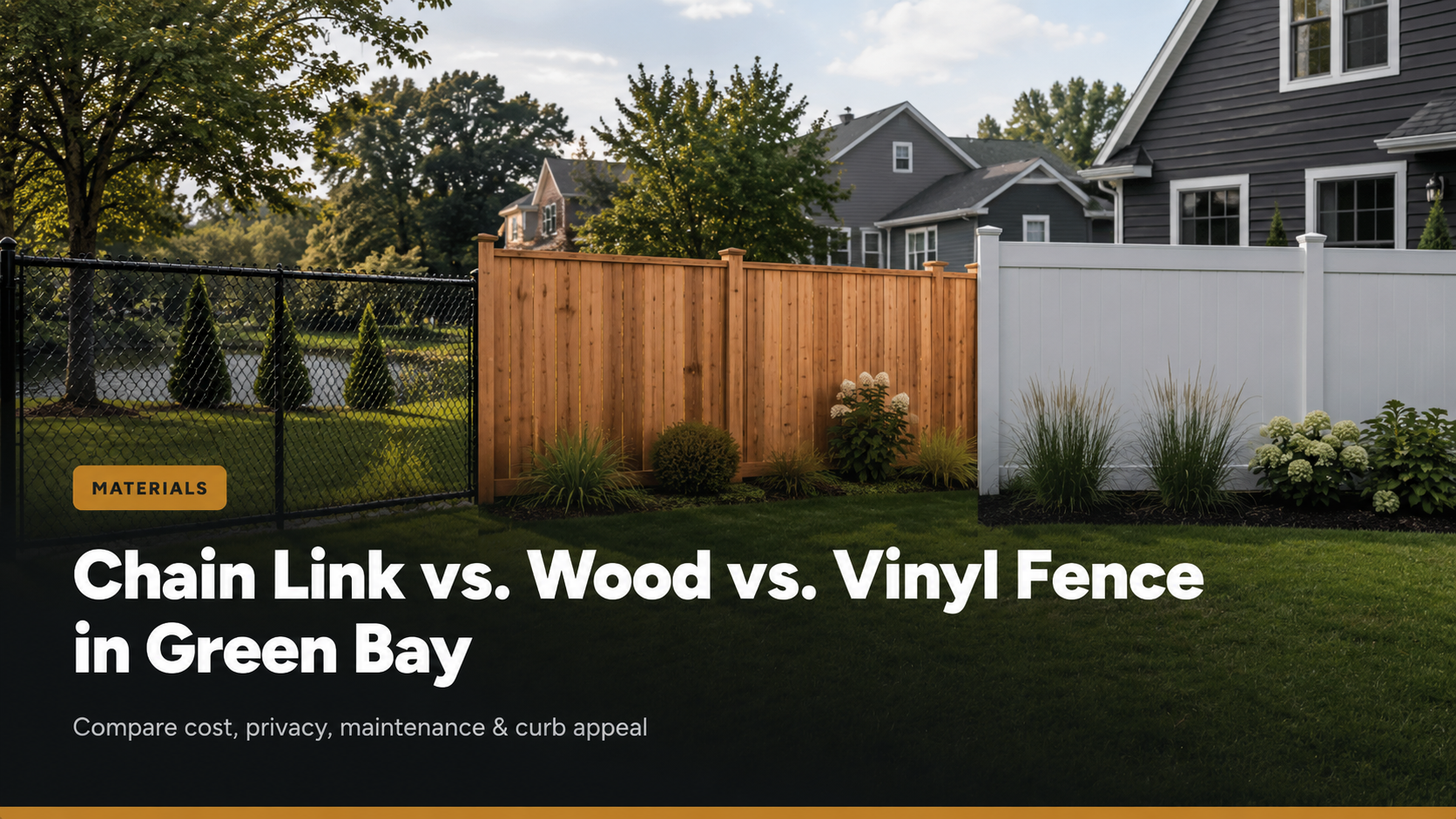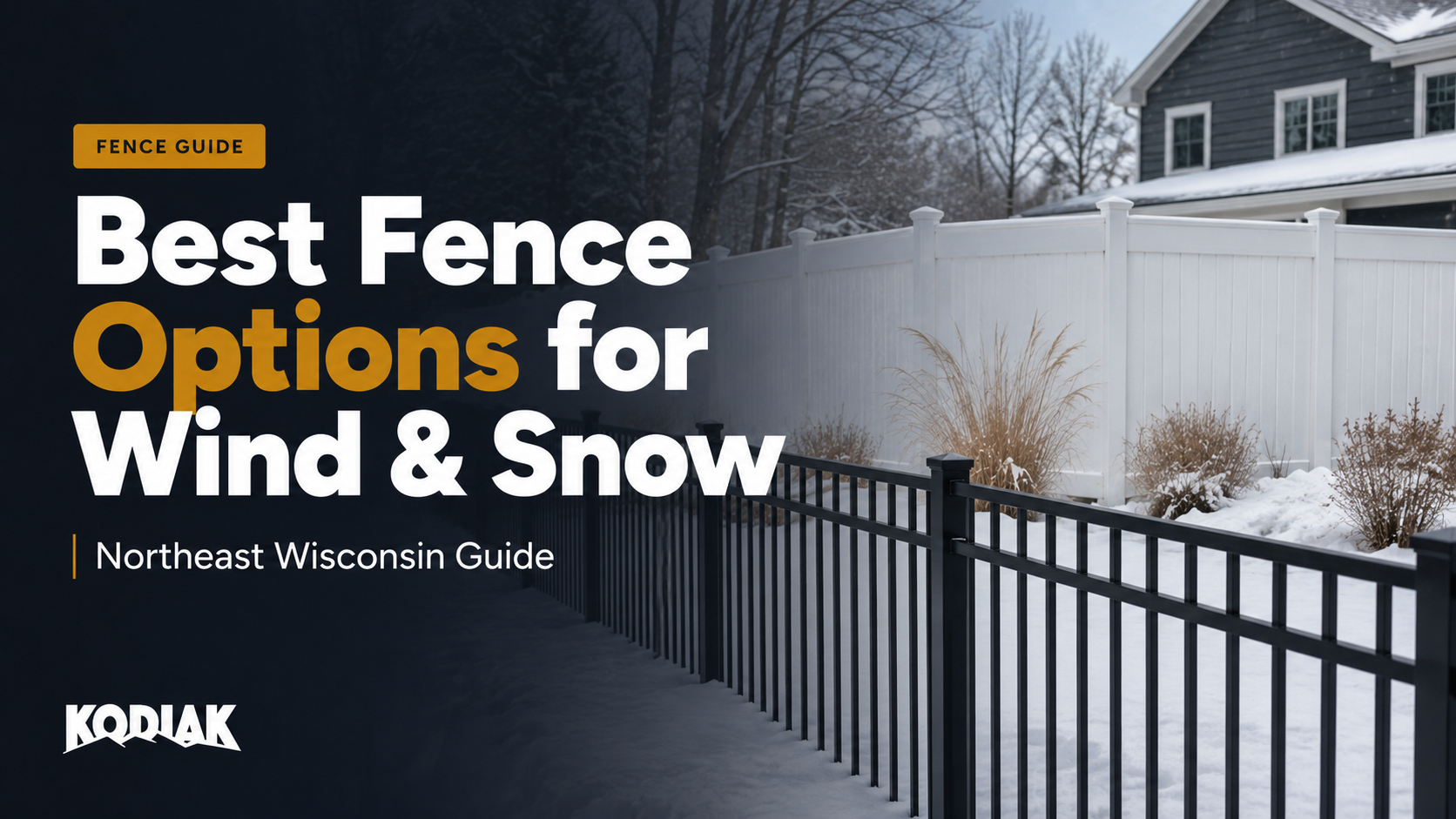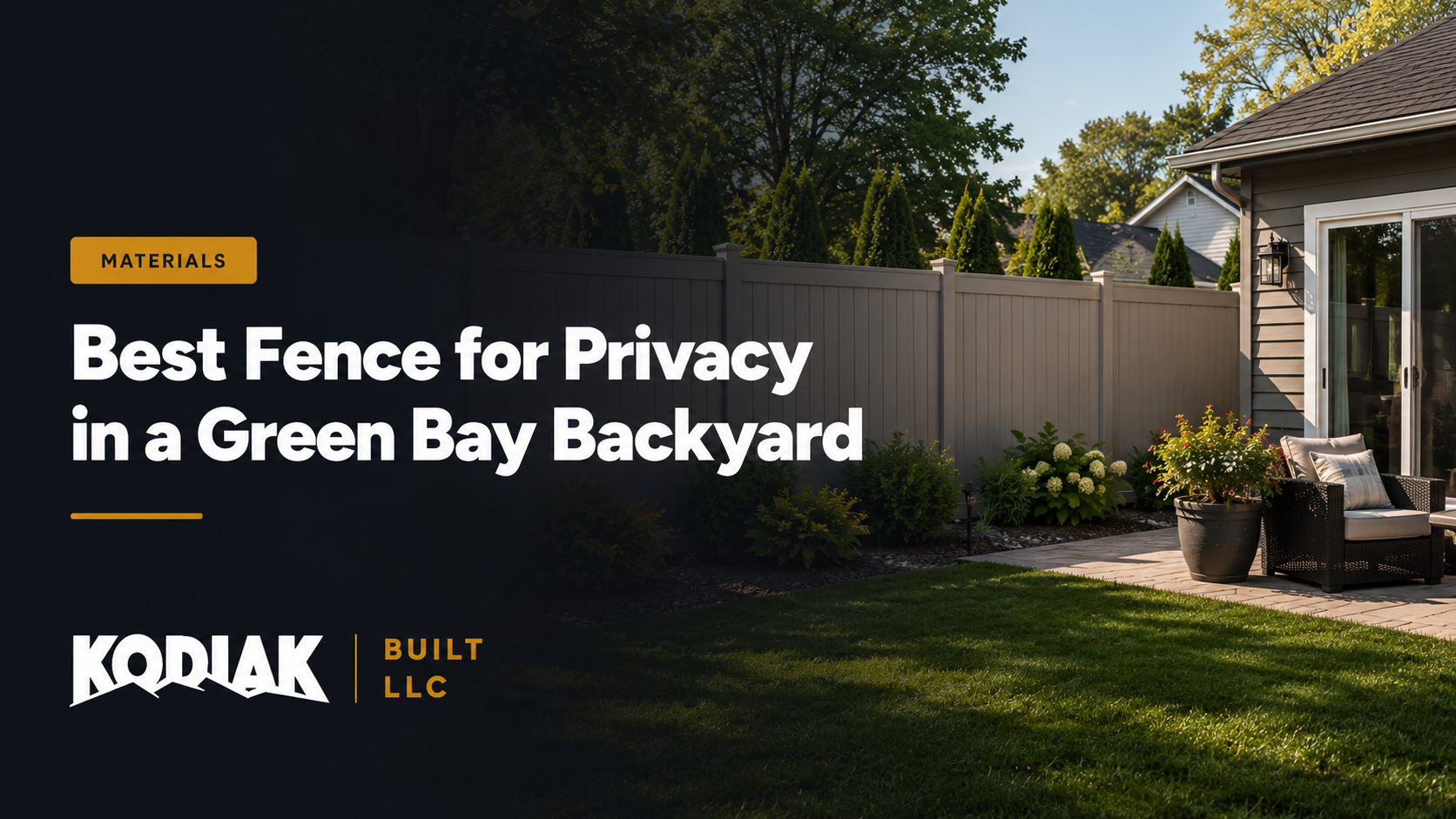
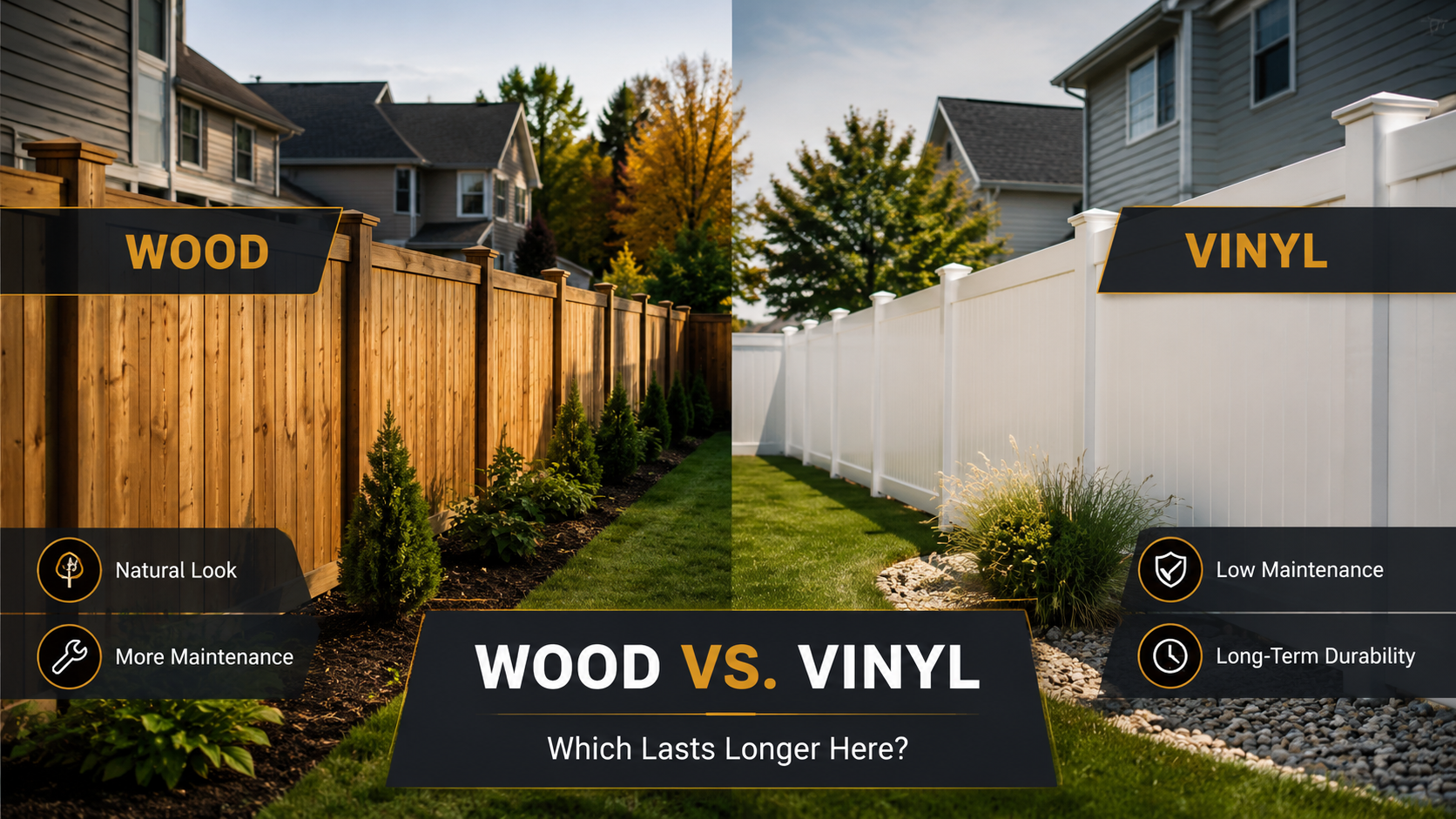
For Green Bay homeowners, privacy fences usually come down to two popular choices: wood or vinyl. Both can look great. Both can create a private backyard. Both can add value when installed well. But they behave differently in Wisconsin weather.
The best choice depends on what you care about most: upfront cost, long-term maintenance, appearance, repairability, durability, and how much time you want to spend taking care of the fence.
The quick answer
If you want the lowest maintenance option, vinyl usually wins. It does not need staining or painting, and it handles moisture better than untreated or neglected wood.
If you want a natural look, easier section-by-section customization, and a classic backyard feel, wood is still a great option. But wood needs maintenance. In Wisconsin, skipping that maintenance can shorten the life of the fence.
Wisconsin weather is hard on fences
Our climate gives fences a little bit of everything:
- ✓Freeze-thaw cycles.
- ✓Snow piles.
- ✓Spring moisture.
- ✓Wind.
- ✓Summer sun.
- ✓Humidity.
- ✓Occasional heavy storms.
A fence in Northeast Wisconsin has to deal with movement, moisture, and temperature swings. The material matters, but installation quality matters just as much.
Wood privacy fences
Wood is the traditional privacy fence material. It is warm, natural, and flexible. It can fit older homes, wooded lots, rural properties, and classic Green Bay neighborhoods.
Pros of wood
- ✓Natural look.
- ✓Often lower upfront material cost than vinyl.
- ✓Can be stained or painted different colors.
- ✓Easier to modify on unusual layouts.
- ✓Individual boards can often be repaired or replaced.
- ✓Works well for custom styles.
Cons of wood
- ✓Needs maintenance.
- ✓Can warp, crack, cup, or twist.
- ✓Can rot if moisture is trapped.
- ✓Can fade or gray over time.
- ✓Stain or sealer needs to be refreshed.
- ✓More vulnerable to ground contact and poor drainage.
How long does wood last?
A properly installed and maintained wood fence can last many years, but the lifespan depends heavily on material choice, post quality, drainage, sun exposure, and maintenance. A neglected wood fence may start looking tired much faster.
If you choose wood, plan on maintenance from the beginning. Do not treat staining or sealing as an optional extra forever. In Wisconsin, moisture and UV exposure will eventually win if the fence is ignored.
Vinyl privacy fences
Vinyl has become popular because homeowners want privacy without constant upkeep. It has a cleaner, more uniform look and is often used for modern suburban backyards.
Pros of vinyl
- ✓Very low maintenance.
- ✓No staining or painting.
- ✓Does not rot like wood.
- ✓Easy to rinse clean.
- ✓Clean, consistent appearance.
- ✓Good option for homeowners who want a polished look.
Cons of vinyl
- ✓Higher upfront cost in many cases.
- ✓Can crack if hit hard in cold weather.
- ✓Repairs may require matching panels or parts.
- ✓Less natural-looking than wood.
- ✓Cheap vinyl can look flimsy or fade poorly.
- ✓Needs proper post setting and quality materials.
How long does vinyl last?
Quality vinyl fencing can be a long-lasting option, especially when installed correctly with strong posts, proper depth, and good layout. The biggest concern is not rot; it is impact damage, material quality, and whether the system was installed properly.
A good vinyl fence should feel solid, not wobbly. The posts, gates, and corners still matter.
Which handles snow better?
Both can handle snow when installed well. Problems happen when snow is piled aggressively against the fence, especially from plows or snowblowers.
Wood can absorb moisture and suffer over time if snow sits against it. Vinyl will not rot from snow, but a hard impact from frozen snow or equipment can crack a panel.
Either way, avoid using the fence as a snow wall.
Which handles wind better?
A privacy fence is basically a wall. Wind load matters. Vinyl and wood can both perform well, but the post system is critical.
For wind-exposed yards, think carefully about:
- ✓Post depth.
- ✓Post spacing.
- ✓Gate locations.
- ✓Panel style.
- ✓Corner bracing.
- ✓Open vs. solid designs.
If your yard is wide open, the installation details matter more than the material debate.
Which is better for dogs?
Both can work well for dogs.
Wood can be easier to customize for uneven ground or dig-prone dogs. Vinyl is easier to clean and resists urine-related staining better than many wood finishes. For strong dogs, gate hardware and bottom gaps matter more than material alone.
For dog owners, we look closely at:
- ✓Bottom clearance.
- ✓Gate latches.
- ✓Dig guards.
- ✓Visibility triggers.
- ✓Strength at corners.
- ✓Whether the dog jumps, digs, or pushes.
Which has better curb appeal?
This depends on the home.
Wood looks natural and can be stained to match decks, trees, and older homes. Vinyl looks clean and bright, especially with newer homes and maintained landscaping. Black aluminum or decorative accents can also be combined with privacy sections for a more premium look.
The best-looking fence is the one that matches the property.
Which is cheaper?
Wood often has a lower upfront material cost, but it may require more maintenance over time. Vinyl often costs more up front but saves time and maintenance later.
When comparing quotes, do not only ask, “What is cheapest today?” Ask:
- ✓What will it look like in five years?
- ✓What maintenance will it need?
- ✓What happens if a panel is damaged?
- ✓How strong are the posts and gates?
- ✓What grade of material is being used?
The cheapest fence is not always the best value.
Our recommendation
Choose wood if you want natural character, custom flexibility, and are willing to maintain it.
Choose vinyl if you want privacy with minimal upkeep and a clean, consistent look.
For many Green Bay homeowners who want a low-maintenance backyard privacy fence, vinyl is hard to beat. For homeowners who love the look of natural materials, wood still makes sense—just go into it with a maintenance plan.
Bottom line
There is no single winner for every yard. Wood and vinyl can both be great fences. The right choice depends on your home, budget, maintenance expectations, pets, wind exposure, and style.
Kodiak Built can help you compare both options and choose a privacy fence that makes sense for Northeast Wisconsin.
Quick answers
Is wood or vinyl better for Wisconsin winters?
Both can handle Wisconsin winters when installed well. Vinyl will not rot from snow and handles moisture better than neglected wood, while wood can absorb moisture and suffer over time if snow sits against it — either way, avoid piling heavy snow against the fence.
Does vinyl fencing crack in cold weather?
Vinyl can crack if it is hit hard in cold weather, such as by frozen snow or equipment. The bigger concerns are impact damage, material quality, and installation — not rot, which vinyl avoids entirely.
Is a wood privacy fence cheaper than vinyl?
Wood often has a lower upfront material cost, but it needs ongoing maintenance like staining or sealing. Vinyl usually costs more up front and saves time and maintenance later, so compare what each fence will need over the years, not just the install price.