Ornamental aluminum used to be the fence you saw around country clubs and historic homes — the wrought-iron look, without the wrought-iron price or upkeep. Now it shows up all over Green Bay: framing front yards, wrapping pools, and running along sloped lots where other fences fight the grade.
This guide covers what aluminum does well, where it isn't the right pick, and what it costs relative to the other fences we build.
What aluminum fencing actually is
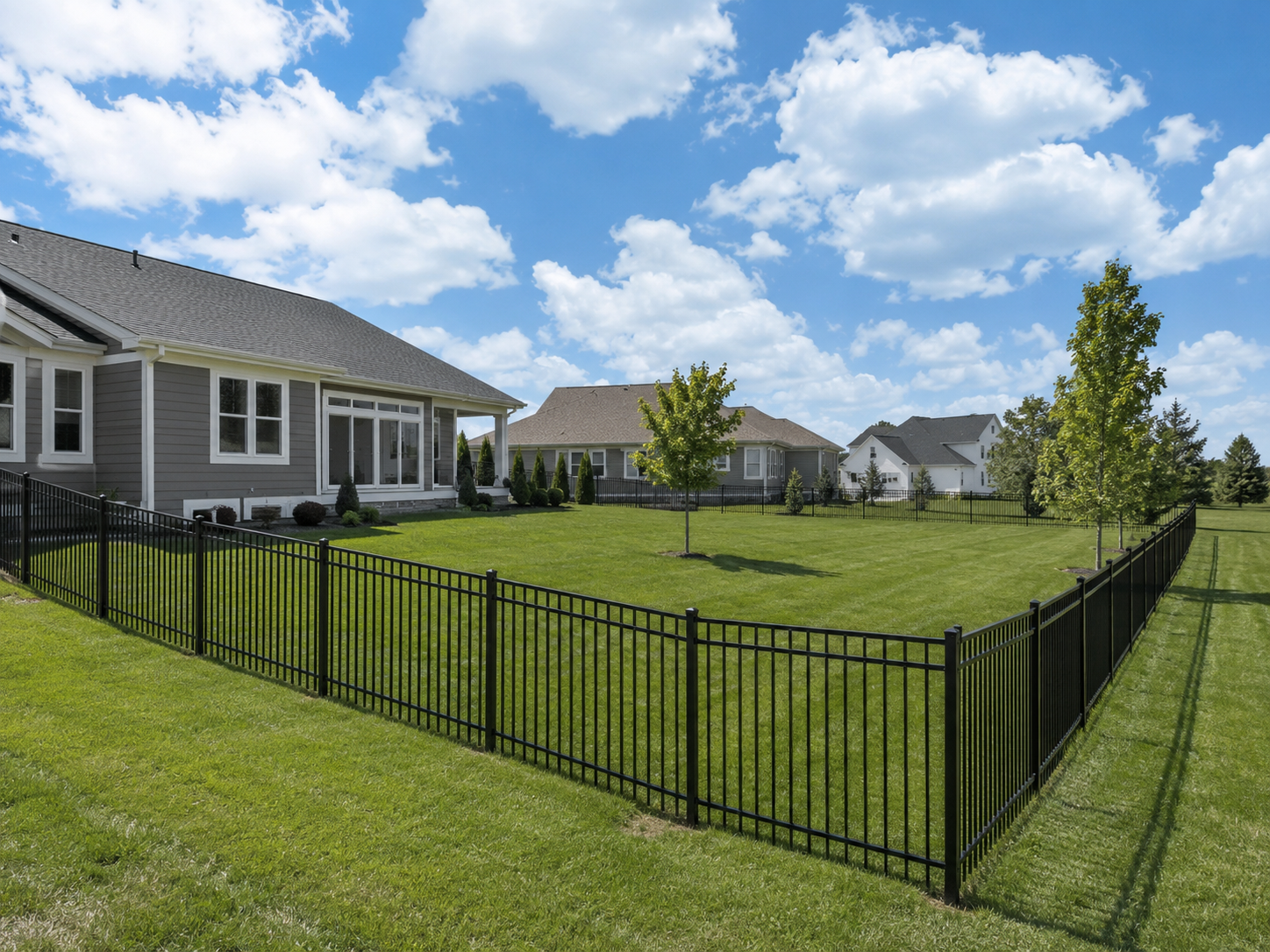
Modern aluminum fencing is a system of powder-coated aluminum rails and pickets, assembled into panels that hang between posts. It gives you the classic iron profile — clean verticals, decorative caps, a formal line around the property — in a material that weighs less, installs cleaner, and never needs paint.
The powder coat is the key detail. It's a baked-on finish, not paint, and it's why an aluminum fence still looks new after years of snowmelt and road salt that would have a bare iron fence bleeding rust down the pickets.
Where aluminum shines
Front yards and curb appeal
Aluminum is the fence you pick when the fence is allowed to be seen. It defines the property line without hiding the house, and most HOAs that restrict solid fencing in front yards are perfectly happy with ornamental aluminum.
Pools
At 48 inches or taller with self-closing, self-latching gates, aluminum meets Wisconsin's pool barrier code — and unlike wood, it doesn't care about splash and chemicals. It's the backbone of most of our pool fencing projects.
Sloped yards
Aluminum panels rack — they parallelogram to follow the grade — so a sloped yard gets one continuous line instead of stair-stepped panels with gaps underneath. If your lot drops toward a back lot line or drainage swale, aluminum handles it more gracefully than almost anything else.
Pets you want to see
Open pickets contain the dog while keeping sightlines — you can see the yard, the kids, and whatever the dog is barking at. Picket spacing can be tightened low to the ground for small dogs.
Where aluminum is the wrong pick
- ✓Privacy. Open pickets hide nothing — if you want a screened backyard, you want vinyl or wood privacy.
- ✓Wind blocking. Air passes straight through, which is great for exposed lots but useless as a windbreak.
- ✓Rock-bottom budget perimeters. For a big utility run, chain link does the containment job for less.
How it handles Wisconsin winters
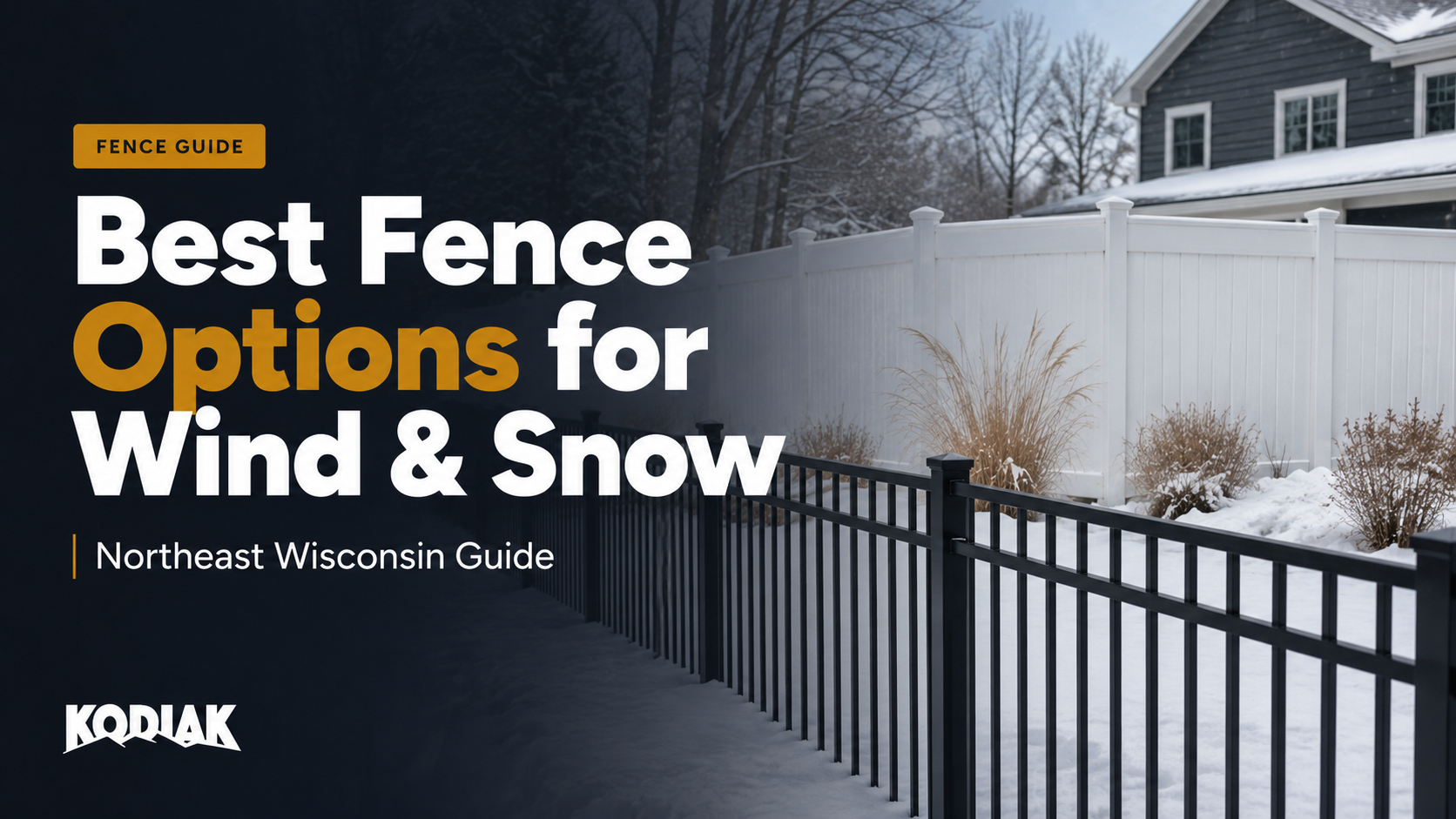
Aluminum's winter story is mostly about what doesn't happen. It doesn't rust from snowmelt or salt spray. It doesn't rot at the ground line. It doesn't need staining before or after the season. Open pickets also let wind and drifting snow pass through instead of loading the panels like a sail.
The one winter enemy it shares with every fence is frost heave — and that's a post problem, not a panel problem. Every aluminum fence we build rides on 2-3/8″ galvanized steel posts set in concrete below the frost line, so the racked panels stay aligned through freeze-thaw.
Local note: road-facing runs take the most salt spray. Powder-coated aluminum is one of the few fence materials that genuinely doesn't care — worth remembering for corner lots on busy Green Bay streets.
What it costs
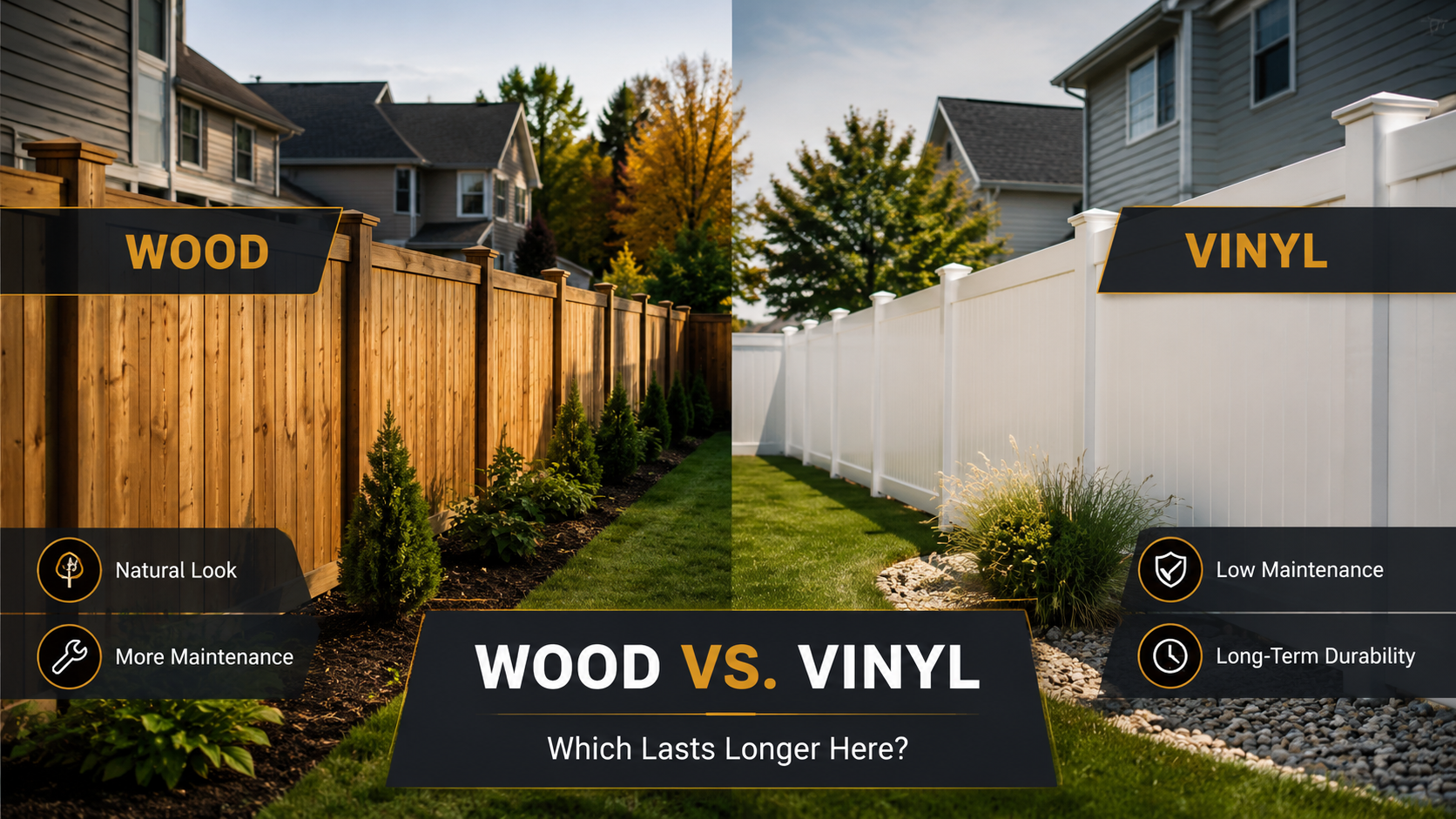
Installed aluminum typically lands in the same range as wood privacy — more than chain link, and a bit under premium vinyl for most layouts. Height, grade (residential vs. heavy-duty), gate count, and how much racking the slope demands all move the number. Our cost guide shows current per-foot ranges for every style side by side.
The long-term math is where aluminum quietly wins: there's no staining cycle, no panel replacement from rot, and the finish is warrantied for decades by most manufacturers. It's an up-front purchase with almost no tail.
Aluminum vs. the alternatives
- ✓Aluminum vs. wrought iron: same look, no rust, no repainting, lighter on the posts. Iron only wins on brute mass.
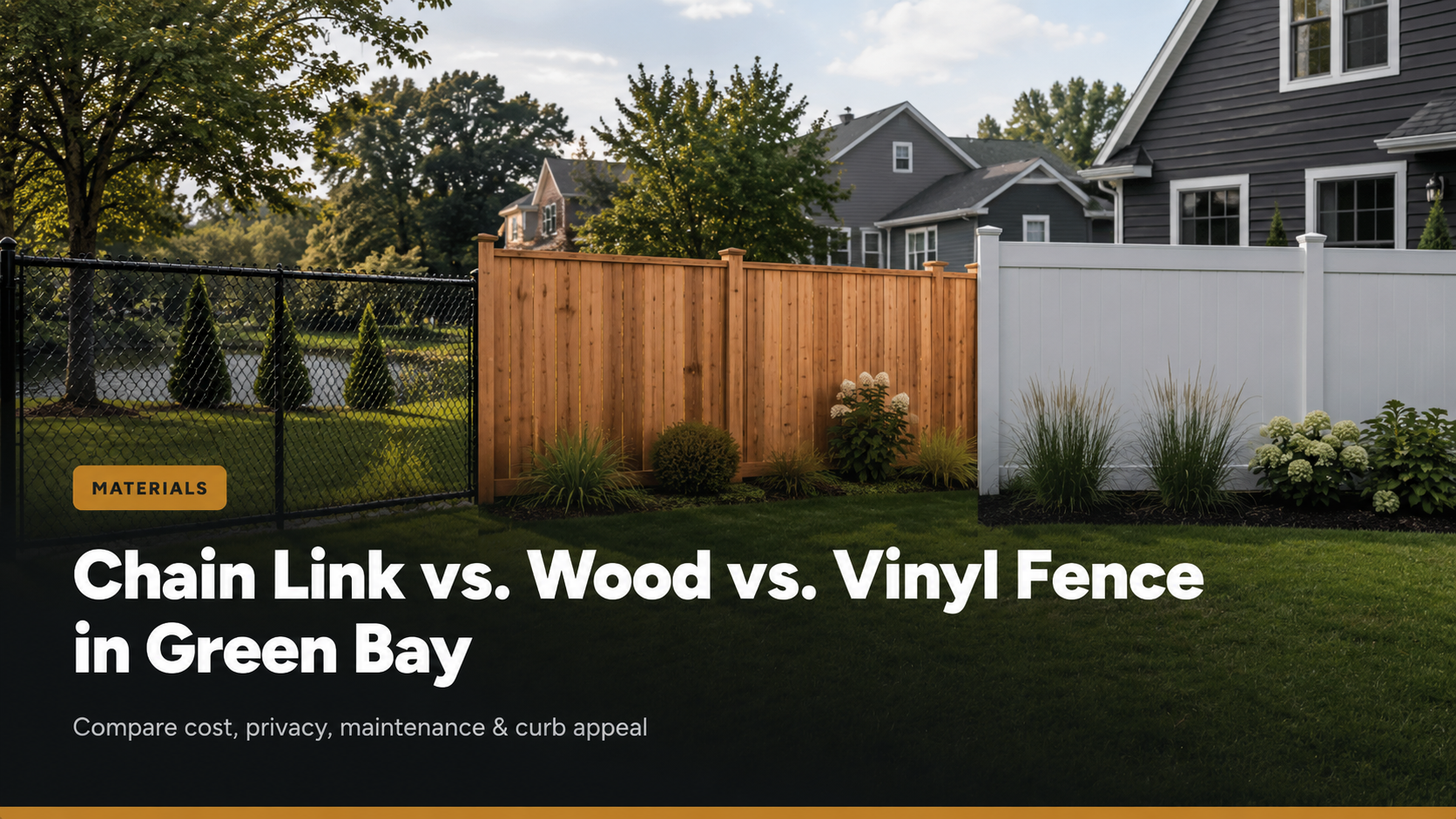
- ✓Aluminum vs. vinyl: aluminum is open and ornamental; vinyl is solid and private. Different jobs.
- ✓Aluminum vs. chain link: both are open containment, but aluminum is the one you put where looks matter.
Bottom line
If the fence needs to look good, follow a slope, pass pool inspection, or survive road salt — and privacy isn't the goal — aluminum is hard to argue with in Northeast Wisconsin.
Want numbers for your yard? Get a free written quote and we'll price aluminum against the other styles you're considering.
Quick answers
Does an aluminum fence rust in Wisconsin?
No. Aluminum doesn't rust, and the powder-coat finish shrugs off snowmelt, road salt, and humidity. That's the core advantage over steel or wrought iron in this climate.
Is aluminum fencing strong enough for a family yard?
Yes — residential-grade ornamental aluminum is engineered for fence duty, and heavy-duty grades exist for gates, pool enclosures, and higher-traffic spots. What matters most is the posts underneath it.
Can aluminum fencing enclose a pool in Wisconsin?
Yes. Configured at 48 inches or taller with self-closing, self-latching gates, ornamental aluminum meets Wisconsin pool barrier code — it's one of the most popular code-compliant pool fences.