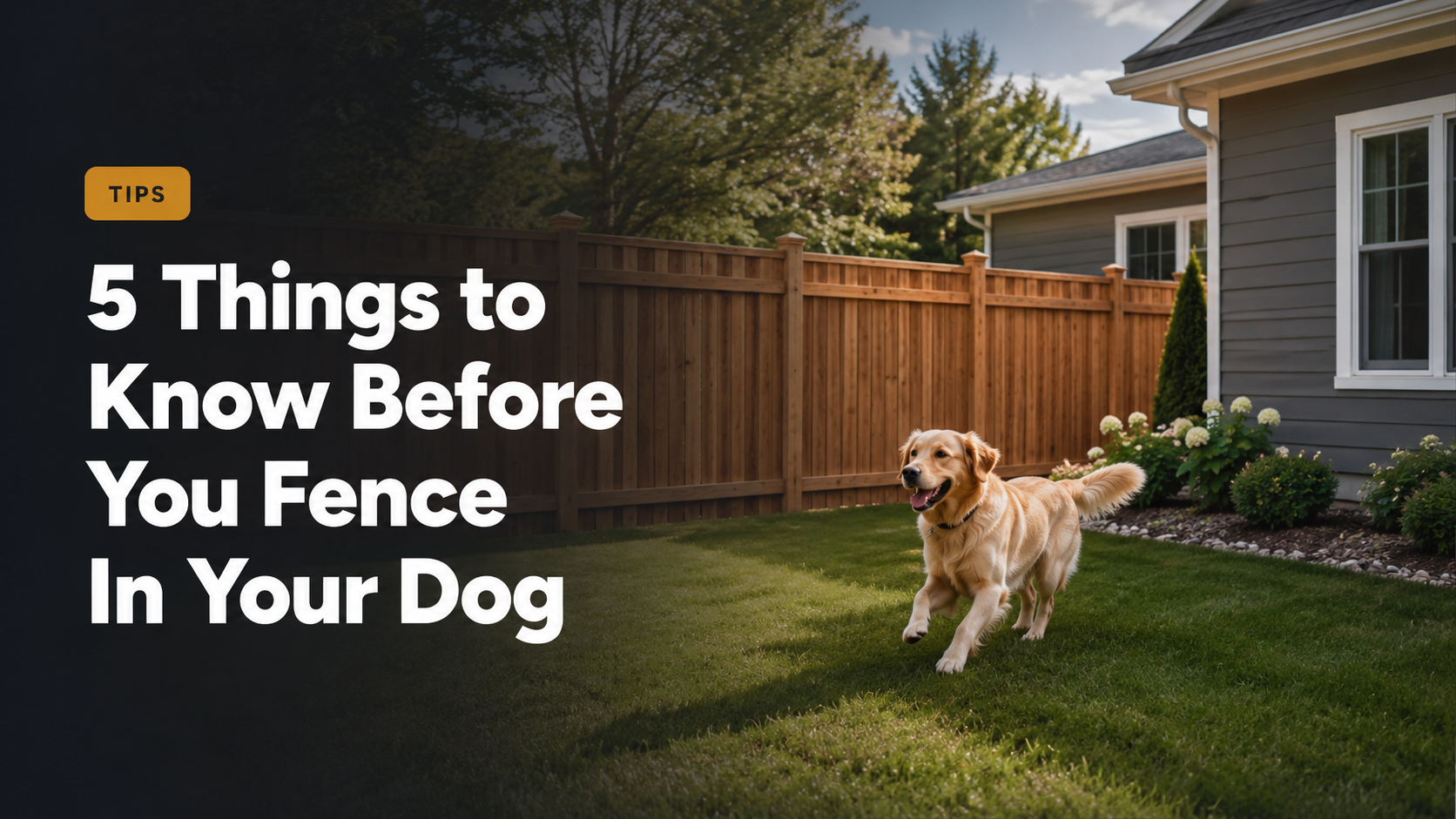
A backyard fence can completely change life with a dog. It gives your dog room to move, makes potty breaks easier, helps protect kids and pets, and turns the yard into a usable space instead of a leash-only zone.
But not every fence is dog-proof. A fence that works for a calm small dog may fail quickly with a large, athletic, anxious, or determined dog. Before you install a fence, think about how your dog actually behaves.
Here are five things to know before fencing in your dog in Green Bay or Northeast Wisconsin.
1. Height depends on the dog, not just the yard
A 4-foot fence may be fine for some small or older dogs. It may be useless for a young, athletic dog that likes to jump. A 6-foot privacy fence may be a better fit for dogs that are reactive, strong, or easily excited by people, dogs, bikes, or wildlife.
Think about:
- ✓Can your dog jump?
- ✓Does your dog climb or push?
- ✓Does your dog react to other dogs walking by?
- ✓Is your dog still growing?
- ✓Will kids throw balls near the fence?
Choosing height based only on price can lead to regret. It is better to build for the dog you have—and the dog you may have in the future.
2. The bottom gap matters
Many dog escapes happen under the fence, not over it. A small gap at the bottom can become a tunnel. Uneven ground, slopes, drainage swales, and old landscaping can all create weak spots.
For dog fences, pay close attention to:
- ✓Ground clearance.
- ✓Low spots.
- ✓Slopes.
- ✓Gate bottoms.
- ✓Transitions near patios or retaining walls.
- ✓Soft soil where digging is easy.
If your dog digs, ask about dig-resistant details. Options may include tighter bottom clearance, landscape barriers, buried wire, stone along the fence line, or other site-specific solutions.
3. Gates are usually the weak point
The gate is one of the most important parts of a dog fence. A beautiful fence with a weak gate latch is not secure.
For dogs, a good gate plan should consider:
- ✓Strong posts.
- ✓Quality hinges.
- ✓A reliable latch.
- ✓Latch height.
- ✓Self-closing hardware if needed.
- ✓Bottom clearance.
- ✓Whether kids will use the gate.
- ✓Whether delivery drivers or guests may leave it open.
If your dog is an escape artist, consider a double-gate or “airlock” style setup in high-traffic areas. That way, one gate can be closed before the next one opens.
4. Visibility can help or hurt
Some dogs do better when they can see out. Others become more reactive when they see every person, dog, squirrel, or bike passing by.
That is why material choice matters.
Privacy fence
Good for dogs that bark at everything. It blocks visual triggers and creates a calmer backyard.
Chain link fence
Chain link is good for budget and visibility, but reactive dogs may bark more because they can see through it.
Vinyl privacy fence
Low maintenance and blocks views. Good for homeowners who want a clean look and less stimulation for the dog.
Wood privacy fence
Natural look and strong privacy. Good for custom layouts and uneven yards, but requires maintenance.
The best dog fence is not always the strongest-looking fence. It is the one that matches your dog’s behavior.
5. Plan for winter and mud
Wisconsin yards change by season. A fence line that looks tight in summer may have different issues in winter or spring.
Think about:
- ✓Snow drifting against the fence.
- ✓Spring mud near gates.
- ✓Dogs wearing paths along the fence line.
- ✓Frozen latches.
- ✓Snow piles reducing effective fence height.
- ✓Drainage near posts.
If snow gets piled against the fence, a jumping dog may gain extra height. If spring mud collects at the gate, the entrance can become messy and unstable. A good fence plan should look at year-round use.
Bonus: call before you dig
Dog fence projects still involve digging. Before fence posts are installed, utilities need to be located. In Wisconsin, Diggers Hotline / 811 should be contacted before excavation. Public utilities can be marked, but private lines such as sprinkler lines, electric to detached buildings, or invisible dog fence wires may require extra attention.
If you already have an invisible fence, tell your contractor before work begins.
Questions to ask before installing a dog fence
Before you choose a fence, ask yourself:
- ✓Does my dog jump?
- ✓Does my dog dig?
- ✓Does my dog bark at people or dogs?
- ✓Do I need privacy?
- ✓How many gates do I need?
- ✓Will kids use the gates?
- ✓Is the yard sloped?
- ✓Are there utility lines or private lines?
- ✓Do I want low maintenance?
- ✓Will I add another dog later?
The answers help determine the right height, material, gate style, and layout.
Bottom line
A dog fence is not just a property line. It is a safety system, a convenience upgrade, and a quality-of-life improvement for your family and your pet.
Kodiak Built can help you design a fence that fits your dog, your yard, and Wisconsin weather. Whether you need privacy, strength, low maintenance, or a smarter gate layout, the best time to solve those details is before the posts go in.
Quick answers
How tall should a fence be for a dog?
Height depends on the dog, not just the yard. A 4-foot fence may be fine for some small or older dogs, while a 6-foot privacy fence is often a better fit for dogs that jump, climb, or get excited by people, dogs, bikes, or wildlife.
What is the best fence for a dog that barks at everything?
A privacy fence is usually the best choice for reactive dogs because it blocks the visual triggers that set off barking and creates a calmer backyard. See-through options like chain link can make reactive dogs bark more because they see everything passing by.
How do I keep my dog from digging under the fence?
Watch the bottom gap — many dog escapes happen under the fence, not over it. Dig-resistant options include tighter bottom clearance, landscape barriers, buried wire, or stone along the fence line, chosen around the yard's low spots, slopes, and soft soil.