In many cases, yes: if you are building or replacing a fence in the City of Green Bay, you should expect to deal with a fence permit or at least confirm the requirement before work begins. Fence rules can depend on the project type, property location, zoning, height, corner lots, pools, historic districts, and whether the fence is new or replacing an existing fence.
This guide gives homeowners a practical starting point. It is not legal advice, and it does not replace the City of Green Bay’s current permitting requirements. Before installation, always confirm the latest rules with the city or your municipality.
Local note: Fence rules, permit fees, HOA rules, utility-locate requirements, and product availability can change. Always confirm current requirements with the City of Green Bay, your municipality, your HOA, and Diggers Hotline before starting work.
Why fence permits exist
Fence permits are not just paperwork. They help the city check basic issues before a fence is installed, including:
- ✓Fence location.
- ✓Fence height.
- ✓Visibility near streets, driveways, and corners.
- ✓Easements and setbacks.
- ✓Pool safety requirements.
- ✓Property maintenance standards.
- ✓Whether the project conflicts with other local rules.
For homeowners, the permit process can prevent expensive problems. Moving a fence after it is installed is much more frustrating than adjusting the plan before the holes are dug.
What the City of Green Bay typically wants to know
For a fence permit, expect to provide information such as:
- ✓Property address.
- ✓Owner contact information.
- ✓Contractor information, if applicable.
- ✓Fence location on the lot.
- ✓Fence height.
- ✓Fence material.
- ✓Total length.
- ✓A simple site plan or sketch.
- ✓Whether the fence is near a street, driveway, corner, pool, or easement.
Green Bay’s permitting information has identified fences as a short-project permit type, alongside projects like driveway expansions, sheds, and patios. The city’s fence guide has also listed separate residential and commercial permit fees, but you should verify current fees before submitting.
Do you need a survey?
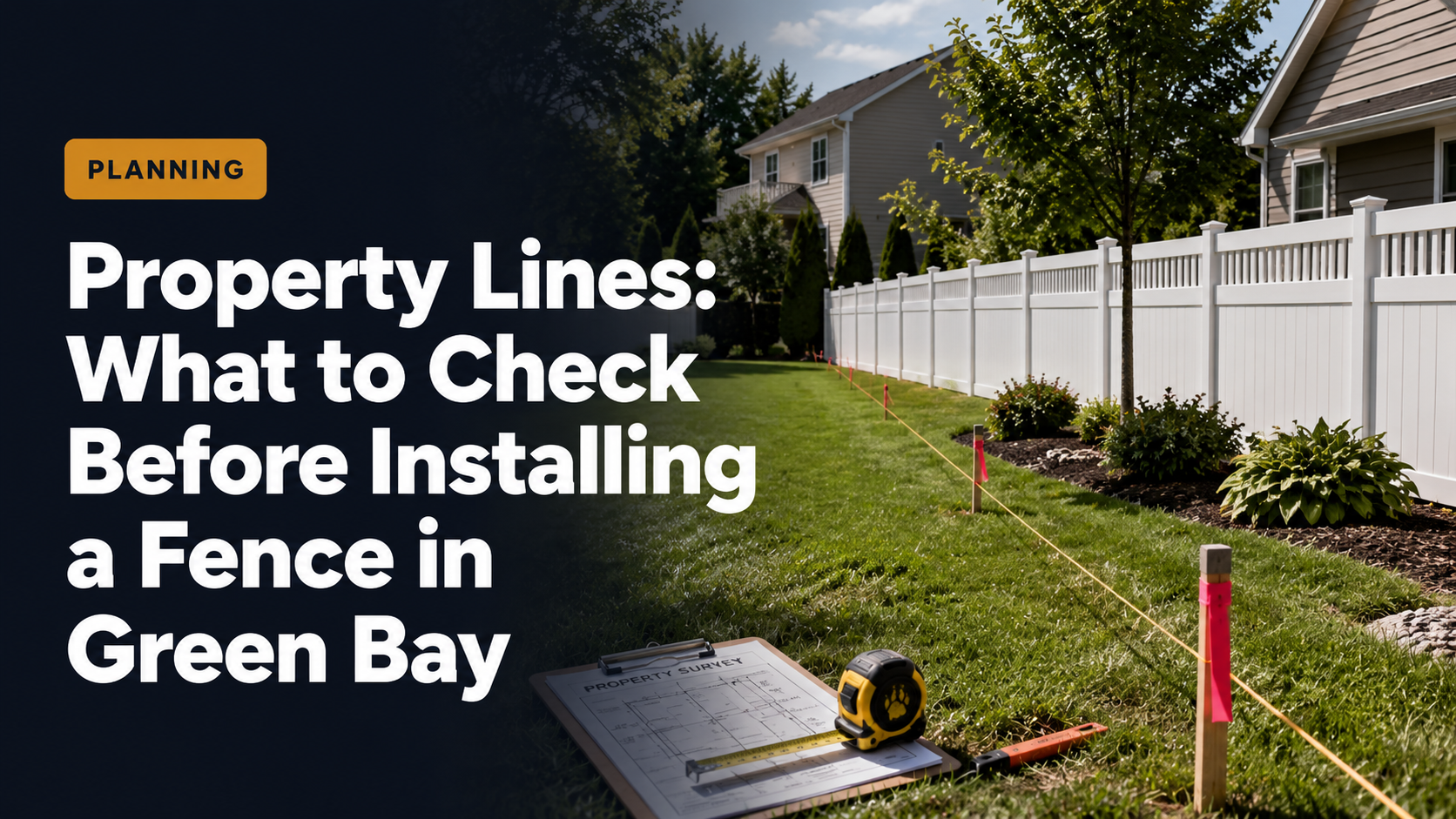
A permit is not the same thing as a survey. A permit may allow the city to review your proposed project, but it does not magically prove the property line.
If you are unsure where the property line is, get clarity before installing. Options may include:
- ✓Finding existing property pins.
- ✓Reviewing your plat of survey if you have one.
- ✓Hiring a surveyor.
- ✓Talking with your neighbor before work begins.
A fence built in the wrong place can create neighbor disputes and may need to be moved.
Height rules matter
Fence height rules are one of the biggest reasons to check local code before building. In many residential areas, backyard and side-yard fences are treated differently from front-yard or corner-lot fences.
For example, Green Bay’s zoning language has included limits for fences in required side and rear setbacks, with more restrictive limits for solid fences in front-yard or corner-side-yard areas. Pool fences may have separate rules. Commercial properties can also be different from residential properties.
The practical takeaway: do not assume a 6-foot privacy fence is allowed everywhere on the lot. It may be allowed in one area and restricted in another.
Corner lots need extra attention
Corner lots are often more complicated because the fence can affect visibility for drivers, cyclists, and pedestrians. A privacy fence near a street corner or driveway may be subject to stricter height or setback requirements.
If your property is on a corner, tell your contractor right away. The fence layout may need to change to stay compliant and safe.
Pools are different
Pool fencing is its own category because safety is involved. Gate hardware, latch height, openings, climbability, and fence height can matter. If you are fencing a pool, do not rely on general backyard fence assumptions. Confirm pool barrier rules before installation.
HOAs and subdivisions
Even if the city allows your fence, your subdivision or HOA might have additional rules. These can cover:
- ✓Approved materials.
- ✓Colors.
- ✓Heights.
- ✓Decorative style.
- ✓Which side faces outward.
- ✓Setbacks from sidewalks or shared spaces.
- ✓Whether chain link is allowed.
If you have an HOA, get approval before ordering materials.
Call before you dig
A fence project involves digging multiple holes. In Wisconsin, you should contact Diggers Hotline / 811 before digging so underground utilities can be marked. This is a critical step whether the project is DIY or contractor-installed.
Utility locates help prevent damage to gas, electric, communication, water, and other buried lines. Private lines may require separate locating. Examples can include lines to detached garages, sprinkler systems, invisible dog fences, or privately installed electrical runs.
What happens if you skip the permit?
Skipping the permit can create several problems:
- ✓The city may require corrections.
- ✓You may have to move or modify the fence.
- ✓A neighbor complaint can trigger inspection.
- ✓Unpermitted work can create issues during a sale.
- ✓Insurance or liability questions may become harder.
It is usually much cheaper to handle the permit correctly up front.
What should homeowners prepare before requesting an estimate?
Before asking for a quote, gather:
- ✓A rough sketch of where you want the fence.
- ✓Desired height and material.
- ✓Gate locations.
- ✓Photos of the yard.
- ✓Any HOA rules.
- ✓A survey or plat if available.
- ✓Notes about dogs, pools, slopes, drainage, or neighbor concerns.
This helps your contractor give better guidance and reduces surprises later.
Can Kodiak Built help with the process?
Yes. For fence projects in Green Bay and surrounding communities, Kodiak Built can help think through layout, material options, gate placement, utility locate timing, and the basic permit questions to ask. Final approval always depends on the city, municipality, and any HOA rules that apply to the property.
Bottom line
If you are planning a fence in Green Bay, assume you need to check the permit rules before work begins. A little planning can save a lot of rework.
A good fence project starts before the first post hole. It starts with a clear layout, the right material, utility locates, permit awareness, and a contractor who understands that doing it right matters.
Quick answers
Do I need a permit to build a fence in Green Bay?
In many cases, yes. If you are building or replacing a fence in the City of Green Bay, expect to deal with a fence permit — or at least confirm the requirement with the city — before work begins.
What information does a Green Bay fence permit ask for?
Typically the property address, fence location on the lot, height, material, total length, and a simple site plan — plus whether the fence sits near a street, corner, pool, or easement.
What happens if you build a fence without a permit?
The city can require corrections, you may have to move or modify the fence, and unpermitted work can surface as a problem during a home sale. Handling the permit up front is almost always cheaper.