On the edges of town — Suamico, Hobart, Pulaski, anywhere the fields meet the backyards — deer treat gardens as a buffet with poor security. If you grow anything edible on a rural or edge-of-town lot in Northeast Wisconsin, deer pressure isn't a possibility; it's a line item.
First, some honesty: nothing residential is truly deer-proof. But deer behavior is predictable, and the difference between a fence deer hop and a fence deer skip is well understood. Here's how to think about it — using ordinary, well-built fencing, deployed smartly.
Reading your deer pressure
Before choosing a strategy, spend a week noticing. Worn trails at the yard's edge, tracks in soft ground at dawn, hostas browsed to stubs, a browse line on the cedars — that's the traffic report. A lot with a nightly deer highway through it needs a different answer than one with occasional visitors, and fall and winter always raise the stakes as wild food gets scarce.
What actually deters deer
Height matters most
A healthy whitetail clears typical backyard fence heights without breaking stride — the fence that reliably holds a dog or defines a property line is, to a deer, a speed bump. Real deterrence starts where residential fencing usually stops, which is why deer strategy is less about buying a normal fence slightly taller and more about changing the problem. That's not a knock on ordinary fences — it's a reason to be honest about the mission before picking one.
They won't jump what they can't read
Deer are cautious athletes. They hate jumping into a space they can't see — no visible landing zone, no jump. That's why a solid privacy fence deters far out of proportion to its height: a deer that could physically clear it usually won't, because the other side is a mystery. The barrier is behavioral as much as physical. Solid fencing also hides the reward — a deer that can't see the garden has less reason to test the fence at all.
Mess with their depth perception
The classic garden trick: two modest barriers a few feet apart. Deer judge distance poorly and refuse jumps they can't measure, so a double layer lets two short fences do the work of one tall one — handy when you'd rather not build a tower around the tomatoes.
Fence the garden, or fence the yard?
For pure crop defense, fencing just the garden is usually the efficient play: a small, tight enclosure concentrates height and cost exactly where the pressure is, and a compact footprint makes taller fencing feel less imposing. Fencing the whole yard earns its keep when you want everything protected — plantings, shrubs, the dog — and you'd rather the property line do the work.
There's a middle path, too: fence the yard for the family and the dog at normal height, then harden just the garden inside it. Two modest fences beat one compromised one.
How standard fencing covers the deer job
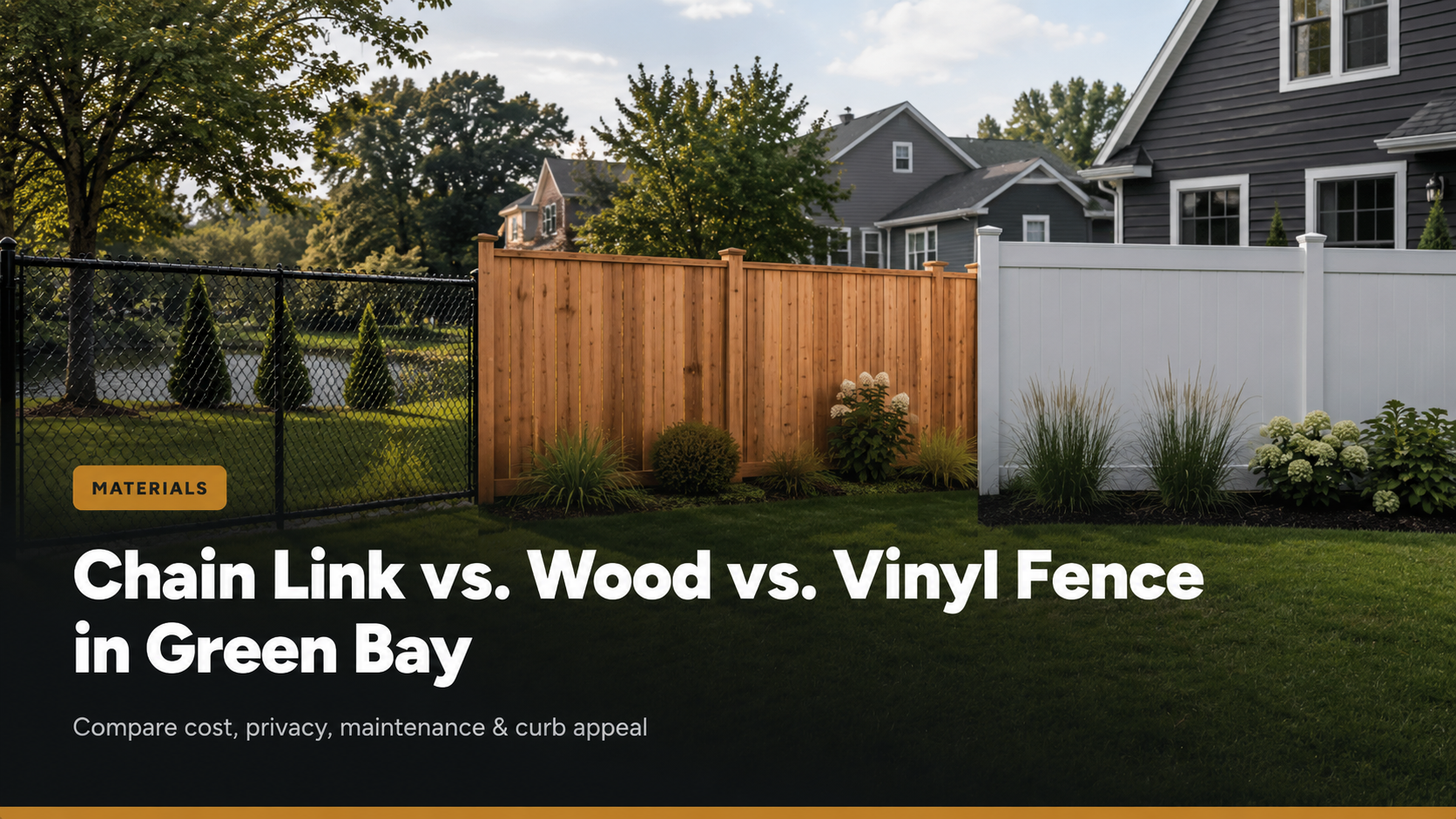
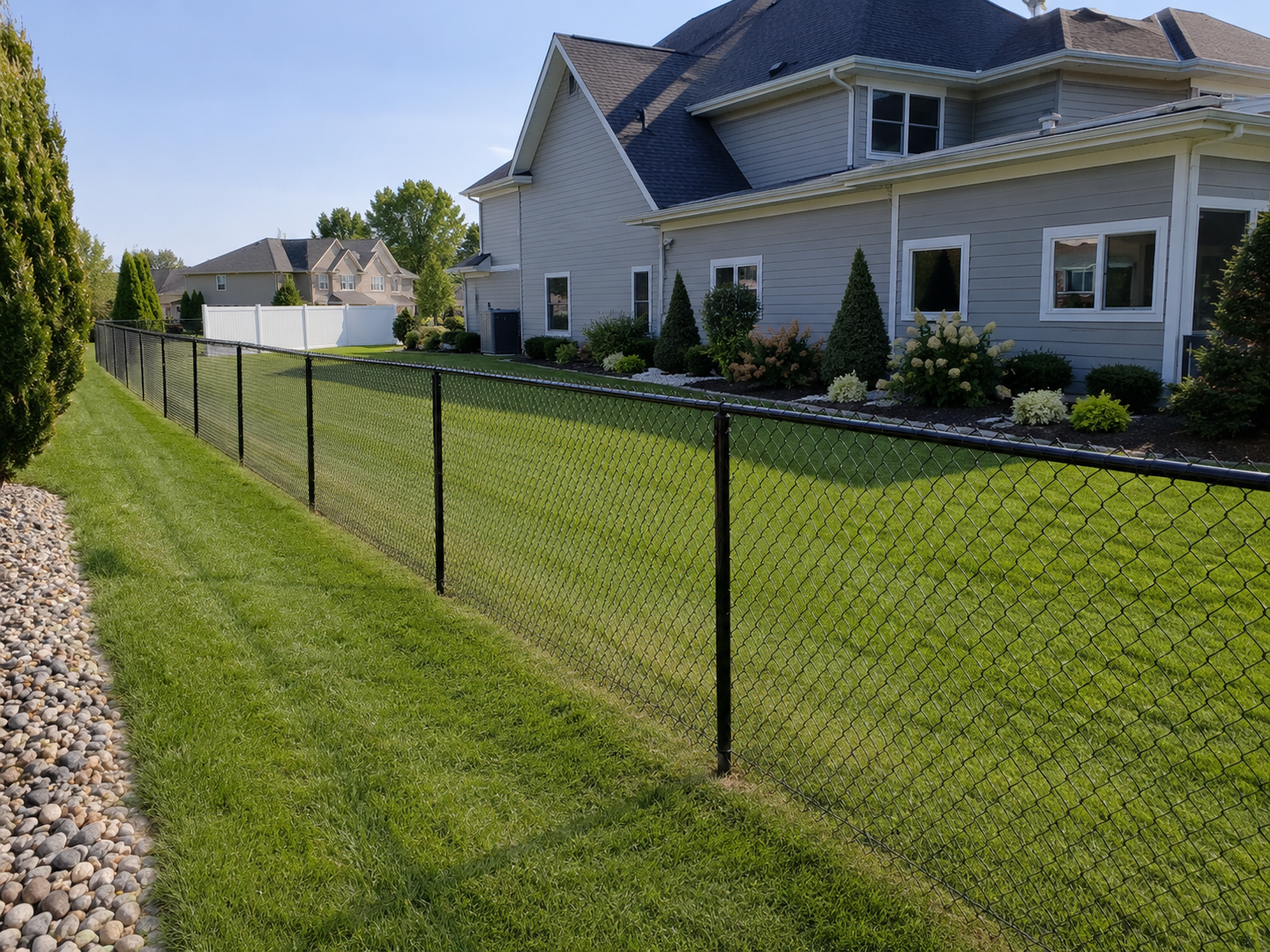
Chain link is the tall-open option: heights run from 3 feet residential up to 12 feet on commercial builds, which is the territory where jumping genuinely stops being worth a deer's effort. For garden enclosures and orchard corners under real pressure, a tall open fence is the direct answer.
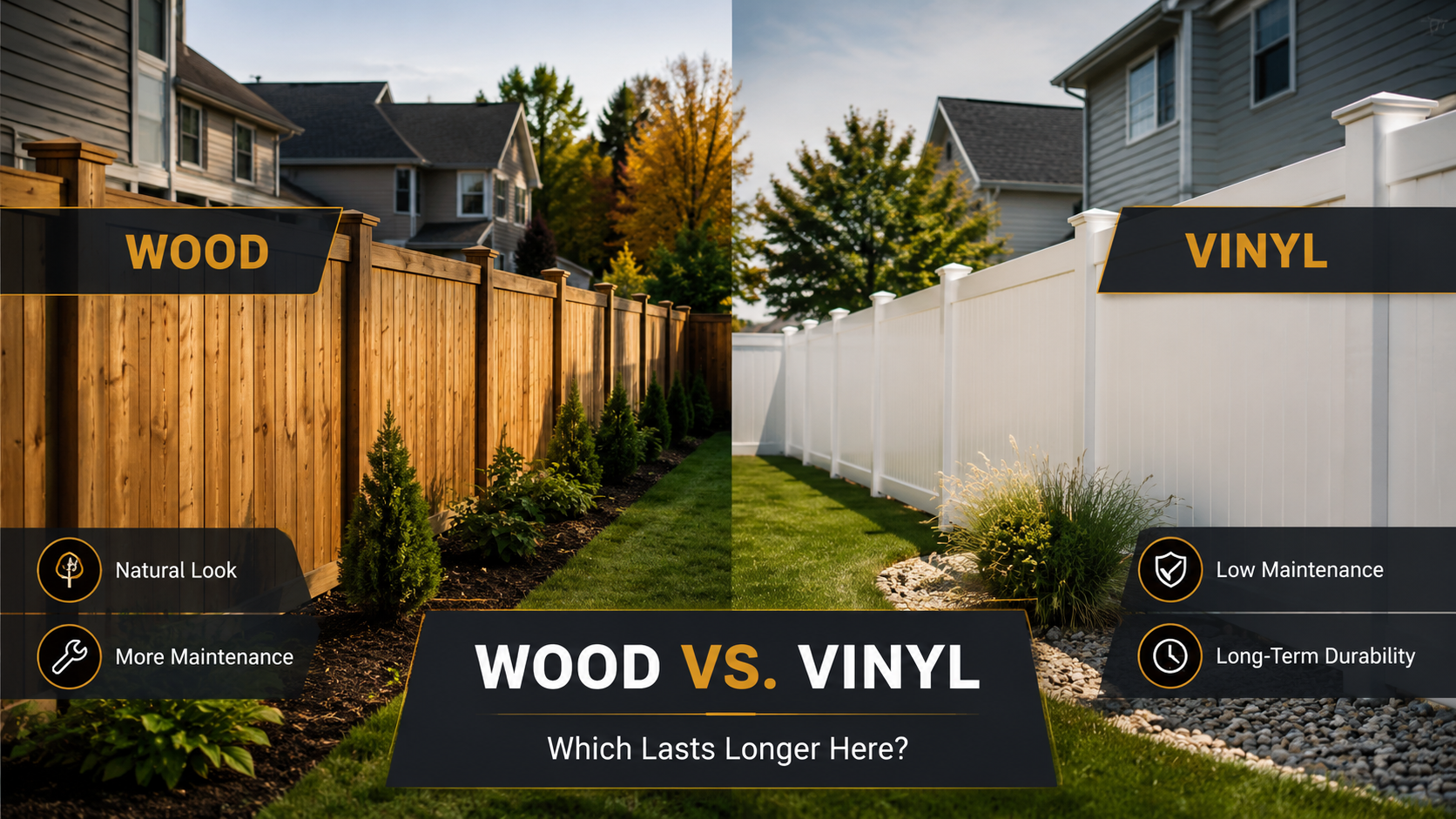
A wood privacy fence is the visual-block strategy: standard-height solid fencing that most deer decline to jump on principle, while also doing everything else a privacy fence does. For whole-yard protection on an edge-of-town lot, it's usually the more livable answer than anything extremely tall.
The garden enclosure, done right
For a dedicated garden fence, think small and tall rather than big and medium: a tight enclosure around the beds, height as the headline feature, a gate that closes as reliably as it opens, and no gaps at the corners. Tall open-mesh enclosures are the standard play here — the openness keeps sun and airflow on the plants while the height does the deterring — with the double-layer trick added on the approach side if the pressure is severe.
Don't forget the fourth side
The most common deer-fence failure we hear about isn't a jump — it's a gate left open, a gap where the fence meets the garage, or a low spot under the line. Deer patrol edges nightly and remember what they find. Whatever strategy you pick, it's only as good as its worst three feet. Walk the line monthly during the growing season the way the deer walk it nightly.
The honest limits
A hard winter rewrites deer manners — genuinely hungry deer test barriers that summer deer respect. Deterrence is about stacking the odds: height or visual block, tight lines, closed gates, and a garden layout that doesn't park the salad bar against the property line. Pair the fence with unglamorous discipline — harvest ripe produce promptly, close the gate every time — because deer are creatures of routine: break the routine early and they reroute; reward it once and they subscribe.
What about repellents and scare tactics?
Sprays, motion sprinklers, and lights all work — briefly, sometimes, until the deer decide otherwise. They're fine as a second layer and hopeless as a first one, because they ask a hungry animal to stay scared of something that never actually stops it. A physical barrier doesn't need the deer's cooperation. That's the whole argument for fencing.
If the same fence needs to keep a dog in while keeping deer out, design for the dog first — containment planning is far less forgiving than deterrence. A fence that fails a deer costs you tomatoes; a fence that fails a dog costs you the dog.
Bottom line
Deer defense in Northeast Wisconsin is a strategy question, not a product question: tall and open where the crops need hard protection, solid where you want the whole yard quietly skipped, doubled up where neither wants to be huge. All of it can be built from ordinary fencing installed like it matters.
Rural lot, garden on the line? Tell us about the property and we'll walk you through the acreage options.
Quick answers
How tall does a fence need to be to keep deer out?
Taller than most yard fences — a healthy whitetail clears typical residential heights without much effort. The practical strategies are a tall open fence, a solid fence deer can't see beyond, or a double-layer setup around the garden itself.
Do privacy fences stop deer?
Often, yes. Deer are reluctant to jump into a space they can't see, so a solid privacy fence deters far out of proportion to its height — it works as a behavioral barrier more than a physical one.
Can I fence just the garden instead of the whole yard?
Absolutely, and for pure crop protection it's usually the efficient move. A small, tight enclosure concentrates the height and the cost exactly where the deer pressure is.