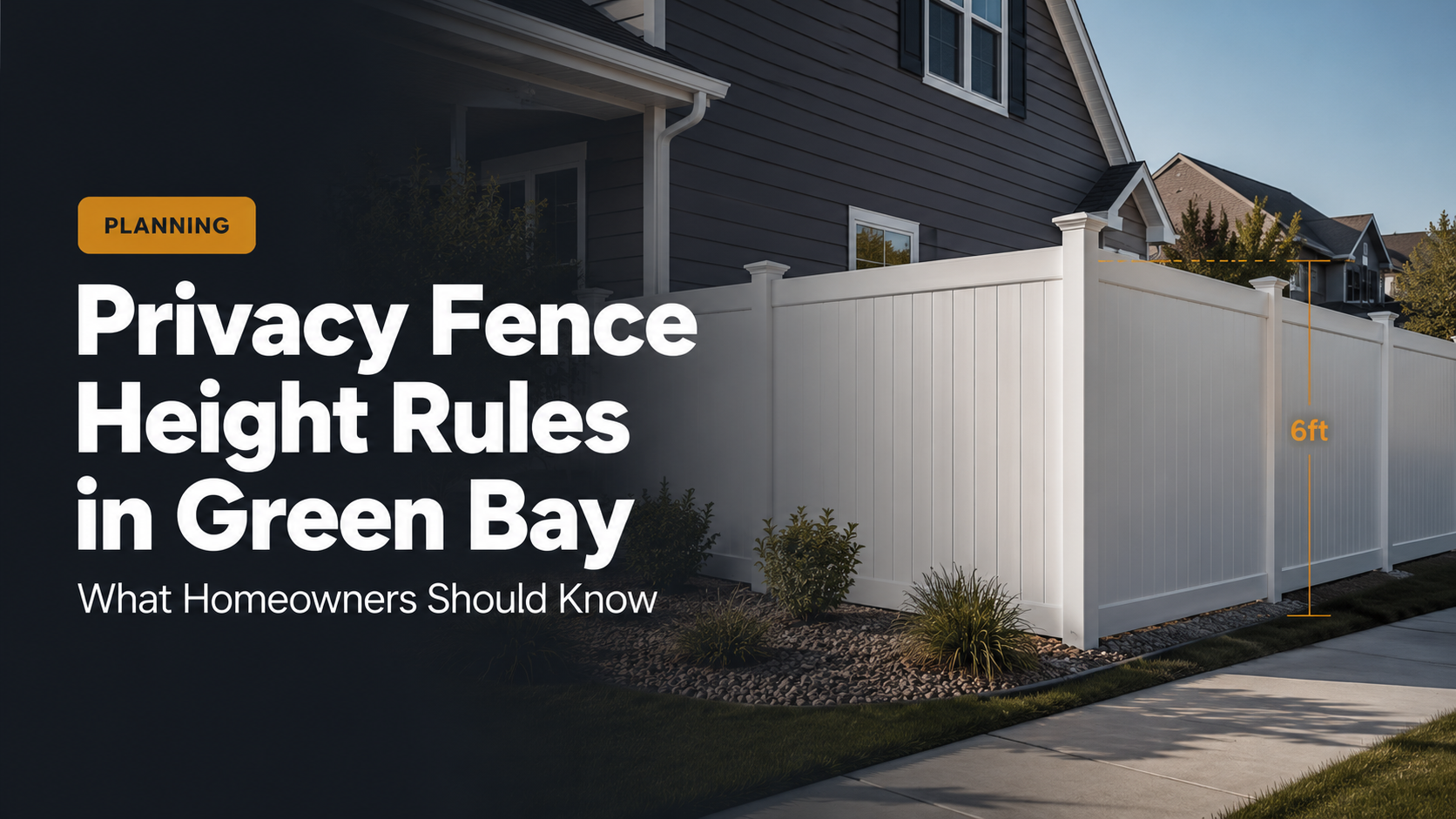
A 6-foot privacy fence is one of the most common requests from Green Bay homeowners. It can make a backyard feel quieter, safer, and more usable. But fence height rules are not the same for every part of a property.
Before you order materials or approve a layout, confirm what height is allowed for your specific lot.
Local note: Fence rules, permit fees, HOA rules, utility-locate requirements, and product availability can change. Always confirm current requirements with the City of Green Bay, your municipality, your HOA, and Diggers Hotline before starting work.
Why height rules matter
Fence height rules help balance privacy, safety, neighborhood appearance, and visibility. A tall solid fence in the backyard is one thing. A tall solid fence near a front sidewalk, driveway, or street corner is another.
If a fence is too tall in the wrong area, the city may require changes.
Backyard privacy fences
In many residential situations, the backyard is where taller privacy fencing is most appropriate. This is where homeowners typically want privacy for patios, dogs, pools, kids, and outdoor living.
However, “backyard” is not always as simple as it sounds. Required setbacks, corner lots, through lots, and unusual property shapes can affect what is allowed.
Front yards and corner side yards
Front-yard and corner-side-yard areas are often more restricted, especially for solid fences. The reason is visibility. Drivers and pedestrians need clear sight lines near streets, intersections, and driveways.
A fence layout that works on an interior lot may not work the same way on a corner lot.
Pool fences may have different rules
Pool fencing is about safety, not just privacy. Pool barriers may have rules for height, gate hardware, openings, latch placement, and climbability. If you are installing a fence around a pool, confirm the pool-specific rules before selecting the fence.
HOA rules can be stricter than city rules
A fence may satisfy city requirements and still violate HOA rules. HOAs often regulate:
- ✓Maximum height.
- ✓Approved materials.
- ✓Colors.
- ✓Style.
- ✓Finished side orientation.
- ✓Setbacks from sidewalks.
- ✓Whether chain link is allowed.
Always check HOA approval before work begins.
How height affects cost and strength
Taller fences cost more because they use more material and may require stronger posts. They also catch more wind.
When planning a taller privacy fence, consider:
- ✓Post depth.
- ✓Post spacing.
- ✓Gate size.
- ✓Wind exposure.
- ✓Slope transitions.
- ✓Material strength.
- ✓Soil conditions.
A fence that is technically allowed still needs to be built correctly.
What about lattice or decorative tops?
Some homeowners want a 6-foot fence plus a decorative top. Whether that counts toward total height depends on local rules and how the fence is measured. Do not assume decorative features are exempt.
Ask before building.
How to plan the right height
Start with your reason for the fence:
Privacy
A 6-foot privacy fence is often the goal, especially near patios, pools, or close neighbors.
Dogs
Height depends on the dog. Some dogs need more than a short boundary fence.
Curb appeal
Shorter decorative fencing may look better in front or side-yard areas.
Security
Commercial or security fencing may involve different materials and rules.
Bottom line
Privacy fence height rules are property-specific. Before installing, confirm local code, HOA rules, corner-lot visibility, pool requirements, and permit needs.
Kodiak Built can help design a fence layout that gives you privacy while respecting the rules that apply to your property.
Quick answers
How tall can a privacy fence be in a Green Bay backyard?
A 6-foot privacy fence is one of the most common requests, and the backyard is usually where taller privacy fencing is most appropriate. The allowed height is property-specific, though — setbacks, corner lots, through lots, and unusual property shapes can all change what is permitted, so confirm the rules for your lot before ordering materials.
Are front-yard fences more restricted than backyard fences?
Often, yes — front-yard and corner-side-yard areas are usually more restricted, especially for solid fences. The reason is visibility: drivers and pedestrians need clear sight lines near streets, intersections, and driveways.
Does a lattice or decorative top count toward fence height?
It depends on local rules and how the fence is measured, so do not assume decorative features are exempt. If you want a 6-foot fence plus a decorative top, ask before building.