Very few yards are actually flat — Green Bay just looks flat until you put a string line on it. The moment a fence meets real grade, there are exactly two ways to handle it: rack the panels or step them. It's a decision most homeowners don't know exists until the fence is half built, and by then it's been made for them.
Better to make it on purpose. Here's how the two approaches work, which materials do which, and where each one wins.
Racking: the fence follows the ground
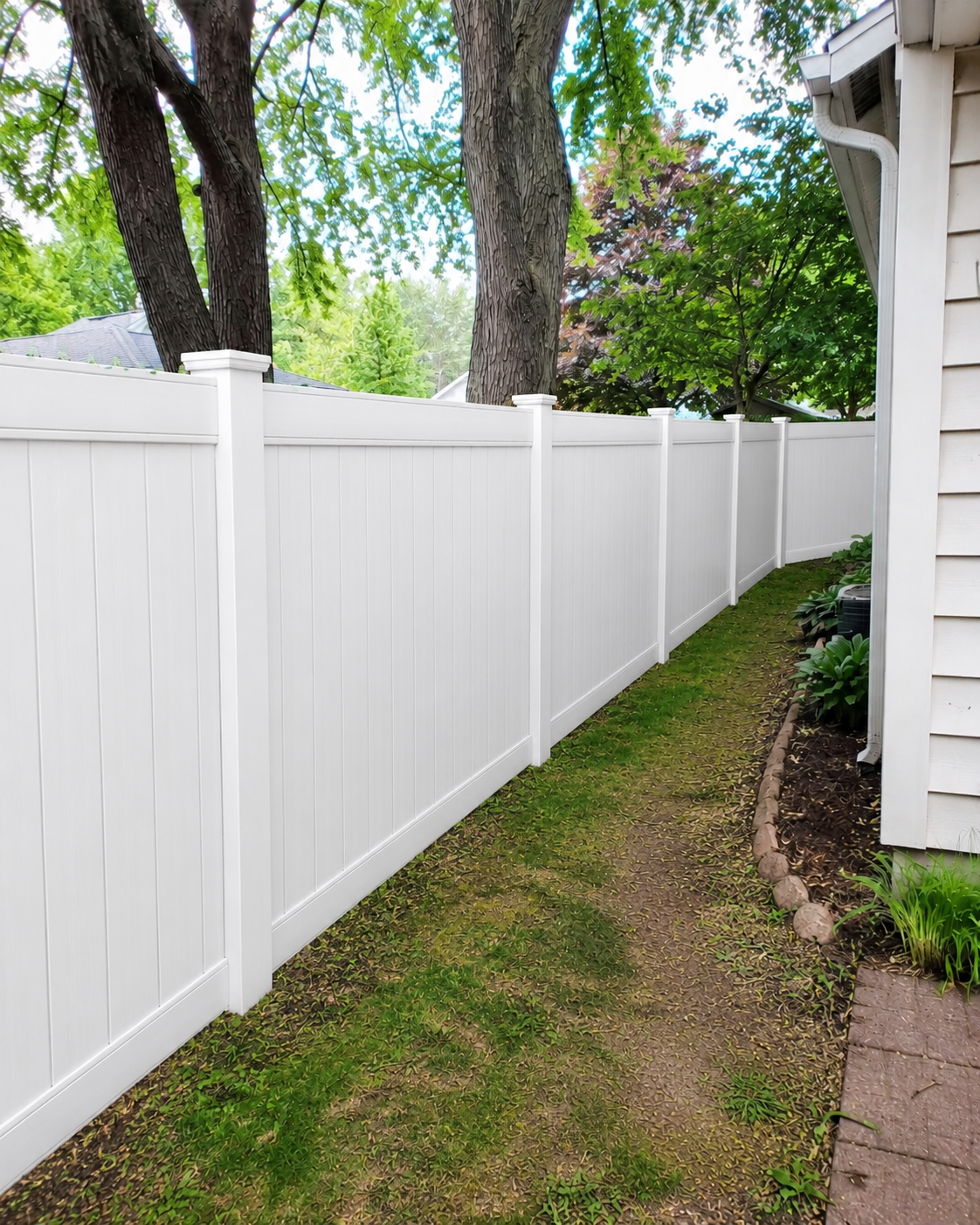
A racked panel flexes into a slight parallelogram — the pickets stay vertical while the rails tilt to match the slope, so the bottom of the fence runs parallel to the ground the whole way down. The result is one continuous line that hugs the grade with no gaps underneath. On a rolling yard, it looks like the fence grew there. There are limits — every racked system has a maximum slope it can follow before the geometry runs out — which is why the material choice and the grade measurement happen together.
Stepping: the panels stay level
A stepped fence keeps every panel square and level and drops down at the posts, descending the slope like a staircase. The lines are crisp and architectural — and under every panel, the ground falls away, leaving a triangular gap that grows with the grade. Doing steps well is a craft of its own: consistent drops at each post read as rhythm, random drops read as a mistake.
Which materials do which
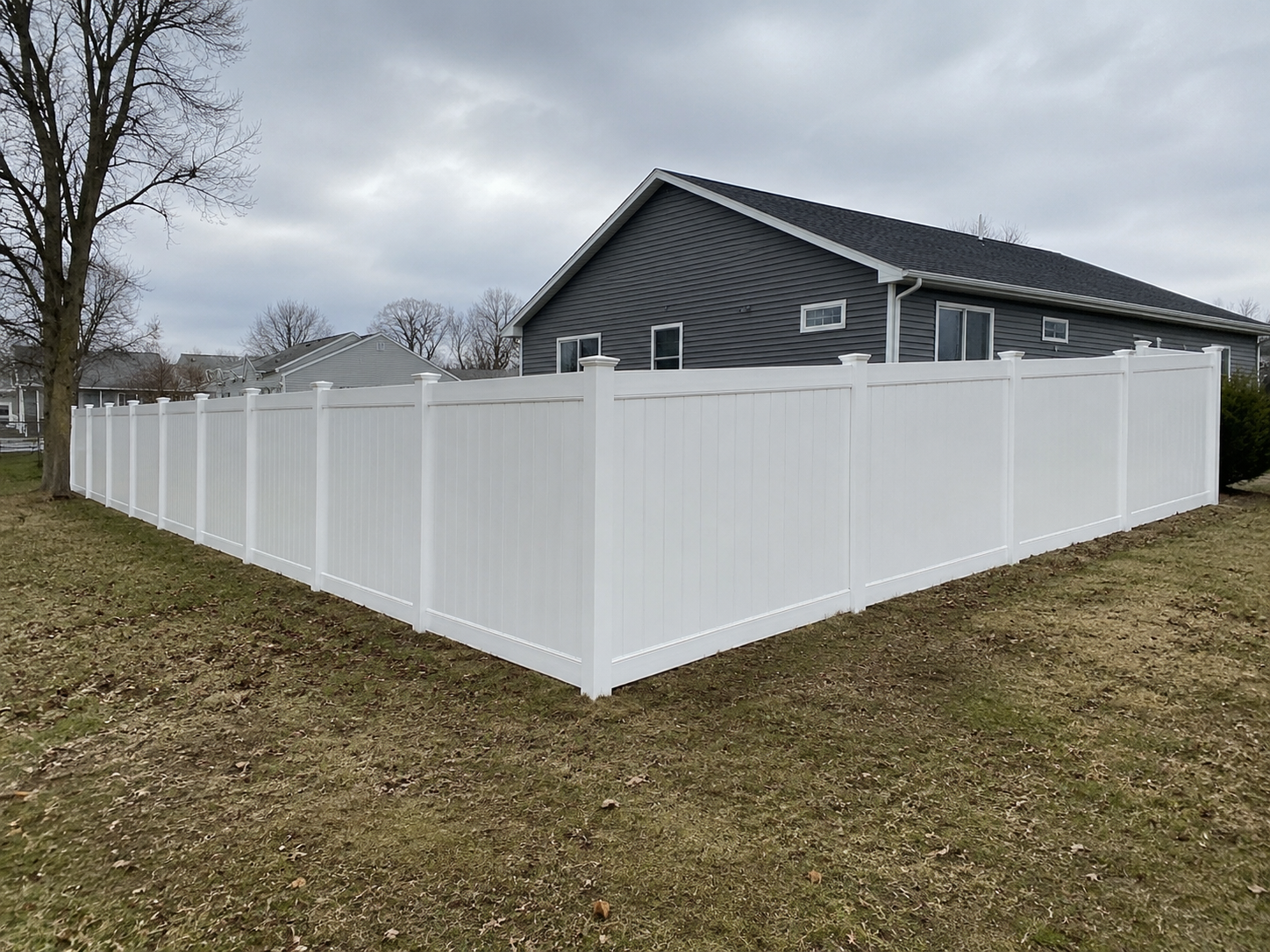
Aluminum is the racking champion — its panels are engineered to rack far and clean, which is a big part of why it's the go-to for rolling lots. Chain link doesn't even need the concept; the mesh simply follows the grade. Vinyl racks within limits that depend on the panel design — modest slopes yes, steep ones no. Solid wood privacy is usually stepped, or custom-cut board by board to follow the ground, which is the premium move.
Mixing methods on one property
This isn't a whole-yard vow. Plenty of our builds rack the rolling side yard, step the straight run along the back, and keep every panel square across the flat — the ground votes section by section. What matters is deciding it panel by panel on a site walk, with a string line telling the truth about the grade, instead of discovering it when the third panel won't sit right.
When racking wins
Rolling, continuous grades; any fence with a containment job; anyone allergic to the gap-toothed look. The deciding factor is usually the bottom edge: racked fencing keeps ground clearance tight and consistent for the entire run, which is exactly what pets and privacy both want. It's also the quiet reason aluminum shows up on so many rolling Wisconsin lots that could have afforded anything.
When stepping wins
Solid panelized styles that can't rack, formal looks where dead-level lines matter, and slopes steep enough to exceed a material's racking limit. A stepped fence on a straight, steady grade is a genuinely handsome thing — the stair rhythm reads intentional. The gaps are the tax.
The gap problem
Those triangles under a stepped fence are exit doors: dogs find them, rabbits commute through them, and soccer balls emigrate. The fixes are standard — custom-cut bottom boards that follow grade, added pickets at the ground line, stone or timber along the gap — and they belong in the fence design, not on a punch list. If your dog already treats the bottom of the fence as a project, our dig-proofing guide is the companion read.
Water runs downhill — plan for it
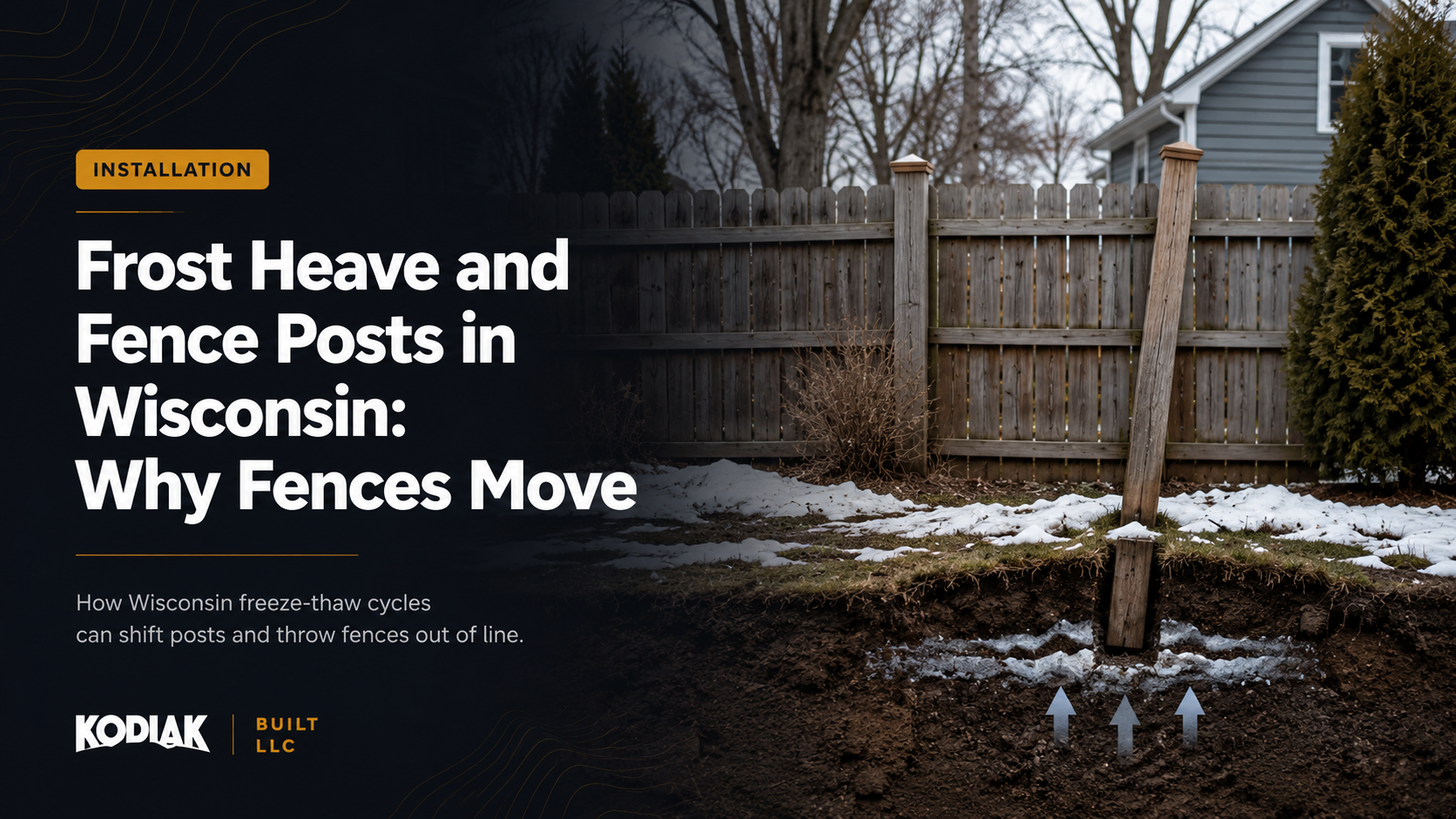
A slope concentrates runoff, and a fence line running across one becomes a small dam. Washouts along and under the fence open gaps that weren't there in July, and soil that stays saturated works footings harder through every freeze-thaw cycle. On steeper yards, where the water goes is part of the fence plan. If the yard already has a swale or an obvious runoff path, the fence should cross it on purpose — a panel designed over a swale, with clearance and armor at the ground line, beats a panel that dams it by accident.
Posts on a grade
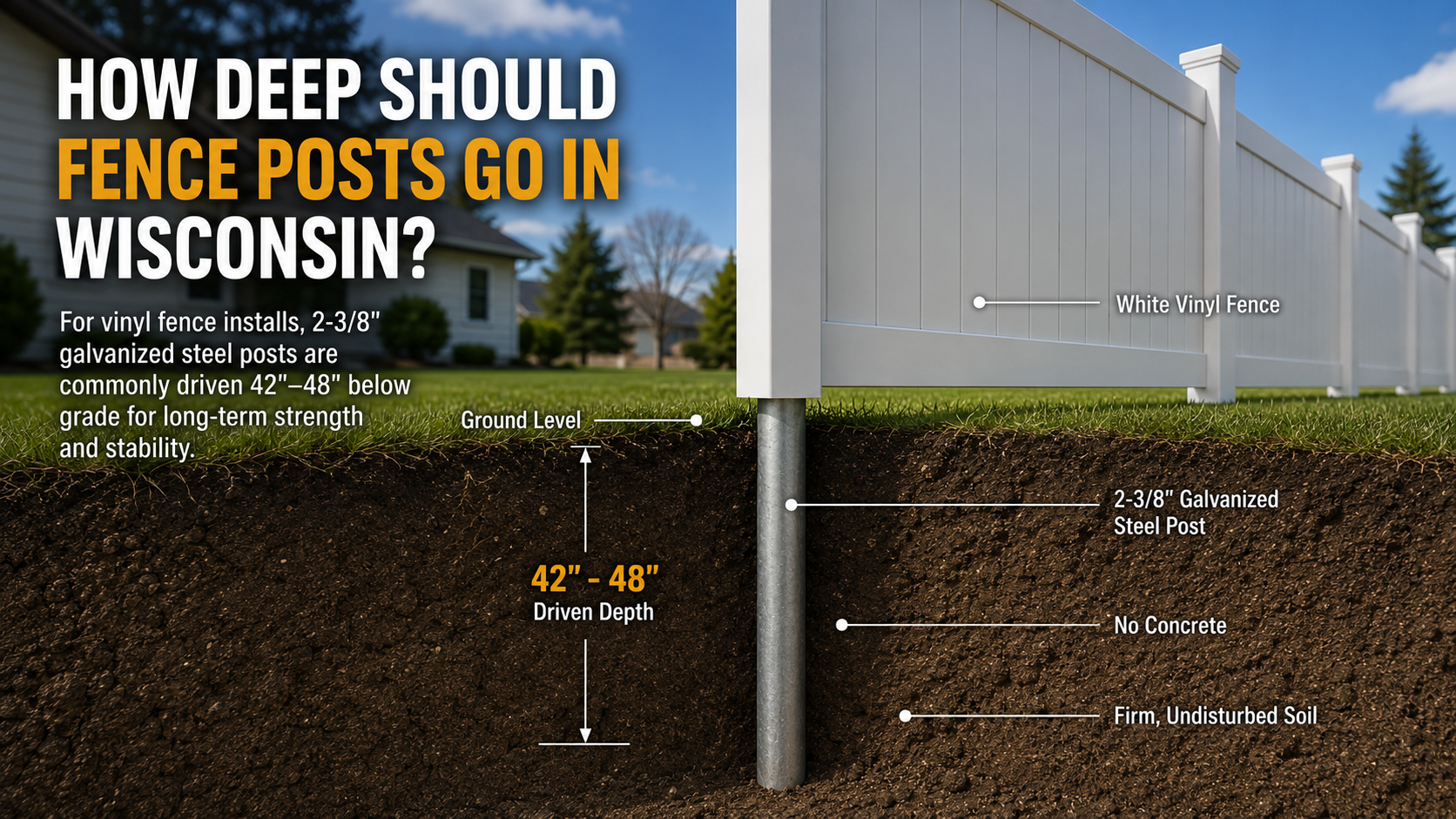
Post depth is measured from the actual grade at each post, not from the top of the hill — every post on a slope needs its full depth below its own ground line, in concrete, below frost. Slopes also expose downhill footings to erosion, one more reason post depth is not the place to economize. On steep runs, expect more posts than the same footage would need on the flat — shorter spans follow grade more faithfully, whichever method wins.
Gates go on the flat
Gates hate slopes. A gate swinging uphill runs out of ground clearance halfway open, a gate swinging downhill leaves a growing gap under its bottom rail, and the latch geometry fights you forever. Put gates at the flattest point on the line, full stop — and if the layout truly forces a sloped gate, it needs to be designed for the slope, not discovered on it.
What slopes do to the budget
Grade adds work, and it's honest work: more careful layout, sometimes more posts, custom cutting on stepped wood, gap treatments along the bottom. On a quote it should show up as visible line items tied to your actual yard, not a vague terrain surcharge. A builder who walked the slope can tell you exactly where the money goes; a builder who didn't, can't.
Comparing quotes on a sloped yard? Ask each builder the same two questions: rack or step, and how do you handle the bottom edge? If the answer doesn't reference your actual grade, it was decided in the truck.
Bottom line
Slopes don't make fences hard — they make decisions matter. Racking follows the land and seals the bottom line; stepping keeps panels square and needs its gaps closed. The right answer comes off a string line in your yard, not off a brochure.
Sloped yard, big plans? Get a free quote and we'll walk the grade with you before anyone picks a method.
Quick answers
What's the difference between racking and stepping a fence?
Racked panels flex into a slight parallelogram so the bottom of the fence follows the ground; stepped panels stay level and drop down at each post like a staircase, leaving triangular gaps underneath. Racking hugs grade, stepping keeps every panel square.
Which fence styles rack best on a slope?
Aluminum racks the farthest and cleanest, chain link simply follows the grade by nature, and vinyl racks within limits that depend on the panel design. Solid wood privacy is usually stepped or custom-cut board by board to follow the slope.
How do you close the gaps under a stepped fence?
Custom-cut bottom boards that follow the grade, added pickets at the ground line, or stone and timber along the gap — chosen by gap size and what the fence needs to hold in. For pets, closing those triangles is part of the design, not an afterthought.