If your fence looked straight in fall but crooked in spring, frost heave may be part of the problem. In Wisconsin, repeated freezing and thawing can move soil, loosen posts, and slowly push fences out of alignment.
Frost heave is one reason a fence can fail even when the material itself still looks good.
What is frost heave?
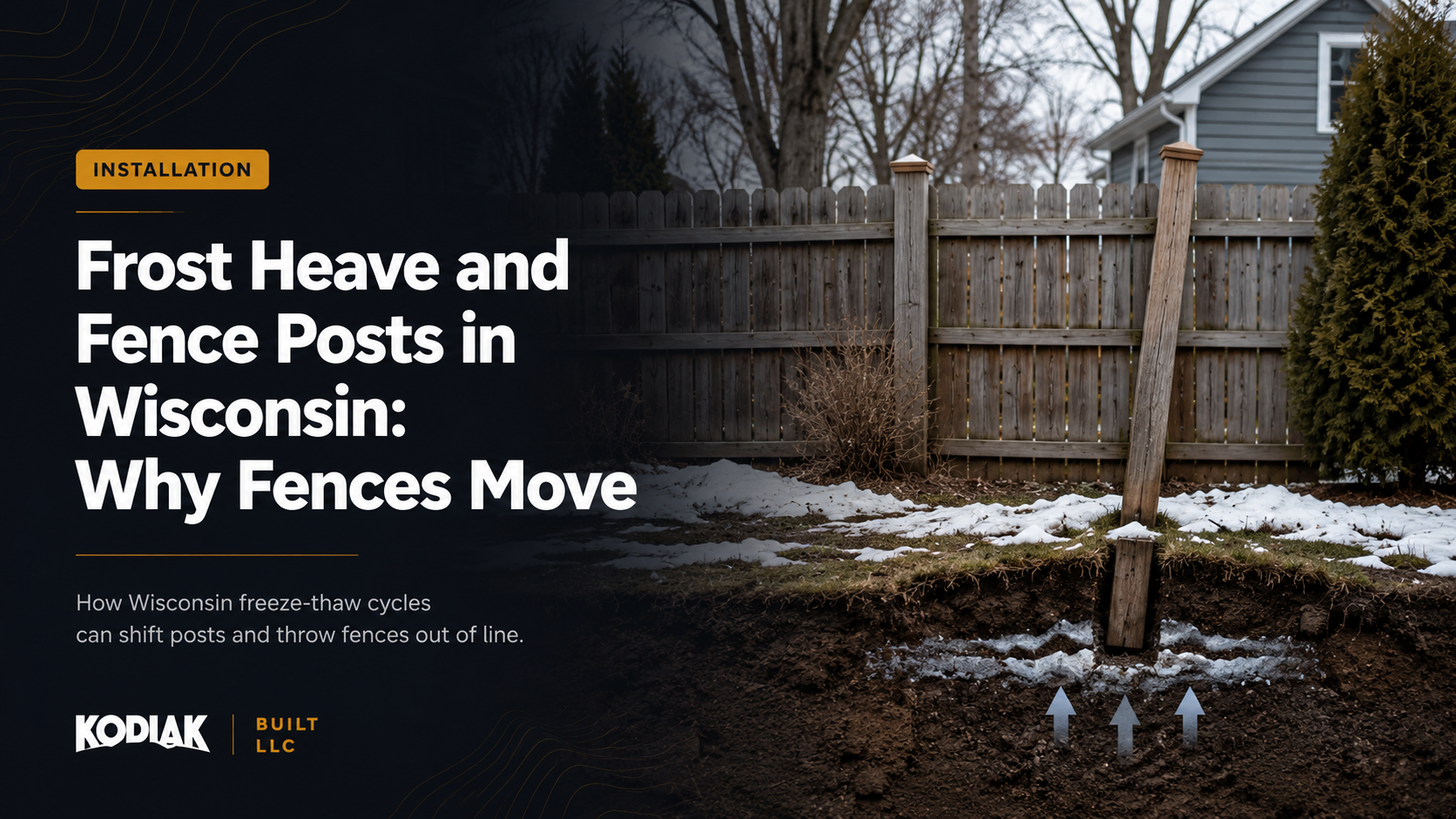
Frost heave happens when moisture in the ground freezes and expands. As the soil expands, it can lift or push against anything in it, including fence posts. When the ground thaws, the soil settles again, but not always evenly.
Over time, this movement can:
- ✓Push posts upward.
- ✓Loosen soil around posts.
- ✓Tilt fence sections.
- ✓Cause gates to sag or rub.
- ✓Create waves in a fence line.
Why Wisconsin fences are vulnerable
Green Bay-area fences face multiple freeze-thaw cycles, wet springs, snowmelt, clay pockets, and changing soil moisture. A shallow post may not have enough stable ground around it to resist movement.
The taller and more solid the fence, the more the problem matters. Privacy fences catch wind, which adds stress to posts already weakened by soil movement.
Soil type matters
Sandy, well-drained soil behaves differently from clay-heavy or wet soil. Clay and silt can hold moisture and expand more during freezing. Fill areas and disturbed soil can also be less stable.
A good installer pays attention to:
- ✓Wet spots.
- ✓Drainage patterns.
- ✓Clay or silt soils.
- ✓Low areas.
- ✓Slopes.
- ✓Previous fence failures.
Post depth matters
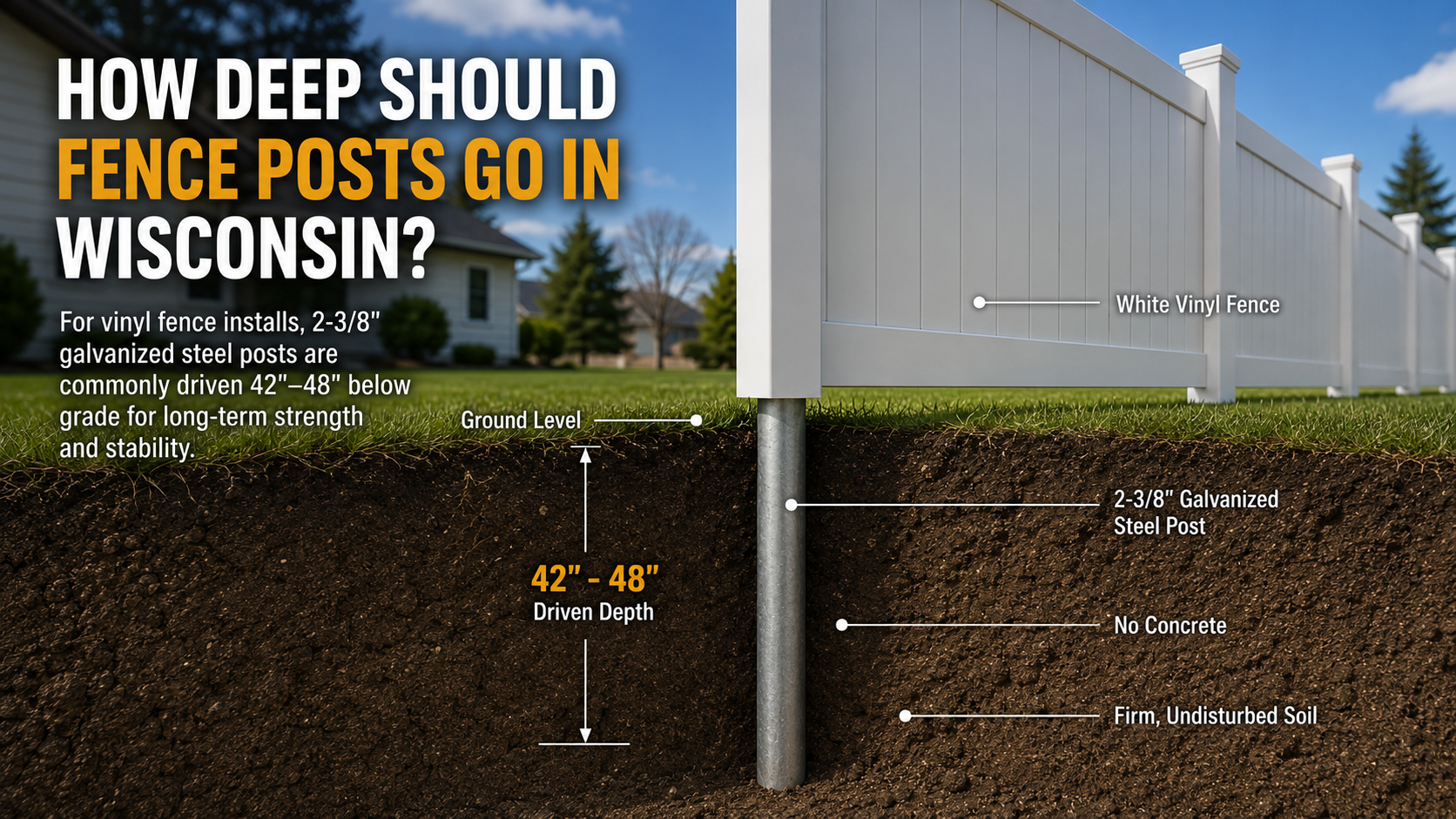
Deeper posts are more stable because they reach more consistent soil and create more underground resistance. In Wisconsin, many fence projects should be planned with depth in mind, especially privacy fences, gates, corners, and exposed areas.
A shallow post may save labor on day one, but it can cost more later.
Concrete can help or hurt
Concrete is common, but it must be used correctly. A large concrete collar near the top of the hole can give frost more surface area to grab and lift. Poor drainage around concrete can also trap water.
A better installation thinks about the full post system:
- ✓Hole depth.
- ✓Hole shape.
- ✓Drainage.
- ✓Backfill or concrete approach.
- ✓Post material.
- ✓Soil type.
- ✓Gate loads.
Why gates show problems first
Gates often reveal frost movement before the rest of the fence. A gate needs precise alignment. If one post moves even slightly, the latch may miss, the gate may drag, or the gap may change.
That is why gate posts should be planned more carefully than basic line posts.
Can an old heaving fence be fixed?
Sometimes. If only one or two posts moved, they may be reset or replaced. If the whole fence was installed shallow or the soil conditions are poor, repeated repairs may not solve the root problem.
Repair decisions depend on:
- ✓Age of the fence.
- ✓Material condition.
- ✓Number of bad posts.
- ✓Gate alignment.
- ✓Soil and drainage.
- ✓Whether the fence was properly installed originally.
How to reduce frost heave risk
A better fence installation may include:
- ✓Deeper posts.
- ✓Stronger gate and corner posts.
- ✓Proper drainage.
- ✓Quality materials.
- ✓Correct backfill or concrete technique.
- ✓Careful layout in wet areas.
- ✓Avoiding snow pile pressure against the fence.
No contractor can control winter, but good installation reduces risk.
Bottom line
Frost heave is one of the reasons Wisconsin fences need to be built differently than fences in warmer climates. A fence that looks good on install day still needs underground strength to survive freeze-thaw cycles.
Kodiak Built designs fence installations with Wisconsin conditions in mind, from post depth to gate support to long-term alignment.
Quick answers
What is frost heave?
Frost heave happens when moisture in the ground freezes and expands, lifting or pushing against anything in the soil — including fence posts. When the ground thaws, the soil settles again, but not always evenly.
Why is my fence leaning after winter?
If a fence looked straight in fall and crooked in spring, frost heave is often part of the problem. Wisconsin's repeated freeze-thaw cycles can push posts upward, loosen the soil around them, tilt sections, make gates sag or rub, and put waves in a fence line.
Can a heaved fence post be fixed?
Sometimes. If only one or two posts moved, they can often be reset or replaced, but if the whole fence was installed shallow or the soil conditions are poor, repeated repairs may not solve the root problem.