In Northeast Wisconsin, fence post depth is not a minor detail. It is one of the biggest differences between a fence that still looks straight years from now and a fence that starts leaning, lifting, or opening up at the gate after a few freeze-thaw cycles.
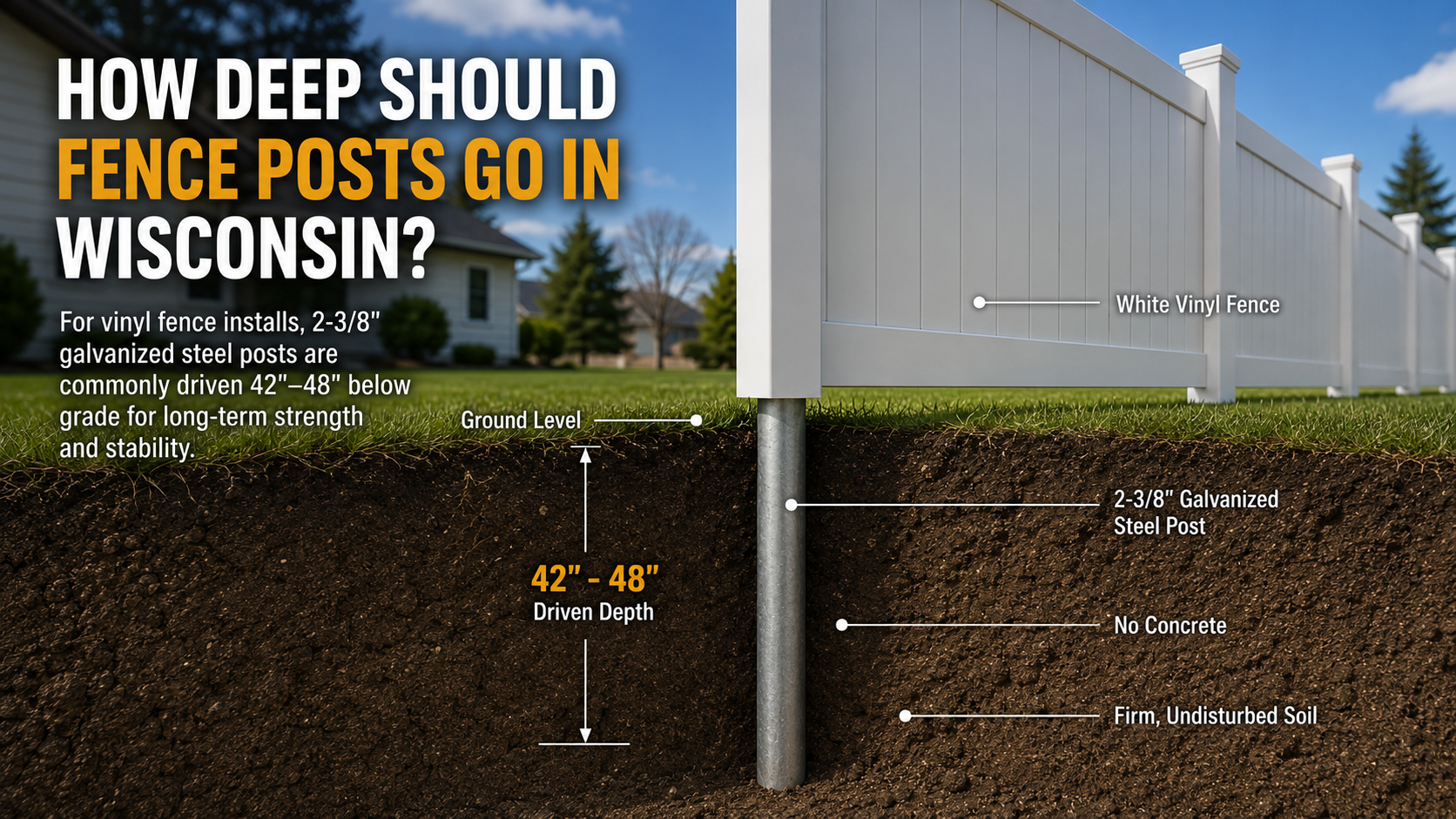
The short answer: many Wisconsin fence posts should be set deeper than a quick weekend install would suggest. A common professional target is roughly 36 to 48 inches below grade, depending on fence height, soil, exposure, material, and whether the post is carrying a gate or corner load. In colder areas and difficult soils, deeper is often better.
The more useful answer is that post depth should be designed around the conditions on your property, not just a one-size-fits-all number.
Why Wisconsin fences need deeper posts
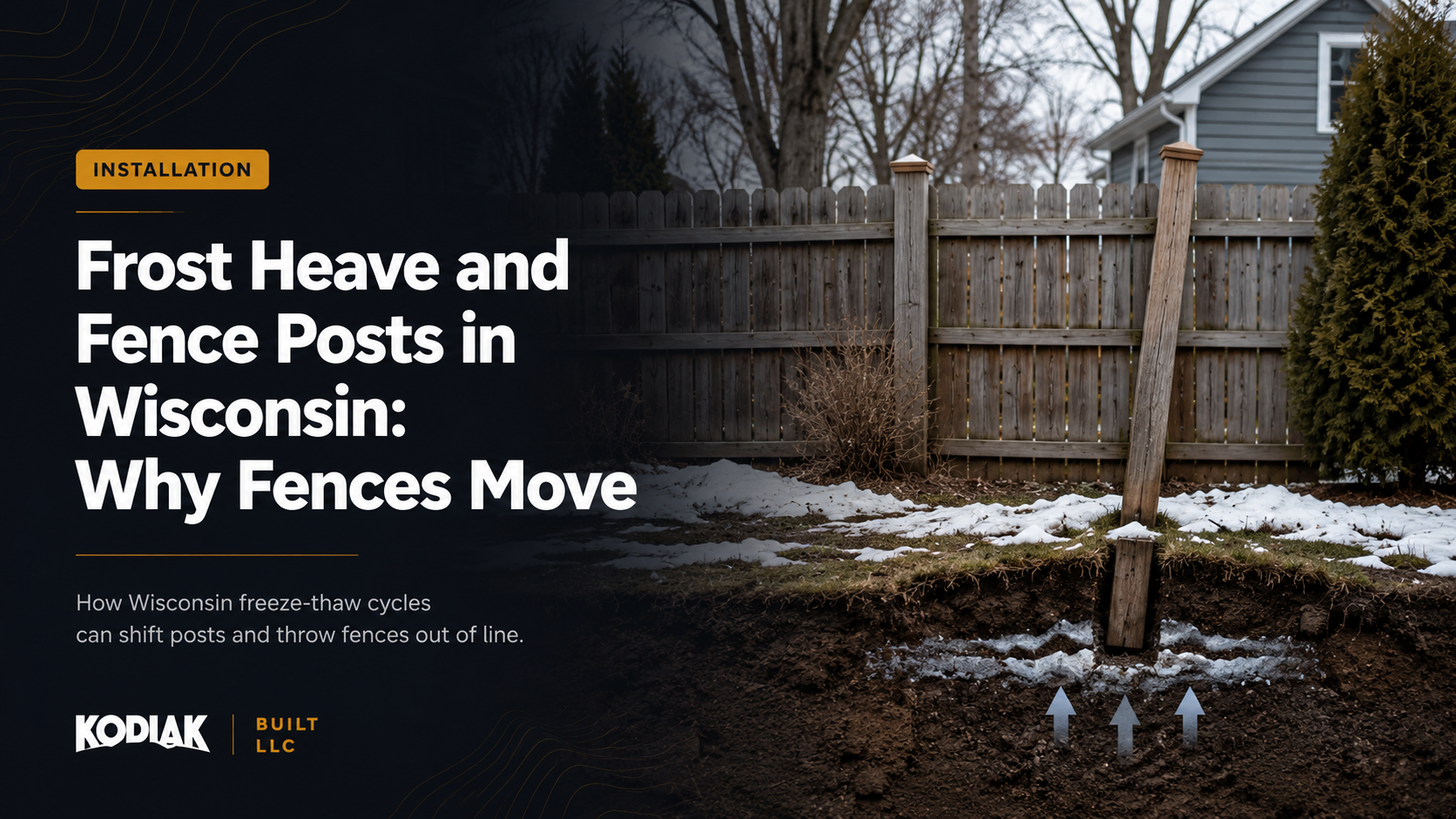
Green Bay and Northeast Wisconsin deal with frost, snow, heavy spring moisture, wind, and soil movement. When wet soil freezes, it expands. When it thaws, it settles. That repeated movement can push shallow posts upward or loosen the soil around them. This is called frost heave, and it is one of the most common reasons fences shift out of alignment.
A shallow post might look fine on day one. The problem usually shows up later:
- ✓Fence panels start stair-stepping or leaning.
- ✓Gates rub, sag, or refuse to latch.
- ✓Posts lift slightly every spring.
- ✓Sections feel loose when pushed.
- ✓A long straight line develops waves.
That is why post depth matters so much here. A fence is only as strong as the posts holding it.
Is 24 inches deep enough for a fence post in Wisconsin?
For many residential fence projects in Wisconsin, 24 inches is usually not the depth we would want for a full-height privacy fence. It may be seen on lighter-duty projects, temporary fencing, short decorative sections, or small repairs, but it is risky for a standard 6-foot privacy fence in an exposed yard.
A 6-foot privacy fence catches a lot of wind. Every gust pushes against the panels and transfers force into the posts. If the posts are shallow, the fence has less underground leverage resisting that movement.
For a serious long-term install, we would rather see posts planned around depth, drainage, soil type, and the load each post carries.
The one-third rule
A common fence-building rule of thumb is to place about one-third of the post below ground. For example, a 9-foot post used for a 6-foot fence would place about 3 feet below grade. That can be a helpful starting point, but in Wisconsin it should not be the only factor.
Why? Because frost and soil movement matter here. A 36-inch hole may work well in many situations, but corner posts, gate posts, tall fences, wet soils, and exposed areas may need more planning.
Gate posts and corner posts need extra attention
Not every post carries the same load. Line posts mainly support panels. Corner posts, end posts, and gate posts take more stress.
Gate posts are especially important. A gate acts like a lever hanging off the post. If the gate post shifts even a little, the latch can stop lining up. That is why gate posts are often larger, deeper, and more carefully reinforced than basic line posts.
For drive gates, wide walk gates, double gates, or heavy privacy gates, the post design matters even more.
Soil matters more than most homeowners realize
Two yards in Green Bay can behave differently. Sandy soil drains quickly but may need solid compaction and proper post sizing. Clay-heavy soil can hold water and heave more during freeze-thaw cycles. Fill dirt, disturbed soil, and wet low spots can all create problems.
Before installing, a good contractor is thinking through:
- ✓Does the yard hold water after rain?
- ✓Is the soil sandy, clay-heavy, rocky, or mixed?
- ✓Are there low spots near the fence line?
- ✓Will snow pile against this section?
- ✓Is the fence line exposed to wind?
- ✓Are there gates or corners that need stronger posts?
That is why a quick “how deep do you dig?” answer is useful, but not complete.
Concrete, gravel, and drainage
Concrete is commonly used for fence posts, but the way it is used matters. Poor drainage around a post can trap moisture. In winter, that moisture can freeze and contribute to movement. With wood posts, trapped moisture can also shorten the life of the post.
A clean installation should consider:
- ✓A properly sized hole.
- ✓A firm base.
- ✓Good post alignment.
- ✓The right backfill or concrete approach for the material.
- ✓Drainage away from the post where practical.
- ✓Proper cure time before heavy gate use.
The goal is not just to bury a post. The goal is to create a stable foundation.
What about driven posts?
Some fence systems use driven posts instead of dug-and-set posts. Driven posts can perform very well when soil conditions and equipment are right because the surrounding soil is not disturbed in the same way. However, not every residential fence material or property is a good fit for driven posts.
For typical residential privacy fencing, especially vinyl or wood, most homeowners will see posts dug, set, aligned, and backfilled or concreted.
Signs your existing posts are too shallow
You may have shallow or poorly set posts if you see:
- ✓The fence line waves after winter.
- ✓Posts move by hand.
- ✓Gates used to close but now drag.
- ✓Concrete collars are visible above grade.
- ✓Posts look lifted after spring thaw.
- ✓Panels are pulling away from posts.
If one or two posts are bad, a repair may be possible. If the entire fence line was installed shallow, replacement may be the smarter long-term fix.
What Kodiak Built recommends
For Green Bay-area fence projects, we like to treat post depth as part of the design, not an afterthought. A strong fence plan should account for fence height, material, soil, slope, wind exposure, gates, corners, drainage, and local requirements.
For many standard privacy fence projects, a deeper, cleaner post set is worth it. It is harder work up front, but it protects the fence from the conditions that beat up Wisconsin fences year after year.
Quick homeowner checklist
Before you approve a fence estimate, ask:
- ✓How deep are the line posts going?
- ✓Are gate posts deeper or larger?
- ✓How are you handling wet or clay-heavy soil?
- ✓How are posts being aligned and braced during installation?
- ✓Are utilities being located before digging?
- ✓How long should concrete cure before the gate is used heavily?
A good fence contractor should be comfortable answering those questions.
Bottom line
In Wisconsin, fence post depth is not where you want to cut corners. A fence that is built too shallow can look good at first and fail slowly. A fence that is planned around frost, soil, gates, and drainage has a much better chance of staying straight and solid.
Built Like a Bear is not just a tagline. For a fence, it starts underground.
Quick answers
How deep should fence posts go in Wisconsin?
A common professional target is roughly 36 to 48 inches below grade, depending on fence height, soil, wind exposure, material, and the load on the post. In colder, wetter, or more exposed spots, deeper is often better.
Is 24 inches deep enough for a fence post in Wisconsin?
Usually not for a full-height privacy fence. A 6-foot privacy fence catches a lot of wind, and shallow posts give it less underground leverage — 24 inches is better suited to light-duty or temporary fencing.
Do gate and corner posts need deeper footings?
Yes. A gate acts like a lever hanging off its post, so gate, corner, and end posts are typically larger, deeper, and more carefully reinforced than standard line posts.