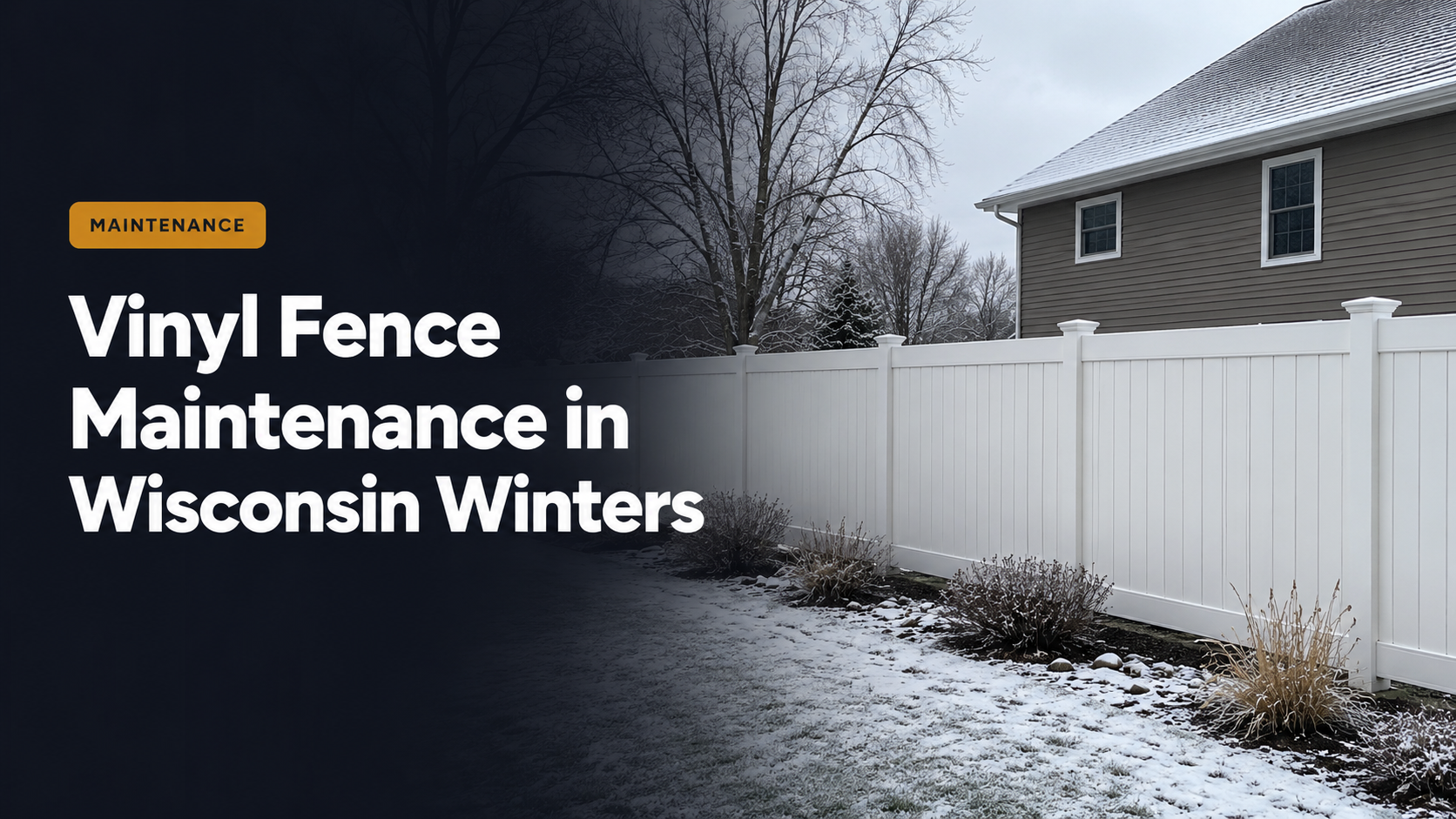
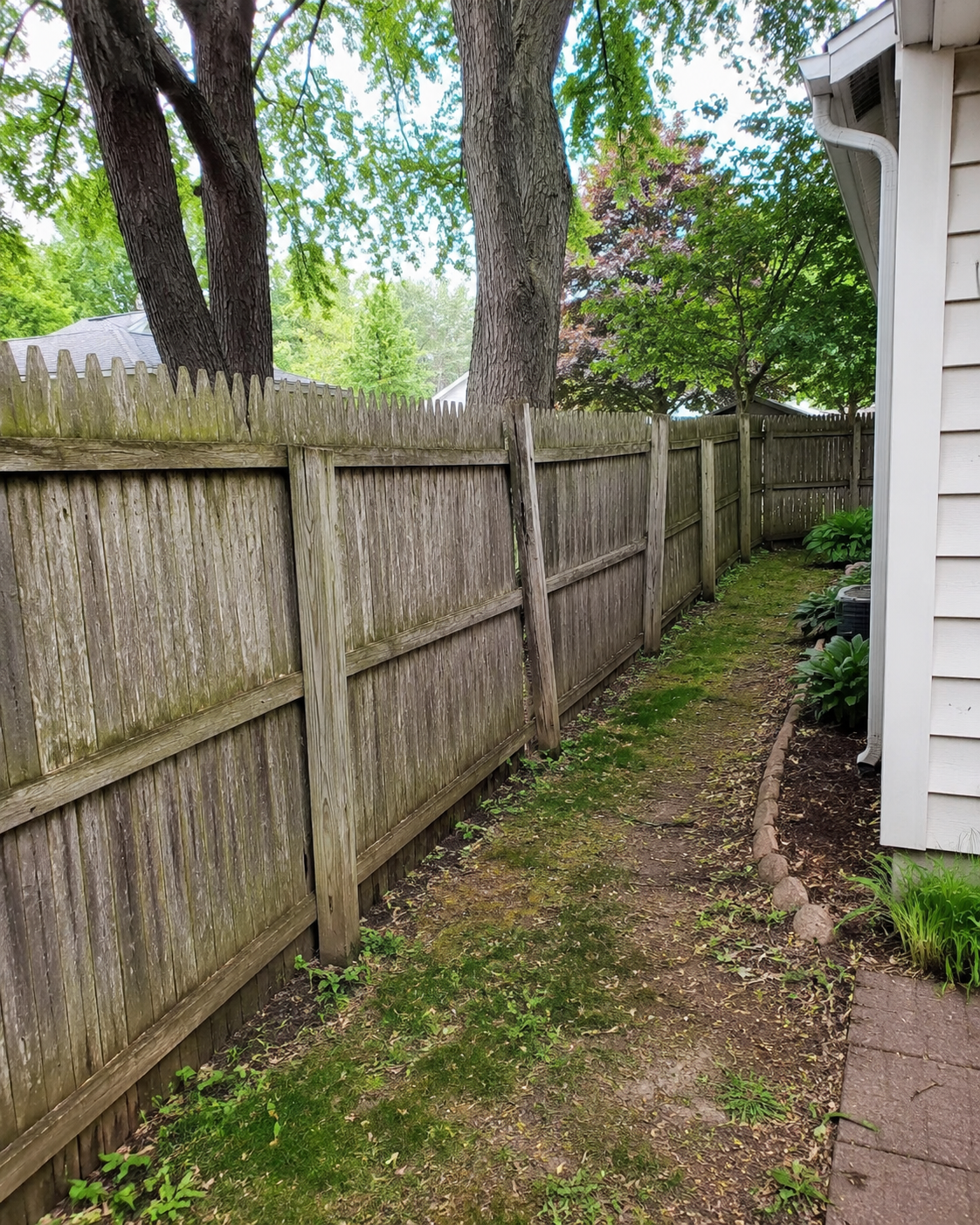
Ask a fence crew what winter actually does to fences around Green Bay and the answer isn't wind or cold — it's machinery. Every March we meet the same casualties along driveways: bowed rails, cracked vinyl, a run of chain link peeled off its framework, one post bent to a heroic angle where a plow found it in the dark at 5 a.m.
Nearly all of it is preventable, and nearly all of the prevention is free. Here's the playbook, in the order the season demands it.
Why driveway runs take the worst of it
A fence along a driveway lives in the strike zone all winter: every pass of the plow pushes snow toward it, every snowblower session throws at it, and every shoveled pile migrates toward it because it's the nearest edge. The rest of your fence mostly just stands in the snow — the driveway run is in traffic.
Two machines, two kinds of damage
The direct hit
A plow blade or snowblower auger meeting a fence is a short story with an expensive ending. It happens most on the first storm of the year — new driver, buried landmarks, a fence line nobody can see — and at the driveway's edges, where the blade swings wide.
The slow push
Subtler and just as destructive: snow piled against the fence. Plowed snow isn't fluffy — it's dense, wet, and heavy, and a berm of it leaning on panels loads them like a slow-motion shove for weeks at a time. Rails bow, cold vinyl cracks, and whole sections walk out of line. Our winter damage guide covers what that looks like by spring.
Know your fence's cold-weather weak points
- ✓Vinyl: turns brittle in deep cold — impacts that bounce off in July crack panels in January.
- ✓Chain link: the mesh forgives a lot, but a blade catching the bottom edge peels it off the framework.
- ✓Wood: rails carry the snow-pile load until they bow, then crack at the knots.
- ✓Every style: the post nearest the driveway apron is the most-hit object on the property.
Mark the line before the first storm
The single highest-value move on this page. Before the ground freezes, set tall driveway markers a few feet out from the fence along any edge that gets plowed. Mark the corners, both sides of any gate opening, and the end posts. You're building a visual guardrail for a driver working at night in a whiteout — make it obvious.
Use real driveway markers — the tall fiberglass ones with reflectors — not garden stakes that vanish under the first drift. The reflector is the point: the driver who matters is working by headlight.
Talk to whoever plows
If a service plows your driveway, spend two minutes on one conversation: here's the fence, here's where the markers are, and here's the open corner where snow can go. Plow drivers don't want to hit your fence — they want to get to the next driveway. A designated dumping spot away from the fence line serves everyone. And if you plow it yourself, the same rules apply — decide where the snow goes in November, because you won't decide well at 6 a.m. in a storm.
Snowblower discipline
A snowblower doesn't have to touch the fence to hurt it. The discharge chute throws dense snow and the occasional chunk of ice hard enough to crack a cold vinyl panel from a driveway's width away. Work with the chute aimed away from the fence line, and never blow snow directly against panels at close range.
Near the street, mind the big plows
Fences that run close to the road live with the municipal plow's spray zone: heavy, wet slush thrown with real speed, storm after storm, all winter. There's no negotiating with a city route, so the fence itself has to be the answer — open styles let the spray pass through, while solid panels near the road earn extra attention on the spring walk-around. It's one more reason roadside and corner sections are worth building stouter than the bare minimum.
Don't stack shoveled snow on the fence
The hand-shoveling version of the same sin: the fence line looks like the natural place to pile snow, right up until the pile is four feet of consolidated weight leaning on panels at their most brittle. Pick a different spot. Our vinyl winter maintenance guide has the full cold-weather list.
Keep gates clear
Gates need somewhere to swing, and packed snow at a gate turns to ice, then to an immovable ramp the gate grinds over — straining hinges and racking the gate out of square. Keep the swing path shoveled through the season, and don't let the plow berm bury the gate — a gate frozen into a snowbank stays closed until March, which matters if the meter reader or the dog needs it.
Set your markers the same weekend the snowblower comes out of storage — early November, before the ground freezes and while you can still see exactly where the fence line runs. A marker you can't drive into frozen ground protects nothing.
In spring: document, then fix
If a plow did find the fence, photograph everything before anything gets moved or tidied — plow services carry insurance for exactly this, and a clear photo set plus a written repair quote makes the claim a paperwork exercise instead of a negotiation. The repair itself is usually routine: a post or two reset, a panel or rail replaced. Keep the photos even if you never file a claim — a dated picture of this year's lean is how you'll notice next year's.
Bottom line
Winter machinery damage is the most preventable fence damage there is: mark the line, brief the driver, aim the chute, pile snow somewhere else, and keep the gates clear. Fifteen minutes in November beats a repair bill in April.
Fence already took a hit? Send us a photo and we'll tell you what the fix looks like.
Quick answers
Can a snowplow damage a fence without ever touching it?
Yes. A plow that piles dense, wet snow against panels loads them like a slow-motion shove for weeks — rails bow, cold vinyl cracks, and whole sections shift out of line without a single direct hit.
How do I mark a fence line before the first snow?
Set tall driveway markers a few feet out from the fence along any plowed edge, and mark the corners, gate openings, and end posts. Do it in late fall, before the ground freezes and while the fence line is still visible.
Who repairs snowplow damage to a fence?
A fence contractor — plow services carry insurance and pay for damage more often than people expect, but they don't fix fences. Photograph the damage before anything is moved and get a written repair quote to document the claim.