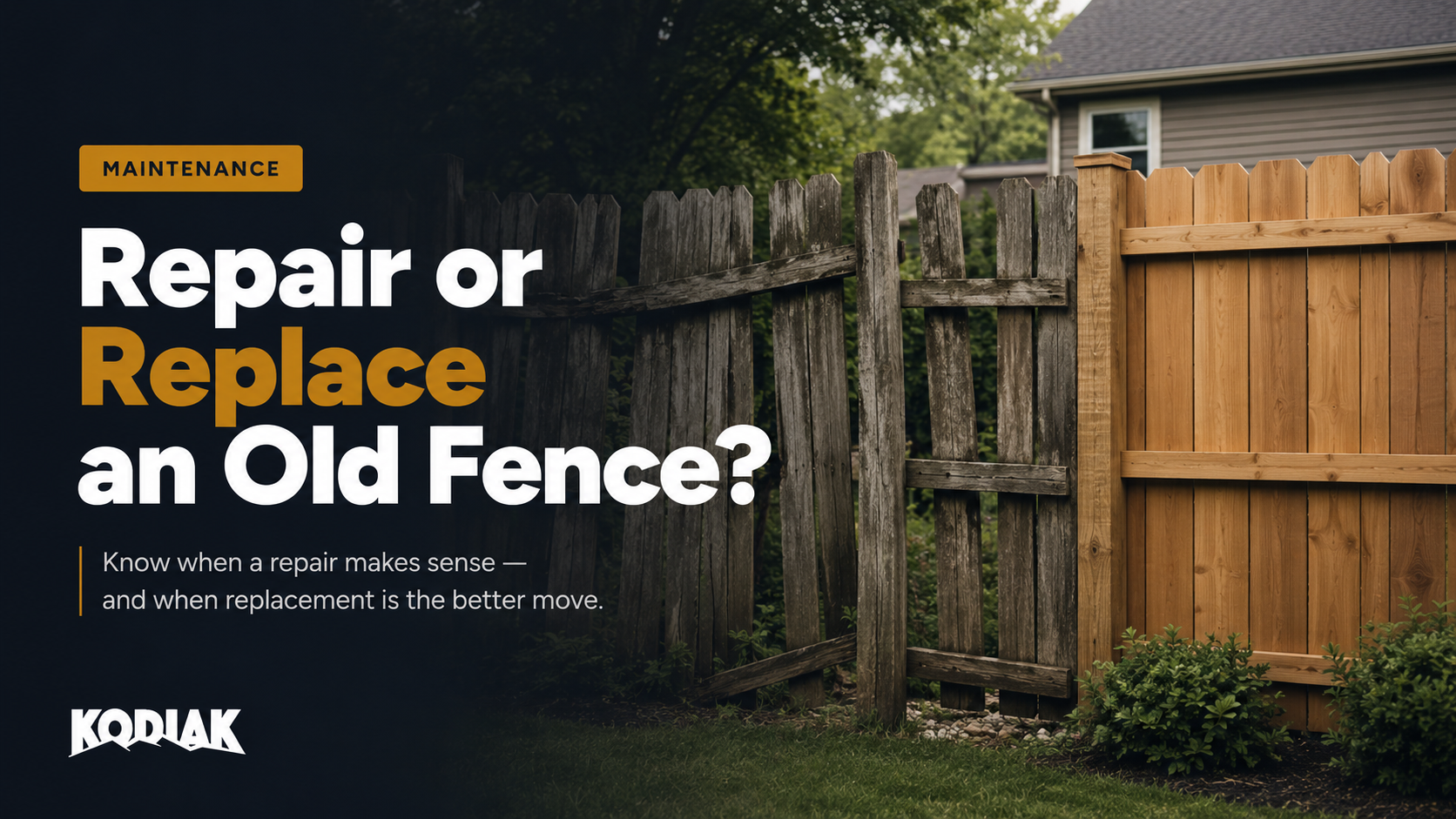
A damaged fence does not always need full replacement. Sometimes one post, one gate, or one section can be repaired. Other times, repairs only delay the inevitable.
The right choice depends on the age of the fence, the cause of the problem, the material, and how many parts are failing.
Start with the reason it failed
Before deciding repair vs. replacement, ask why the fence is failing.
Common reasons include:
- ✓Rotten wood posts.
- ✓Shallow posts.
- ✓Frost heave.
- ✓Wind damage.
- ✓Gate stress.
- ✓Poor drainage.
- ✓Impact from equipment or snow.
- ✓Neglected maintenance.
- ✓Low-quality materials.
If the failure is isolated, repair may be smart. If the failure is system-wide, replacement may be better.
When repair makes sense
Repair may be the right choice if:
- ✓Most of the fence is still straight and solid.
- ✓Only one or two posts are loose.
- ✓A gate needs adjustment.
- ✓A few boards or rails are damaged.
- ✓Storm damage affected one section.
- ✓The fence is still relatively new.
- ✓The material is still available.
Small repairs can extend the life of a fence when the foundation is otherwise sound.
When replacement makes sense
Replacement may be smarter if:
- ✓Many posts are loose or rotten.
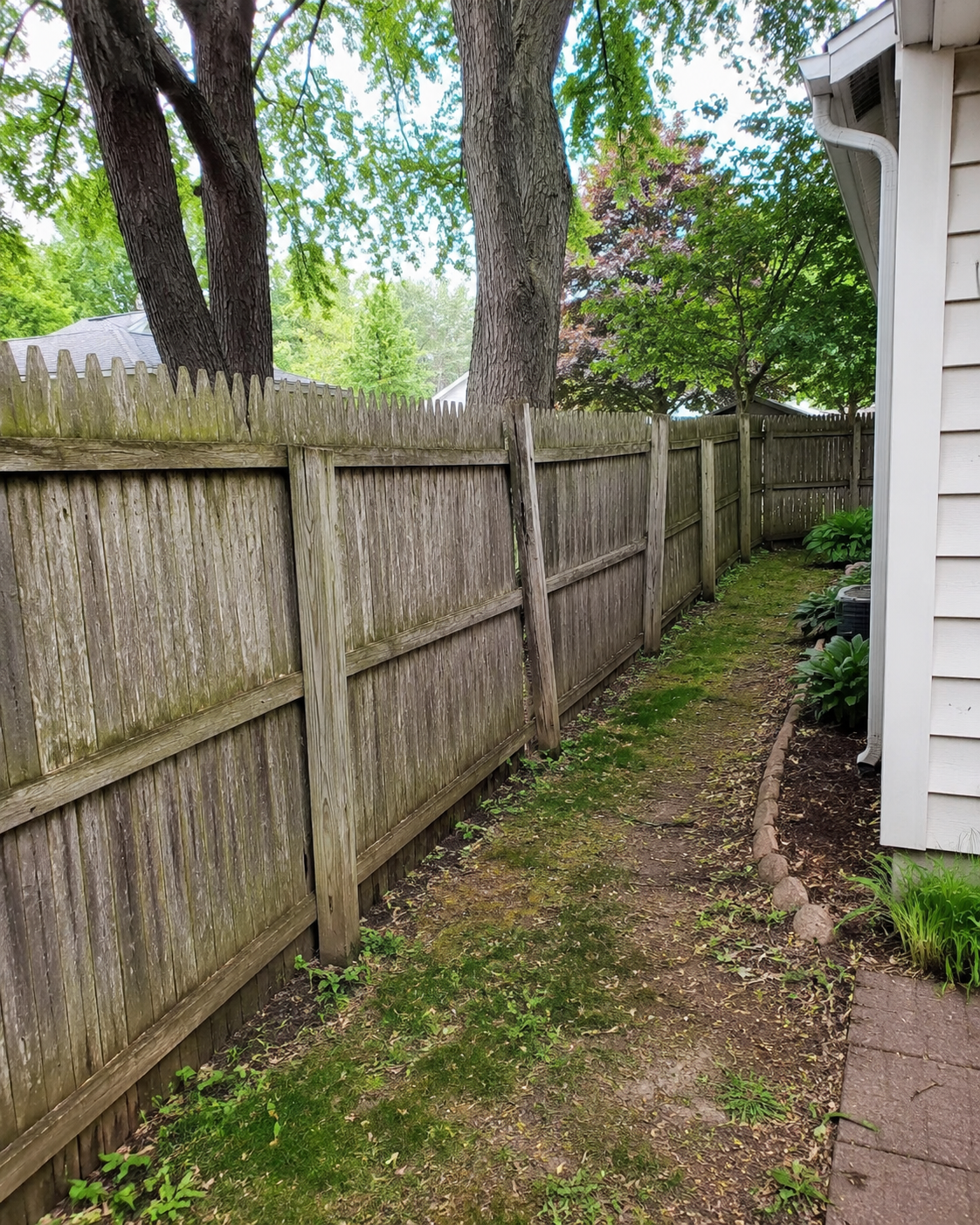
- ✓The fence line is wavy.
- ✓Gates no longer align.
- ✓The fence was installed too shallow.
- ✓Wood is splitting, rotting, or failing throughout.
- ✓Repairs would cost a large share of replacement.
- ✓You want a different material or layout.
- ✓The fence no longer meets your needs.
If the same problem appears in multiple places, it is usually not a one-post issue.
Wood fence repair vs. replacement
Wood fences are often repairable because individual boards, rails, and posts can be replaced. But wood also reaches a point where everything is aging at once.
If the posts are rotten, replacing surface boards will not solve the real problem. If the boards are weathered but the posts are solid, repair and staining may make sense.
Vinyl fence repair vs. replacement
Vinyl panels and rails can sometimes be replaced if matching parts are available. The challenge is color match, manufacturer style, and whether the posts are still aligned.
If a vinyl fence was damaged by impact but the posts are solid, repair may be practical. If posts have shifted across the line, replacement or major resetting may be needed.
Chain link repair vs. replacement
Chain link is often repairable. Fabric, top rail, posts, and gates can be replaced individually. If the posts are solid, a damaged section may be fixed without replacing the whole fence.
If the entire fence is rusted, bent, or too short for your needs, replacement may be a better use of money.
Gates deserve special attention
A bad gate does not always mean the fence is bad. Gate issues can come from hinge wear, latch movement, post shift, or ground heave.
However, if the gate post is loose or leaning, replacing hardware alone will not fix it. The post may need to be reset or replaced.
Consider your future plans
Before repairing an old fence, think about what you want from the yard over the next few years.
Are you adding a dog? Planning a patio? Regrading? Installing a pool? Replacing landscaping? If a larger yard project is coming, it may be smarter to redesign the fence now.
Bottom line
Repair is best when the problem is isolated and the rest of the fence is healthy. Replacement is best when the structure is failing, posts are moving, or the fence no longer fits your needs.
Kodiak Built can inspect the fence, explain the options, and help decide whether repair or replacement is the better investment.
Quick answers
When is fence repair worth it?
Repair makes sense when the problem is isolated: most of the fence is still straight and solid, only one or two posts are loose, a gate needs adjustment, or storm damage hit a single section. Small repairs can extend the life of a fence when the foundation is otherwise sound.
When should a fence be replaced instead of repaired?
Replacement is usually smarter when many posts are loose or rotten, the fence line is wavy, gates no longer align, the fence was installed too shallow, or repairs would cost a large share of replacement. If the same problem appears in multiple places, it is usually not a one-post issue.
Does a sagging gate mean the whole fence is failing?
Not necessarily. Gate issues can come from hinge wear, latch movement, post shift, or ground heave — but if the gate post itself is loose or leaning, replacing hardware alone will not fix it, and the post may need to be reset or replaced.