Every spring, the snow melts and Green Bay yards reveal what winter actually did out there. A fence that went into December straight can come out of March leaning, sagging, or missing pieces — and the causes are usually the same handful of suspects.
Here's what winter breaks, why, and how to think about the fix.
1. Heaved and leaning posts
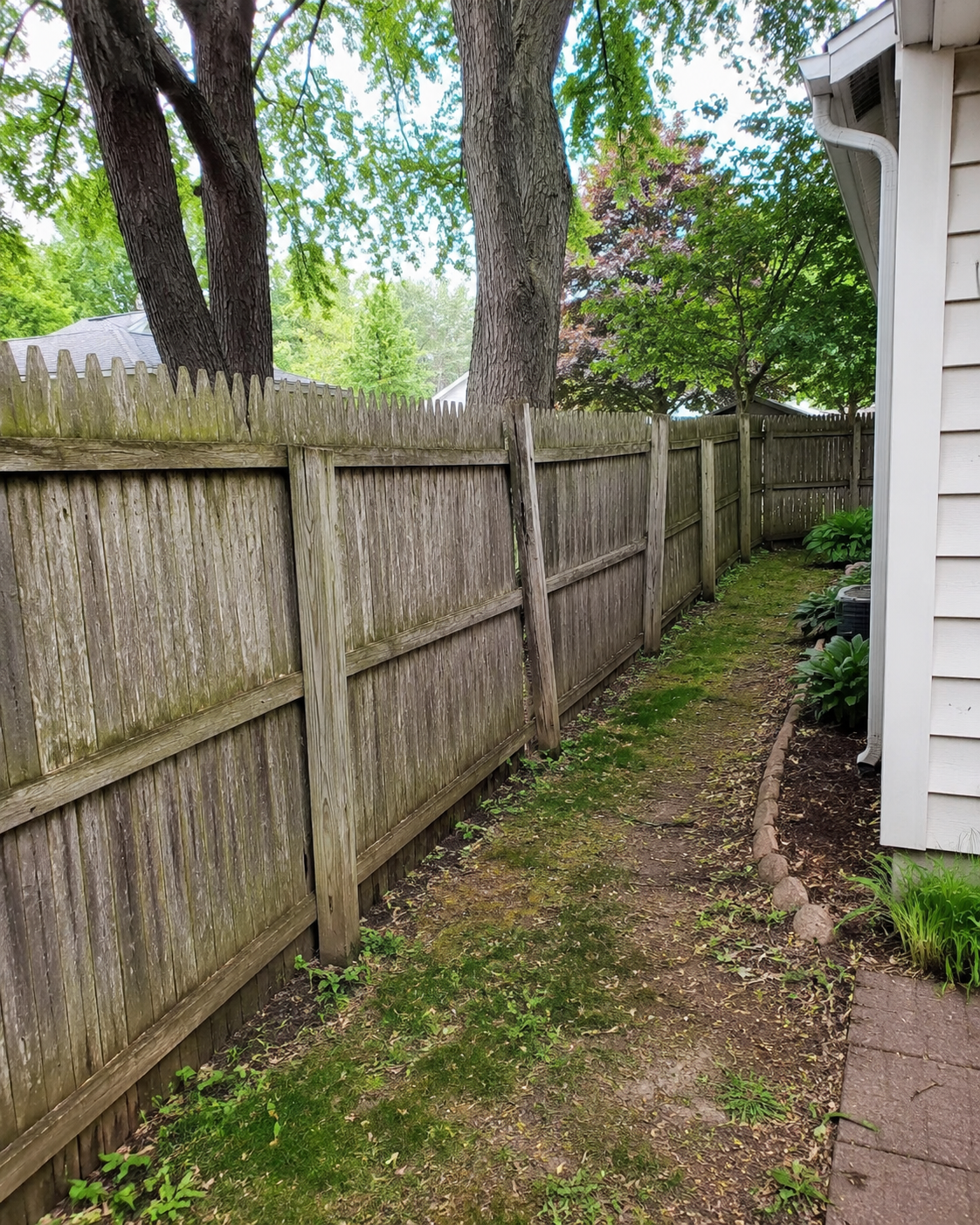
The classic. Wet soil freezes, expands, and pushes shallow posts upward; the thaw drops them back crooked. Repeat that a few dozen times a winter and a post set too shallow starts migrating. We covered the mechanics in our frost heave guide — the short version is that posts set above the frost line are living on borrowed time.
The fix: reset or replace the affected posts, deeper, in concrete below the frost line. If one or two posts moved, that's a standard fence repair call. If the whole line moved, the original install is the problem.
2. Rot that winter finishes off
Wood posts rot slowly at the ground line all year — winter is just when the wind finds them. A post that's soft at grade snaps or leans under snow load, and suddenly a whole section is on the ground.
The fix: swap failed wood posts for steel. Panels usually survive; it's the posts that give. That's why every fence we build starts on galvanized steel posts instead of wood in the ground.
3. Sagging, dragging gates
Why gates lose the winter
A gate is a lever hanging off a post, and frost moves gate posts just enough that the latch stops lining up and the bottom rail starts plowing the ground. Frozen hinges and iced latches take the blame, but the post almost always did the crime.
The fix
Re-set the gate post deep and heavy, re-hang the gate, and replace worn hardware. Gate-only repair calls are some of the most common work we do all spring.
4. Snow load, plows, and snowblowers
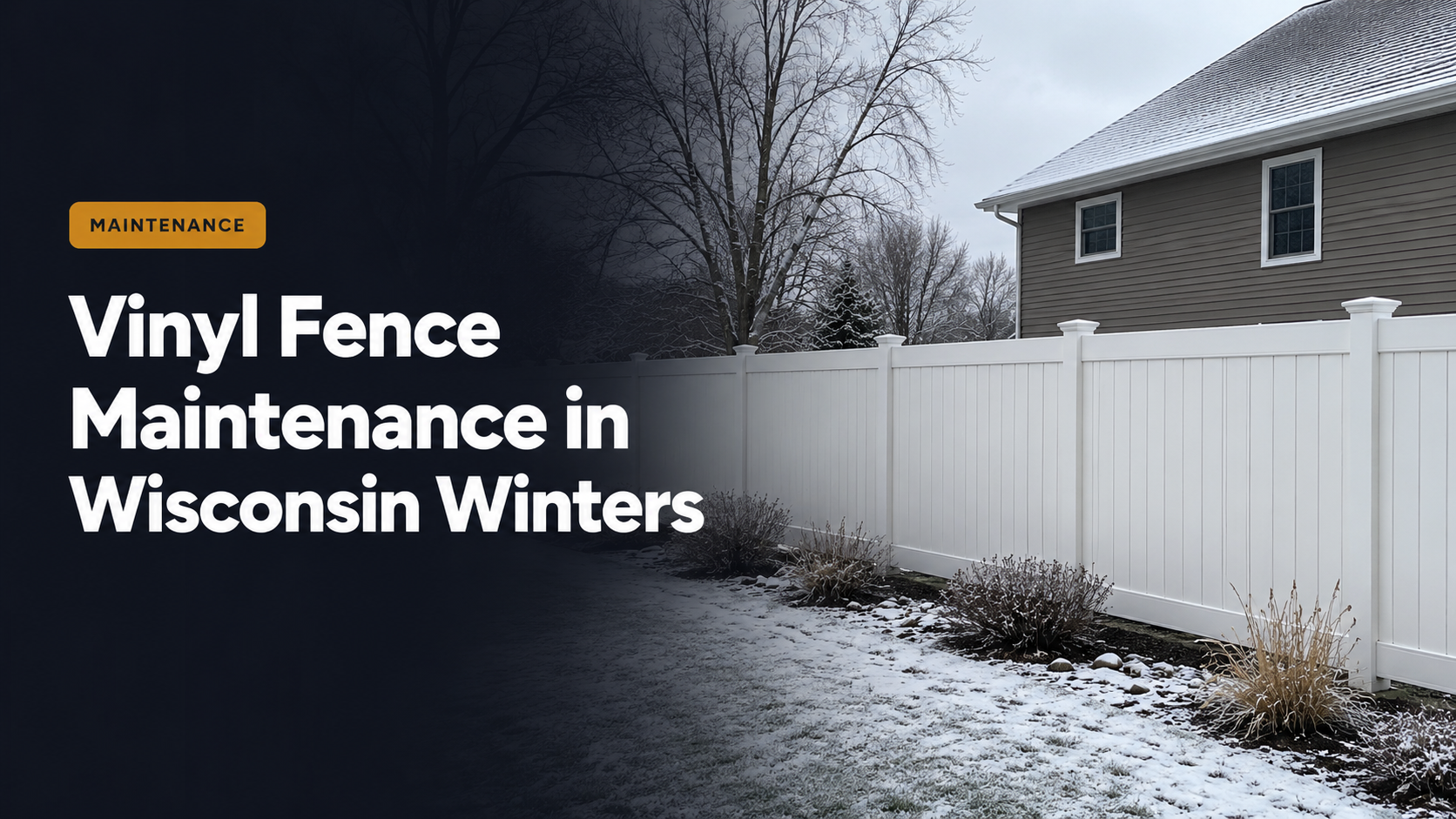
Panels aren't designed to hold a season of plowed snow against them. Heavy piles bow rails, crack vinyl in the cold, and push whole sections out of line — and a direct plow or snowblower strike along a driveway does it all at once.
- ✓Aim snowblower discharge away from the fence line.
- ✓Give the plow guy a landmark — mark the fence corners before the first storm.
- ✓Don't stack shoveled snow against panels, especially vinyl in deep cold.
Our vinyl winter maintenance guide has the full prevention list.
5. Storm damage
Wind events snap rails, lift panels, and drop limbs through sections. Two moves matter here: photograph everything before it's touched (for insurance), and get the opening secured — especially if the fence is what keeps the dog home.
Insurance tip: fences usually fall under the 'other structures' portion of a homeowners policy. Photos plus a written repair quote make the claim straightforward — we provide the quote free.
Repair or replace?
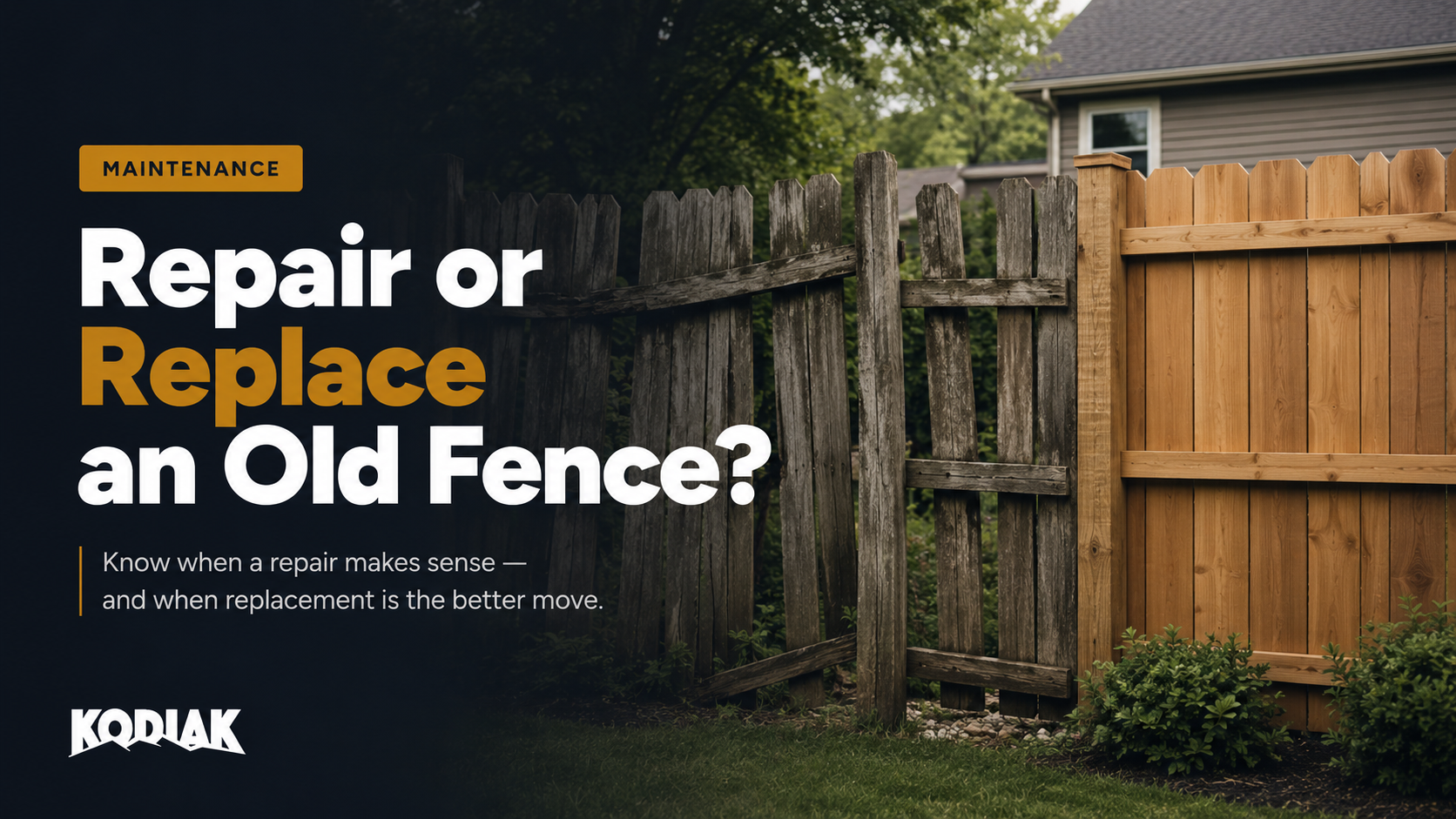
The honest test is the posts. Damage concentrated in a few spots — a heaved post, a sagging gate, a snapped rail — is repair territory. Failure spread across the line means the fence's foundation is done, and section-by-section repairs just space out the cost of a replacement. Our guide on repairing vs. replacing an old fence walks through the call in detail.
Bottom line
Winter doesn't really break fences — it exposes how they were built. Fix the damage once, fix it deeper than it was, and the next thaw is just a season instead of a repair bill.
Walk your fence line this week? If something's leaning, send us a photo and we'll tell you honestly whether it's a fix or a replace.
Quick answers
My fence is leaning after the spring thaw — can it be fixed?
Usually, yes. A few heaved or loosened posts can be reset or replaced without touching the rest of the fence. If most of the line is leaning, the posts were likely set too shallow and a larger fix makes more sense.
Does homeowners insurance cover storm damage to a fence?
Often, under the 'other structures' part of a policy — but coverage and deductibles vary. Photograph the damage before anything is moved and ask your agent; a written repair quote helps document the claim.
Should I fix winter fence damage right away or wait?
Assess right away, even if you repair later. A leaning post loads its neighbors, and a dragging gate wears its hinges every time it's forced — small damage compounds the longer it works against the rest of the fence.