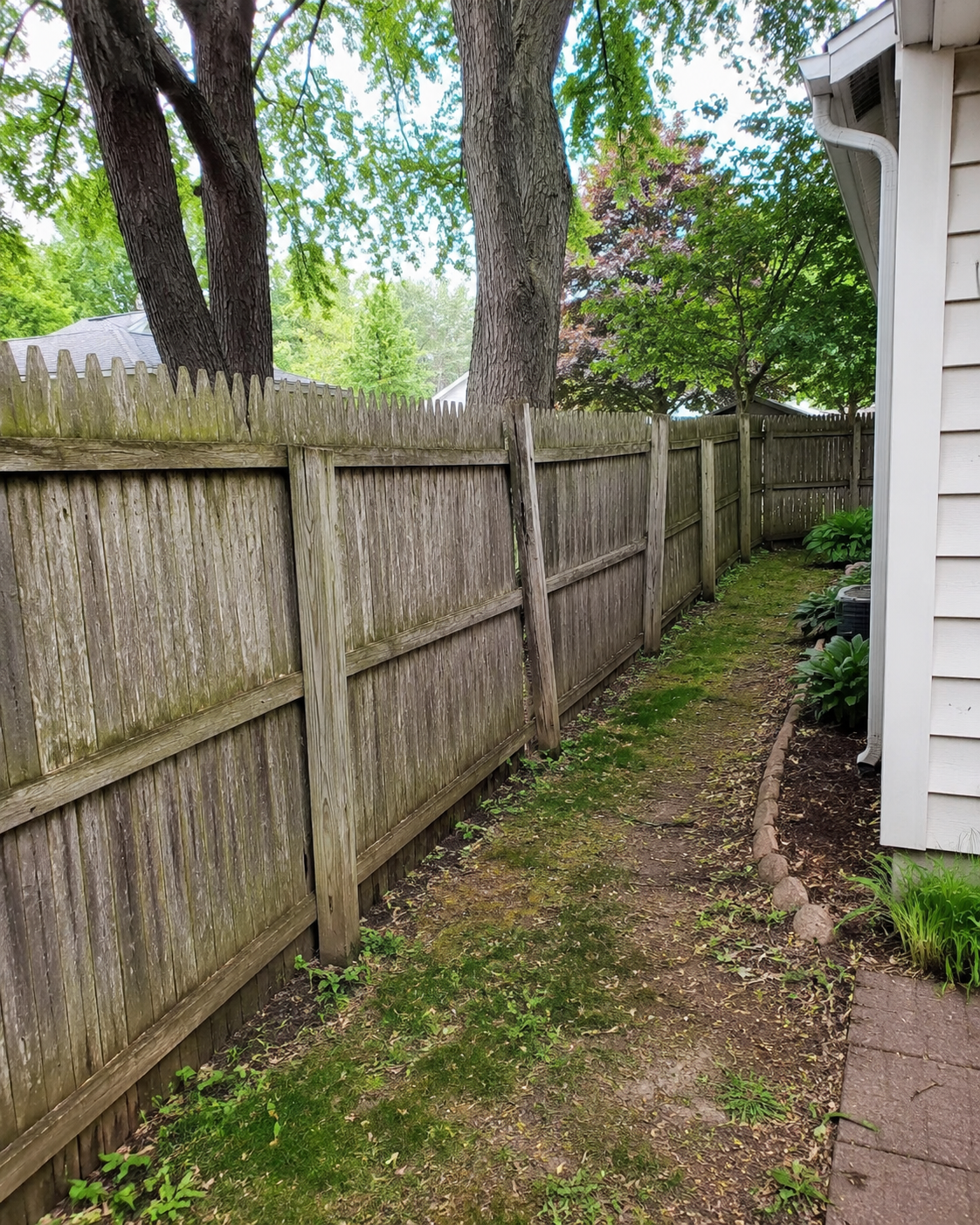
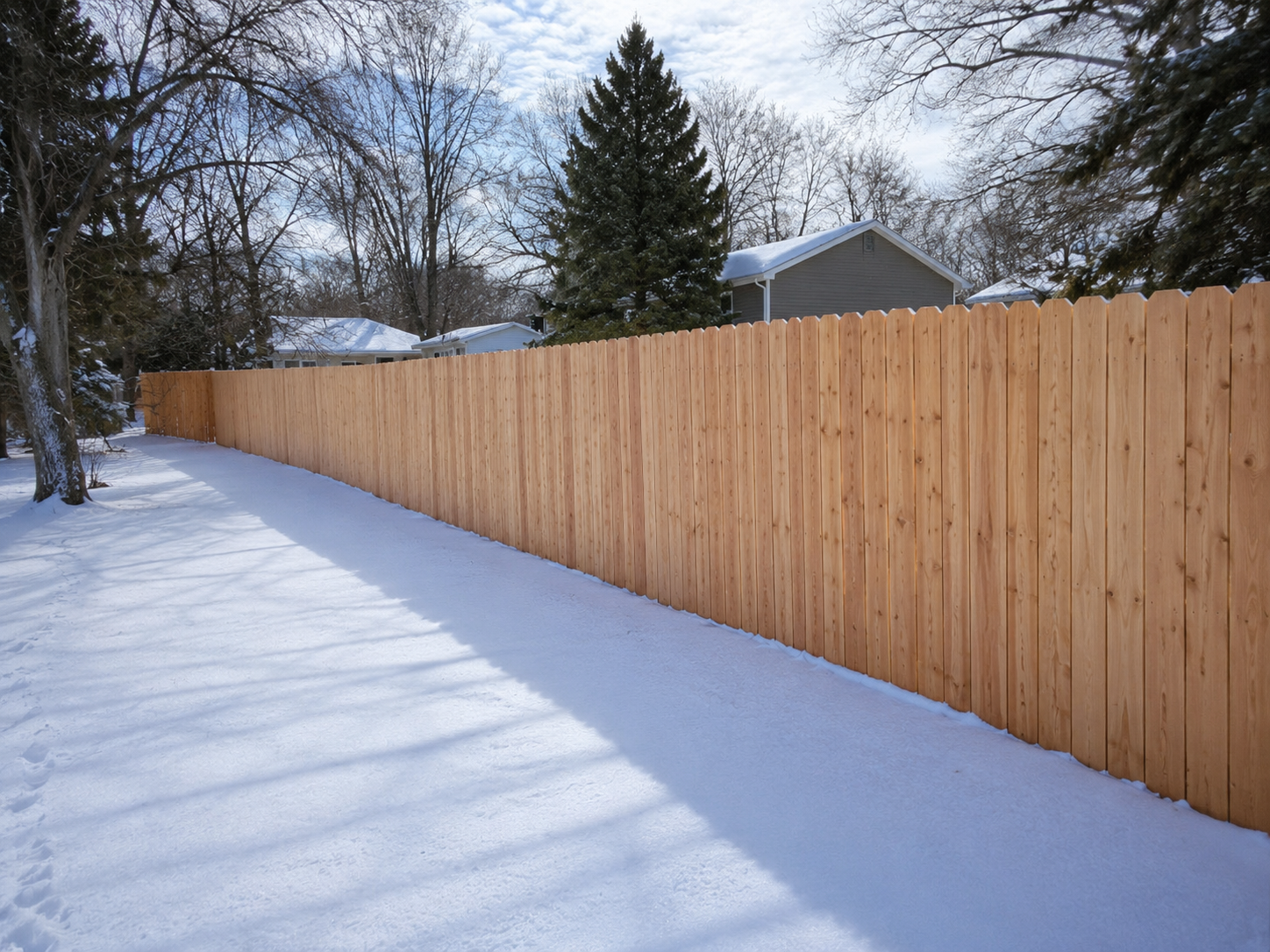
Cedar earned its reputation honestly. It looks warm on day one, takes stain beautifully, and stands up to Wisconsin weather better than most woods. What it won't do is keep that fresh-sawn color on its own — left alone, every cedar fence in Green Bay is on a slow march to silver-gray.
Whether that's a problem is up to you; plenty of people like the weathered look. But if you want cedar to stay cedar-colored, there's a schedule, and it's simpler than most homeowners expect: coat it in the first season, then re-coat every two to three years for the life of the fence.
Why cedar grays here
Two forces do the work. Sunlight breaks down lignin — the natural glue at the surface of the wood — and that's what shifts the color from amber to gray. Moisture does the rest: rain, snowmelt, and humidity swell the boards, dry spells shrink them, and thousands of those small cycles slowly open the surface grain into checks and cracks.
Wisconsin supplies both in bulk. A wood privacy fence here gets hard summer sun, freeze-thaw all winter, and a soggy spring — which is why untreated cedar grays fastest on south- and west-facing runs, where the sun works the longest shift.
The schedule that works
Season one: the first coat
New cedar needs a little drying time before it will take a finish well — but not a year, and definitely not “whenever we get to it.” Plan on coating a new fence in its first season, once the boards have dried out enough that a splash of water soaks in instead of sliding off the mill glaze.
Then every 2–3 years
After the first coat, the rhythm is every two to three years — the same interval we publish on our styles page, and about how long a quality exterior stain keeps repelling water in this climate. Sun-baked lines and sprinkler zones land on the early end. Shaded, sheltered runs stretch toward year three and sometimes past it.
The water test: how to know it's due
Forget the calendar for a second — the fence will tell you. Flick some water at a board. If it beads up and sits there, the finish is still doing its job. If the wood darkens and drinks it straight in, it's time.
Other signs the finish is done:
- ✓Water soaks in instead of beading — the definitive one.
- ✓The color has flattened or grayed noticeably since last year.
- ✓The surface feels dry, fuzzy, or rough under your hand.
- ✓Hairline cracks are showing on the flat faces of boards.
- ✓Dirt and mildew are harder to rinse off than they used to be.
Stain, seal, or paint?
Clear sealer
Pure water protection, no pigment. The wood still grays — just gracefully, without the surface damage that usually comes along for the ride. The right pick if you actually want the silver look and healthy boards at the same time.
Semi-transparent stain
The sweet spot, and what most cedar owners re-up with. Pigment blocks a good share of UV and holds the warm tone, while the grain still shows through. It wears away gradually instead of peeling, so re-coating is a clean-and-apply job rather than a scraping project.
Solid stain and paint
Maximum color and maximum protection, but they form a film — and films peel. Once a fence is painted, every future maintenance cycle becomes a scraping-and-repainting cycle. On a fence with hundreds of board faces, think hard before you commit to that.
Timing the work
Finishes want a dry fence and a dry forecast: a couple of rain-free days before you start, moderate temperatures, and no blazing midday sun flashing the finish dry before it can penetrate. In practice that means late spring through early fall, with a soft spot for those calm, dry September weeks.
A natural rhythm: check the finish during your spring fence checkup, then do the actual staining once the weather settles into a dry stretch.
Prep is half the result
Stain over dirt and you've sealed in the dirt. A re-coat starts with a wash — a garden hose and a soft brush handle most years, with a wood cleaner for mildew shadows — then a full dry before any finish goes on. Rough, weathered spots get a light sanding so the new coat grips wood instead of fuzz. None of it is fun; all of it is why two fences stained the same weekend can look different by next summer.
The spots that go first
Fences don't age evenly. Board tops and cut ends drink water through open end grain, gate edges take hand traffic on top of weather, and the bottom foot of fence lives in splash-back and snow. Give those zones a second pass with the brush — they're where gray shows up first, and a little extra finish there buys the most time per minute of work.
Sprinklers are the quiet cedar killer. An irrigation head that soaks the same three boards every morning will gray and check that section years ahead of the rest of the fence. Aim the spray off the fence line and the whole run ages at the same pace.
What neglect actually costs
A wood privacy fence in Wisconsin runs 15–20 years, and the finish schedule has a lot of say in which end of that range you get. Skipped cycles show up as checked, cupped, splintering boards that need replacing years early — the money saved on stain quietly converts into carpentry.
And if the whole rhythm sounds like a chore you'll resent by year six, that's worth knowing before you build — it's exactly the trade at the center of our wood vs. vinyl comparison. Cedar rewards attention; vinyl doesn't ask for any.
Bottom line
Cedar doesn't ask for much: one coat in the first season, then a re-coat every two to three years, applied during a dry stretch. Do that and the fence keeps its color and its boards for the long end of its lifespan. Skip it and Wisconsin takes the fence apart one surface fiber at a time.
Planning a cedar fence, or trying to rescue one that's gone gray? Get a free quote and we'll give you a straight answer about what it needs.
Quick answers
How often should a cedar fence be stained or sealed in Wisconsin?
Coat a new cedar fence in its first season, then re-stain or re-seal every 2–3 years. Hard sun and sprinkler spray push a fence toward the early end of that window; shade and shelter stretch it — so let the water test, not just the calendar, make the call.
Should I stain or seal a cedar fence — what's the difference?
A clear sealer repels water but lets cedar gray naturally, while stain adds pigment that blocks UV and holds the warm color. Semi-transparent stain is the popular middle ground because it protects like a sealer and keeps the grain visible.
What happens if a cedar fence is never sealed?
It weathers to silver-gray within a few seasons, then the surface starts checking, cracking, and cupping as moisture cycles through unprotected wood. The fence keeps standing, but the boards age faster and land at the short end of cedar's lifespan.