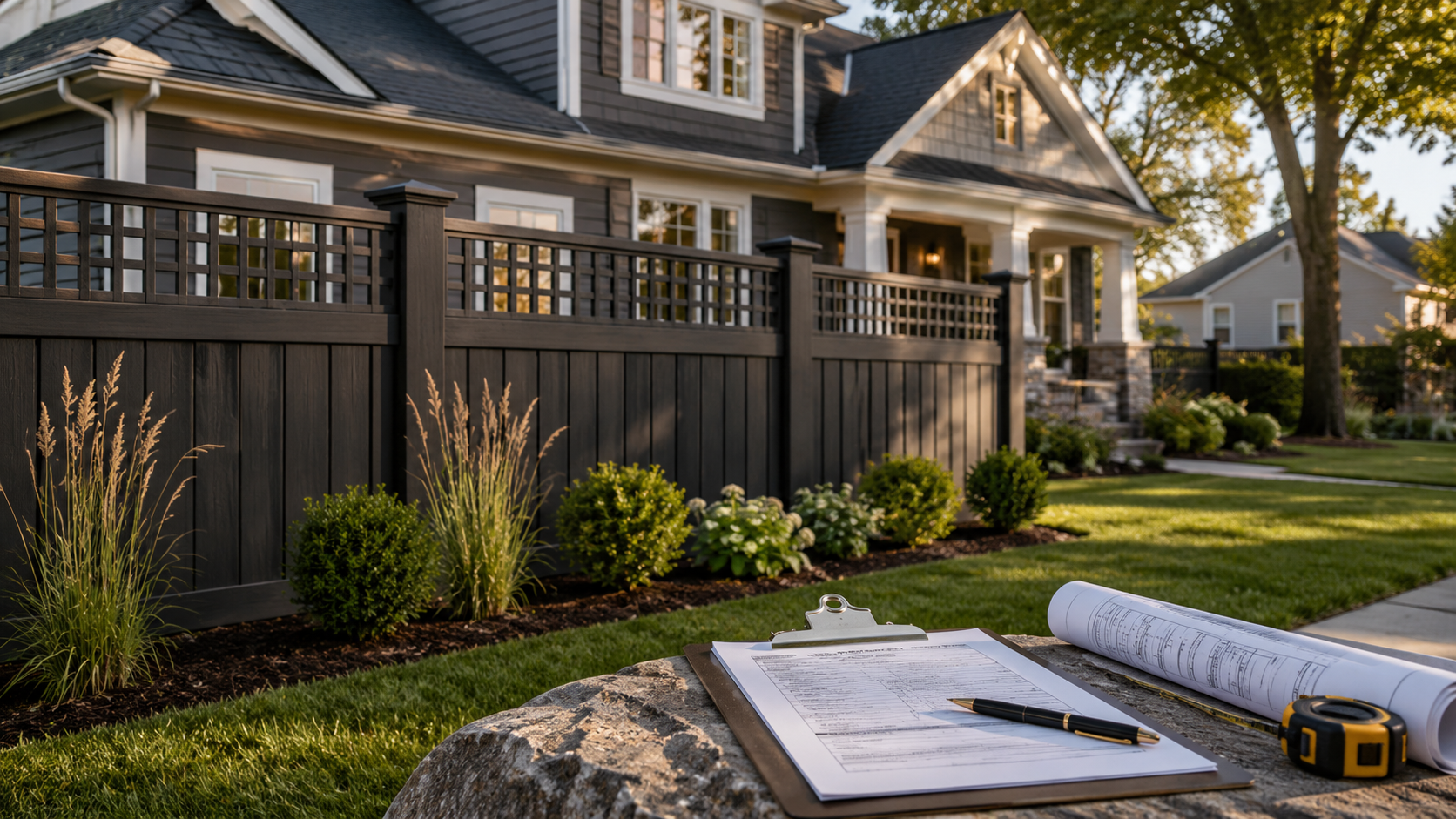
Corner lots are great for light, elbow room, and resale photos — and mildly famous, among fence builders, for surprising their owners. The same corner that gives you two street frontages also gives you two sets of frontage rules and a zone near the intersection where tall, solid fences usually aren't allowed at all.
None of that means a corner lot can't have a great fence. It means the layout has to be planned around one concept: the vision triangle.
Why corner lots are different
An interior lot has one street in front and neighbors on three sides. A corner lot faces the street on two sides — and in most zoning codes, street-facing sides carry stricter fence rules than interior sides. The side of your yard that feels like a side yard may legally be a corner-side frontage, with front-yard-style restrictions to match.
That's the quiet trap: a fence plan copied from an interior-lot neighbor can be non-compliant on your corner parcel even though the fence itself is identical. The height rules that apply depend on which zone of the lot each run crosses.
The vision triangle, explained
At street intersections
Picture a triangle drawn across your corner, with two sides running along the streets back from the intersection and the third side connecting them. Inside that triangle, municipalities restrict anything tall or solid enough to hide an oncoming car, a cyclist, or a kid on the crosswalk — fences included.
At driveways and alleys
Smaller sight triangles often apply where driveways and alleys meet the street, on any lot. If you've ever inched out of a driveway blind because of a neighbor's hedge, you know exactly what these rules exist to prevent.
The size and placement of the vision triangle is parcel-specific — it depends on your streets, your corner, and current municipal code. We confirm the exact triangle for your property at permit time rather than guessing from a rule of thumb.
How the triangle shapes your fence plan
The rules generally don't ban fencing in the triangle — they cap how tall and how solid it can be. In practice that means three moves:
- ✓Keep the tall, solid privacy runs out of the triangle entirely.
- ✓Use low or open styles where the fence crosses restricted ground.
- ✓Step the fence down as it approaches the corner instead of ending it abruptly.
Styles that pass inside the triangle
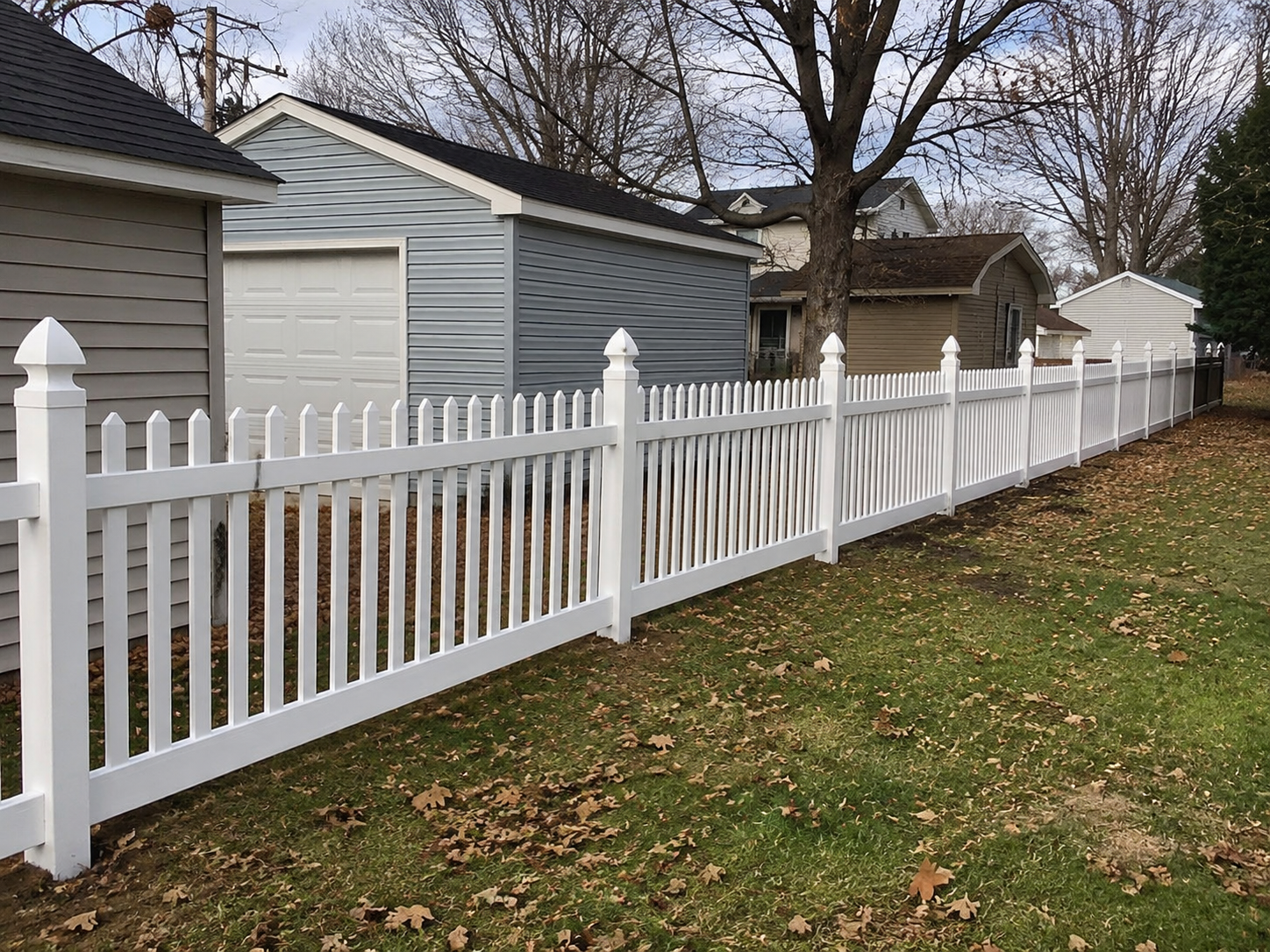
Low, see-through fencing usually satisfies sight-line rules while still defining the yard. Ornamental aluminum is the corner-lot favorite — open pickets, clean look from both streets, and it doesn't read as a wall from the road. Low picket runs and open chain link work the same way.
This is also where corner lots get their signature look: an open, decorative front line that steps up to full privacy behind the house. Done right, it reads intentional — because it is.
The step-down layout
Most corner-lot projects we build in Green Bay end up as a hybrid: 6-foot privacy around the true back yard, stepping down to 4 feet or an open style along the corner-side frontage, staying low or open through the triangle itself. You keep the private outdoor room; the intersection keeps its sight lines; the permit sails.
Don't forget the driveway
Corner lots often have the driveway close to the intersection, which stacks a driveway sight triangle on top of the corner one. Gate placement matters here too — a gate that swings toward the street or parks a car across the sidewalk while it opens will come up at review.
How we handle it
Tell us it's a corner lot at the estimate — that one fact changes the layout conversation from the first sketch. We design the run around the triangle, confirm the parcel-specific rules as part of pulling the permit, and stake the layout so you can see exactly where every height change lands before we dig.
Bottom line
Corner lots don't forbid great fences — they just refuse lazy ones. Plan around the vision triangle, step the heights deliberately, and use open styles where the streets need eyes. The result usually looks better than a solid box would have anyway.
Corner parcel and not sure what's allowed? Get a free quote and we'll figure out the triangle for you.
Quick answers
What is a vision triangle?
It's the sight-line zone municipalities protect where two streets meet, or where a driveway or alley meets the street, so drivers and pedestrians can see each other. Fences, hedges, and structures inside it are restricted — usually by height.
Can I build a 6-foot privacy fence on a corner lot in Green Bay?
Usually yes in the back yard — but not inside the vision triangle, and corner-side frontages are often treated more strictly than interior side yards. The exact allowance is parcel-specific and gets confirmed at permit time.
Who figures out the corner-lot rules for my property?
We do. Confirming the vision triangle and corner-side rules for your specific parcel is part of the permit work we handle on every Green Bay-area installation.