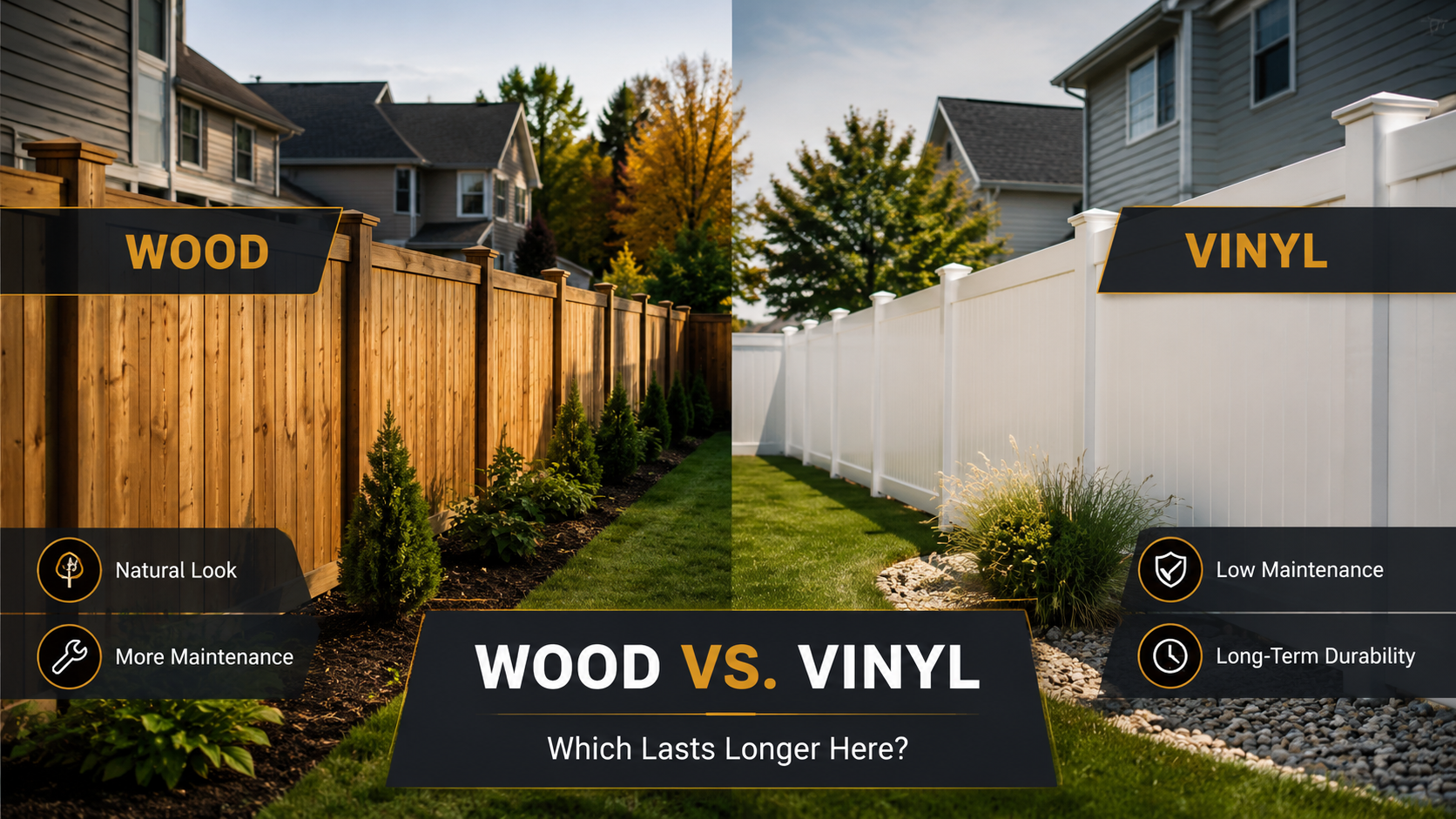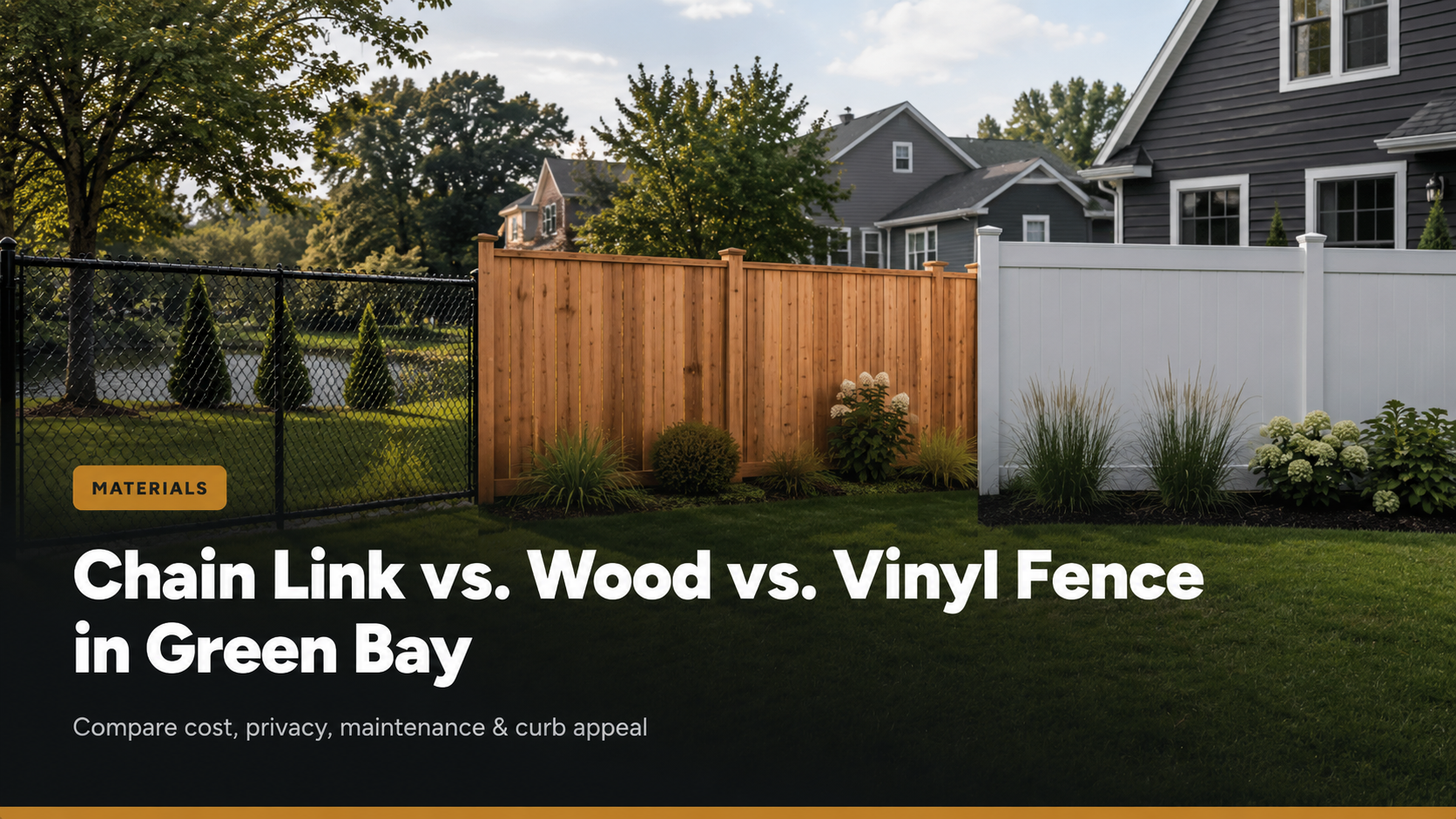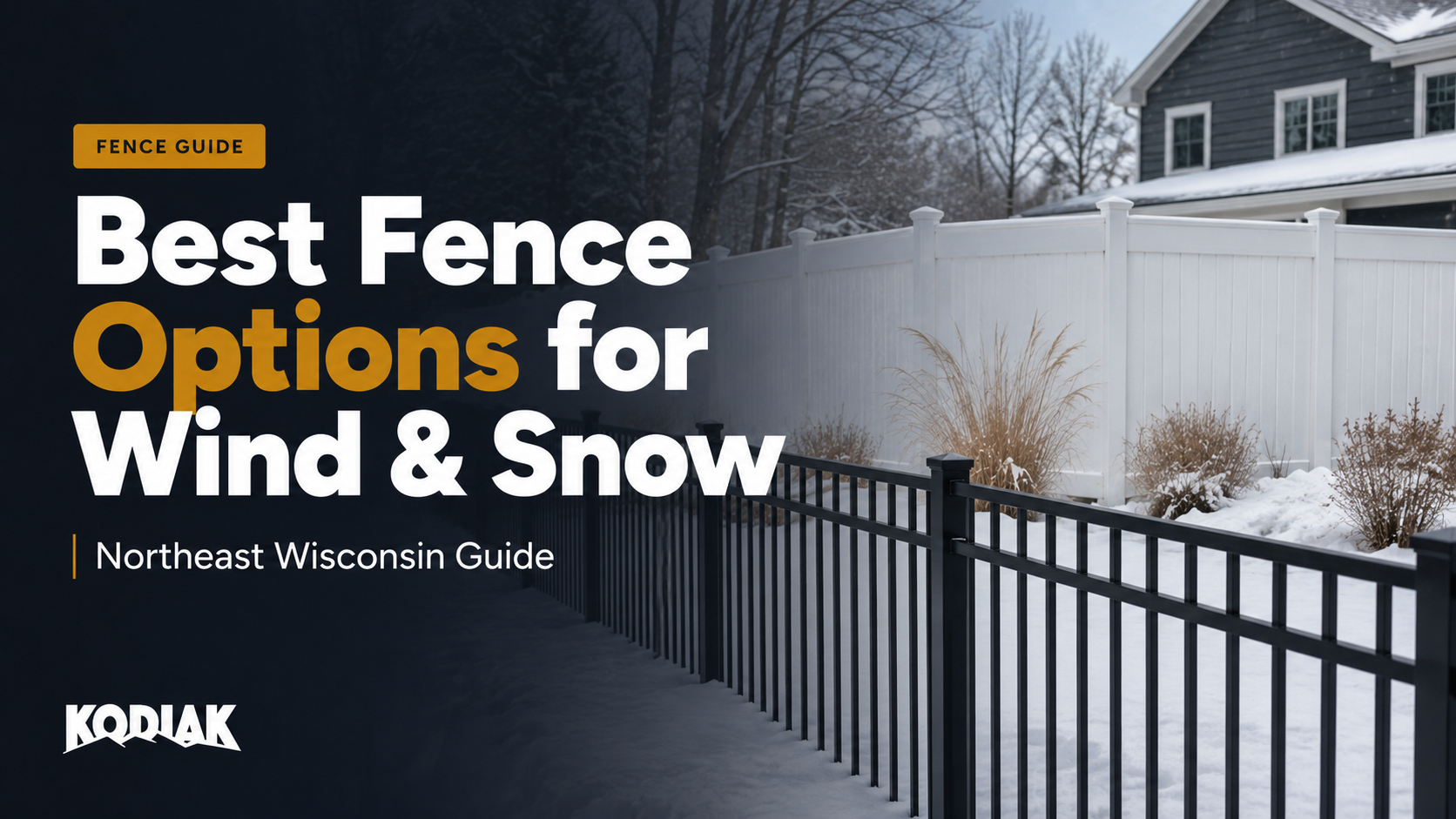
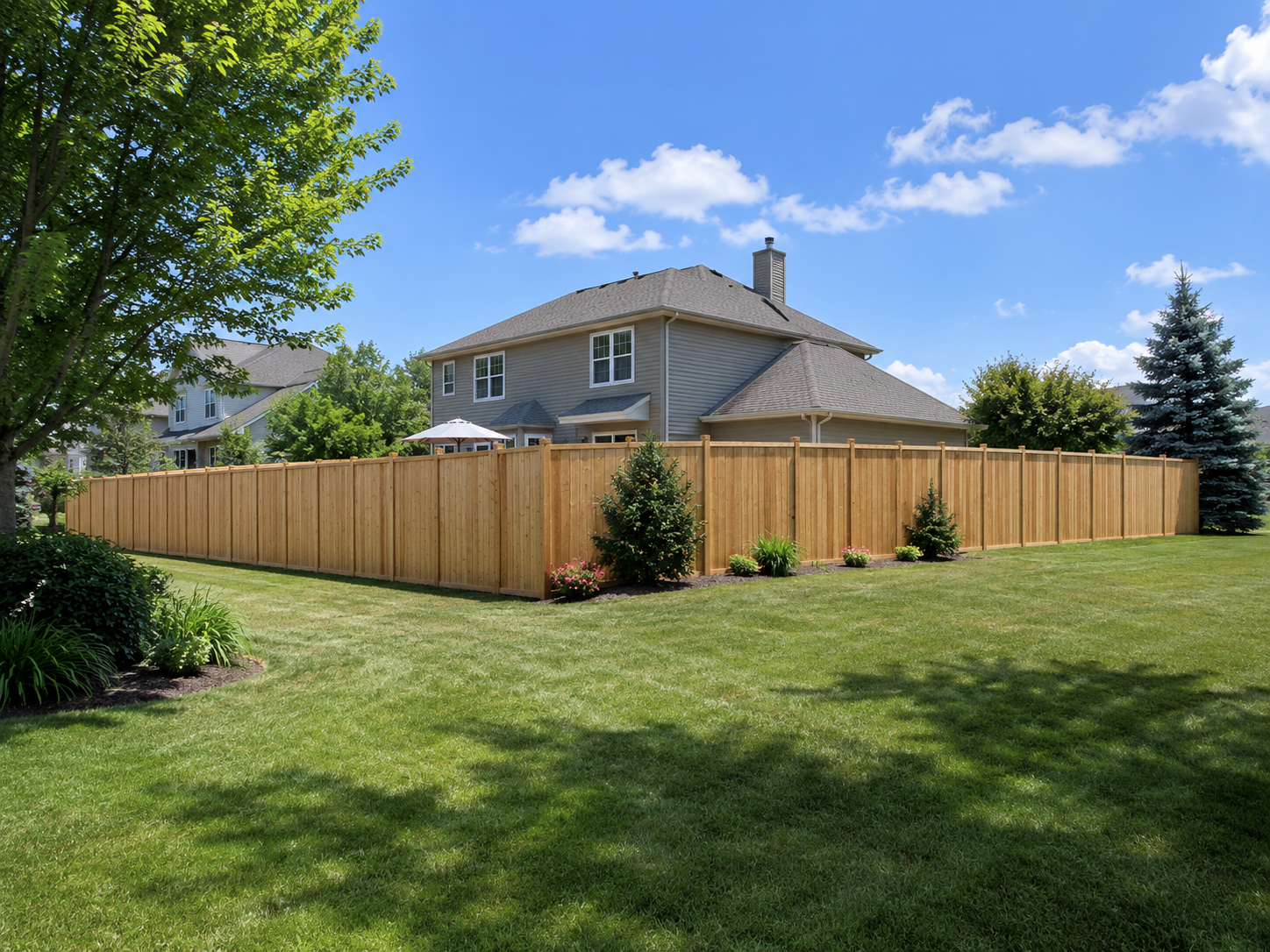
“How long will it last?” is the first honest question of every fence project, and it deserves better than “a long time.” Here are the real ranges — the same ones we publish on our styles comparison table — and, more usefully, what decides whether your fence hits the top of its range or dies embarrassingly short of it.
- ✓Vinyl: 25–30 years
- ✓Wood privacy: 15–20 years
- ✓Chain link: 20+ years
- ✓Aluminum: 30+ years
- ✓Pool fencing: 25+ years
Those numbers assume Wisconsin conditions — the freeze-thaw, the snow load, the wet springs — because that's what the table was built on. In a gentler climate you could stretch them. Here, you earn them.
Material sets the ceiling. Installation sets the floor.
Those ranges are ceilings — what each material can do when it's built right. The floor is set underground. A fence is a row of levers stuck in the dirt, and in Wisconsin the dirt fights back: freeze-thaw cycles heave shallow posts, spring water loosens bad backfill, and once posts start moving, it stops mattering how good the panels are.
That's why every lifespan conversation circles back to post depth and footings. A 25-year material on posts that fail in year eight is an 8-year fence with expensive panels.
What shortens fence life here
- ✓Freeze-thaw cycling that works on shallow or poorly drained posts every single winter.
- ✓Standing moisture at the ground line — rot for wood, corrosion for unprotected steel.
- ✓Snow piled or plowed against panels, flexing them when they're cold and brittle.
- ✓Sprinklers soaking the same stretch of wood every morning all summer.
- ✓Neglect — a skipped seal cycle, or a leaning post left to drag its neighbors out of line.
Lifespans by material
Vinyl: 25–30 years
Vinyl doesn't rot, doesn't feed insects, and never needs paint, which is how it earns its range. Its Wisconsin risk is impact in deep cold, when the material is at its most brittle — a plow-thrown chunk of ice does more damage in January than it ever could in July. Heavy-gauge panels and steel-reinforced posts are what separate a 30-year vinyl fence from a big-box one.
Wood privacy: 15–20 years
Wood's range is the widest because maintenance is part of the material. A cedar fence that gets sealed on schedule and keeps sprinkler spray off its boards reaches year twenty; a neglected one starts shedding pickets years earlier. The traditional failure point — wood posts rotting at the ground line — is exactly why our wood fences ride on galvanized steel posts instead.
Chain link: 20+ years
The workhorse. Galvanized or vinyl-coated steel shrugs off weather that destroys prettier fences, and there's almost nothing on it that can rot, peel, or sag. A good share of the 'failed' chain link we replace didn't fail at all — the owner just got tired of looking at it. The coating is the lifespan lever: black vinyl-coated mesh armors the steel against salt spray and snowmelt, which is worth having anywhere a driveway or road runs close.
Aluminum: 30+ years
The longest-lived thing we install. Powder-coated aluminum doesn't rust, never needs paint, and its racked panels ride out grade and frost movement gracefully. Buy it once, and the gate hardware will ask for attention before the fence itself ever does.
Pool fencing: 25+ years
Pool-grade aluminum and mesh systems run 25-plus years, with one caveat: the hardware lives in a wet, chemical-adjacent environment and works hard. Hinges and latches are the parts to watch — and on a pool fence, a lazy latch is a safety problem, not a squeak.
The parts that age first
A fence doesn't fail all at once — it fails in a predictable order. Gates go first: they're the only moving part, their posts carry lever loads every day, and a gate that sags in year eight is normal wear, not a verdict on the fence. Hardware is second — hinges, latches, and fasteners work harder than anything they're attached to. The panels usually outlast both, and the posts decide when the story actually ends.
That order is good news, practically speaking: gates and hardware are serviceable. Replacing a latch or re-hanging a gate is maintenance — it buys years without touching the fence's real lifespan.
The 60-second lifespan audit: grab each post and push. Solid posts mean the fence has years left almost regardless of how the panels look. Loose posts mean the countdown has started, no matter how good the panels look.
When age means replace
The dividing line is local versus systemic. A snapped rail, one heaved post, a dragging gate — repairs, all of them. Posts loosening along the whole line, rot at every ground contact, sections leaning in different directions — that's a fence announcing its retirement, and our repair-or-replace guide walks through the call in detail.
Lifespan and money
Longer-lived materials generally cost more up front and less per year of service — aluminum and vinyl are the classic examples, costing more than wood on installation day and less over two decades of never being stained. Our cost guide lays out what actually drives the price; when you compare quotes, divide by expected years, not just by feet.
How to reach the top of the range
- ✓Set posts deep, in concrete, below the frost line — non-negotiable here.
- ✓Keep grade and drainage moving water away from the fence line instead of parking it there.
- ✓Fix small damage the season it appears; a leaning post recruits its neighbors.
- ✓Keep sprinklers, snow piles, and firewood stacks off the fence.
- ✓On wood, hold the sealing schedule. On everything else, an annual rinse and a hardware check.
Bottom line
In Wisconsin, the material you pick sets the ceiling — 15 to 30-plus years — and the installation you pick sets the floor. Get both right and the ranges above are conservative. Get the posts wrong and no material on this page will save you.
Want a fence that reaches the long end of its range? Get a free quote and ask us how deep the posts go — we love that question.
Quick answers
Which fence material lasts longest in Wisconsin?
Aluminum, at 30+ years — powder-coated aluminum doesn't rust or rot and barely notices freeze-thaw. Vinyl runs 25–30 years, chain link 20 or more, and wood privacy 15–20 with regular maintenance.
Does installation quality really change how long a fence lasts?
It sets the floor. Posts set shallow or in poor-draining ground heave and loosen within a few winters no matter what the panels are made of, while posts set deep in concrete below the frost line let a fence reach the top of its range.
When is a fence too old to repair?
When the failure stops being local. One heaved post or a sagging gate is a repair; posts loosening all along the line means the foundation is done, and further repairs just spread the cost of a replacement across more service calls.