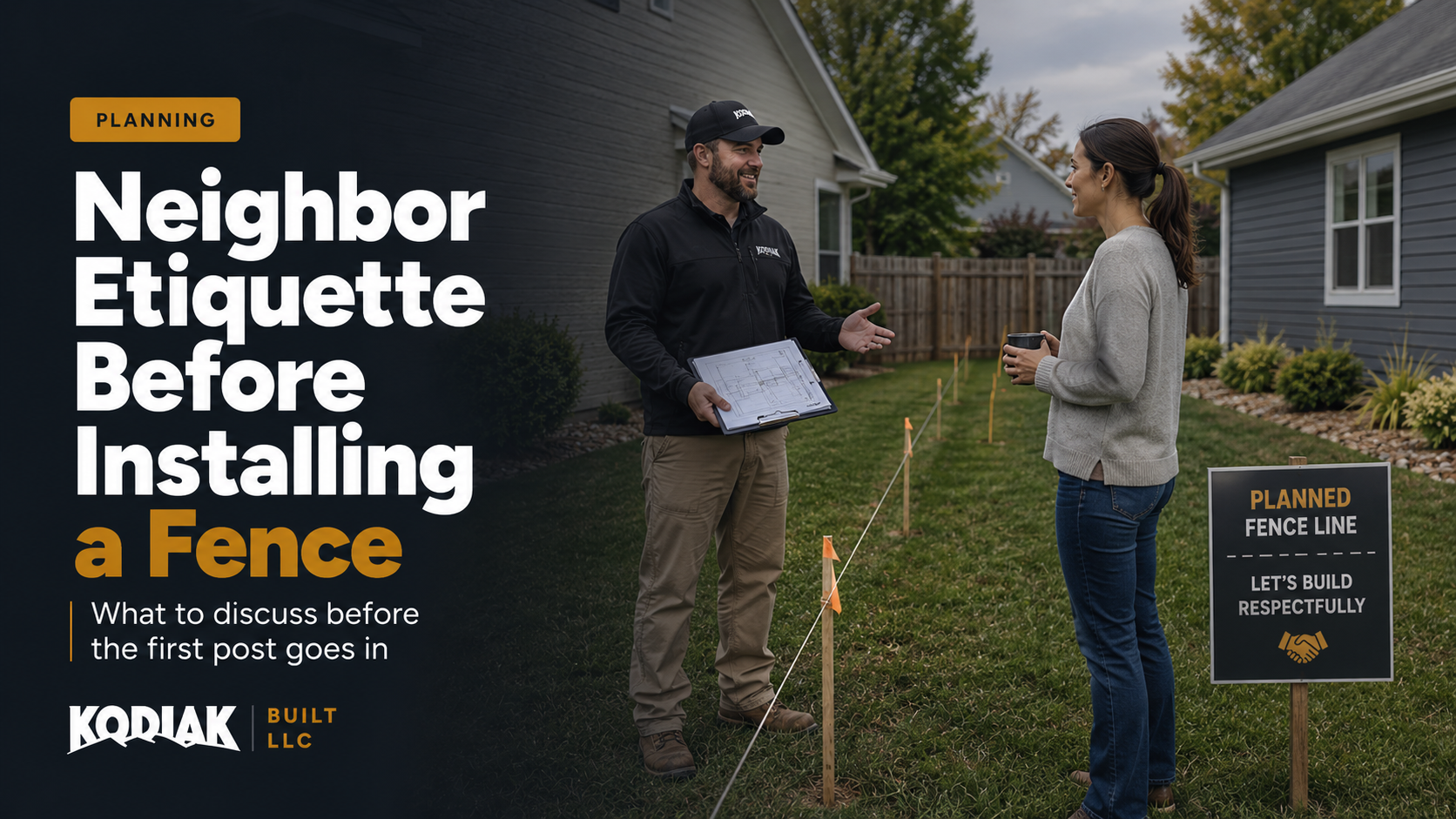
A fence may be on your property, but it affects the neighbors too. It changes sight lines, mowing patterns, pets, snow storage, and how the shared boundary feels.
A little communication before installation can prevent a lot of tension later.
Tell neighbors before work starts
You do not need to make a major announcement, but a simple heads-up is smart. Let neighbors know:
- ✓You are planning a fence.
- ✓Approximately where it will go.
- ✓What style and height you are considering.
- ✓When work may happen.
- ✓Whether access near their yard may be needed.
Most people appreciate being told before a crew shows up.
Be clear about property lines
Do not tell a neighbor “this is the line” unless you know. If the line is unclear, be honest and get it verified.
Property line confusion is one of the fastest ways to turn a simple fence project into a dispute.
Discuss old shared fences
If there is an old fence between properties, ask:
- ✓Who owns it?
- ✓Is it shared?
- ✓Is it on the property line?
- ✓Does the neighbor rely on it for pets?
- ✓Can it be removed?
- ✓Will there be a gap during construction?
Never assume an old fence can be removed without discussion.
Think about the finished side
Some fence styles have a finished side and a structural side. Many homeowners choose to face the finished side outward toward neighbors or public view. Some communities or HOAs may require it.
Even when it is not required, the finished side can be a neighbor-relations issue.
Give notice if pets are involved
If either property has dogs, communicate about timing. Fence removal or installation may temporarily open a yard. Neighbors should know when gates or sections may be down.
Keep the site clean
A messy install can annoy neighbors. Good cleanup matters, especially near shared property lines.
Keep an eye on:
- ✓Old boards or nails.
- ✓Concrete pieces.
- ✓Dirt piles.
- ✓Packaging.
- ✓Tools near the boundary.
- ✓Blocked access.
Do not drain problems onto the neighbor
Fence installation can affect drainage if grading, soil, or landscaping changes. Avoid creating a situation where water runs onto neighboring property in a new way.
If drainage is already an issue, talk about it before installation.
What if the neighbor objects?
Stay calm. Ask what their concern is. Is it the property line, height, style, view, pets, or construction disruption?
Some concerns are easy to solve with layout adjustments. Others may require checking the survey, HOA rules, or city code.
Bottom line
Good neighbor etiquette is simple: communicate early, know the property line, respect pets and access, keep the site clean, and avoid surprises.
Kodiak Built can help plan a clean fence installation, but good communication starts before the first post is set.
Quick answers
Should I tell my neighbors before installing a fence?
Yes — a simple heads-up is smart, even though a major announcement is not needed. Let neighbors know a fence is planned, roughly where it will go, the style and height being considered, when work may happen, and whether access near their yard may be needed.
What should I ask before removing an old shared fence?
Ask who owns it, whether it is shared, whether it sits on the property line, whether the neighbor relies on it for pets, and whether there will be a gap during construction. Never assume an old fence between properties can be removed without discussion.
Which side of the fence should face the neighbor?
Many homeowners face the finished side outward toward neighbors or public view, and some communities and HOAs require it. Even where it is not required, the finished side is a neighbor-relations question worth settling before installation.